
Recent polling struggles for the Liberal Party cannot be solely attributed to its first female leader, nor can the shift toward One Nation be dismissed as just a “protest vote,” according to political analysts.
Observers noted the significance of Angus Taylor’s emphasis on reducing immigration during his victory speech after securing the party leadership on Friday, a stance closely associated with One Nation’s platform.
As discussions about the leadership change began on Thursday, numerous Liberals pointed to the defection of 2.1 million former supporters as a key reason for seeking a new direction.
The latest surveys from Newspoll, Redbridge, and Morgan indicate that One Nation has emerged as the second major political force, with the now-reunited Coalition trailing in third place, garnering approximately 18 percent support.
Simon Welsh, director at Redbridge, cautions that these polling outcomes highlight deep-rooted issues that cannot be resolved merely by replacing Sussan Ley as leader.
“This isn’t just about Sussan Ley. It’s the result of a prolonged period of challenges and the aftermath of the previous election,” Welsh stated in an interview with SBS News on Friday.
At the core of the eroded vote? A belief that the Liberal Party is no longer the answer for economic management.
“The voters that are coming off the Liberals now, in big droves, are voters that Howard bought to the party,” Welsh said.
“Those sort of working and middle-class families that came to the Liberals (from Labor) on this promise of individual economic aspiration.”
It’s an issue of which the party’s shiny new leadership team — Opposition leader Angus Taylor and his deputy Jane Hume — appear to be aware.
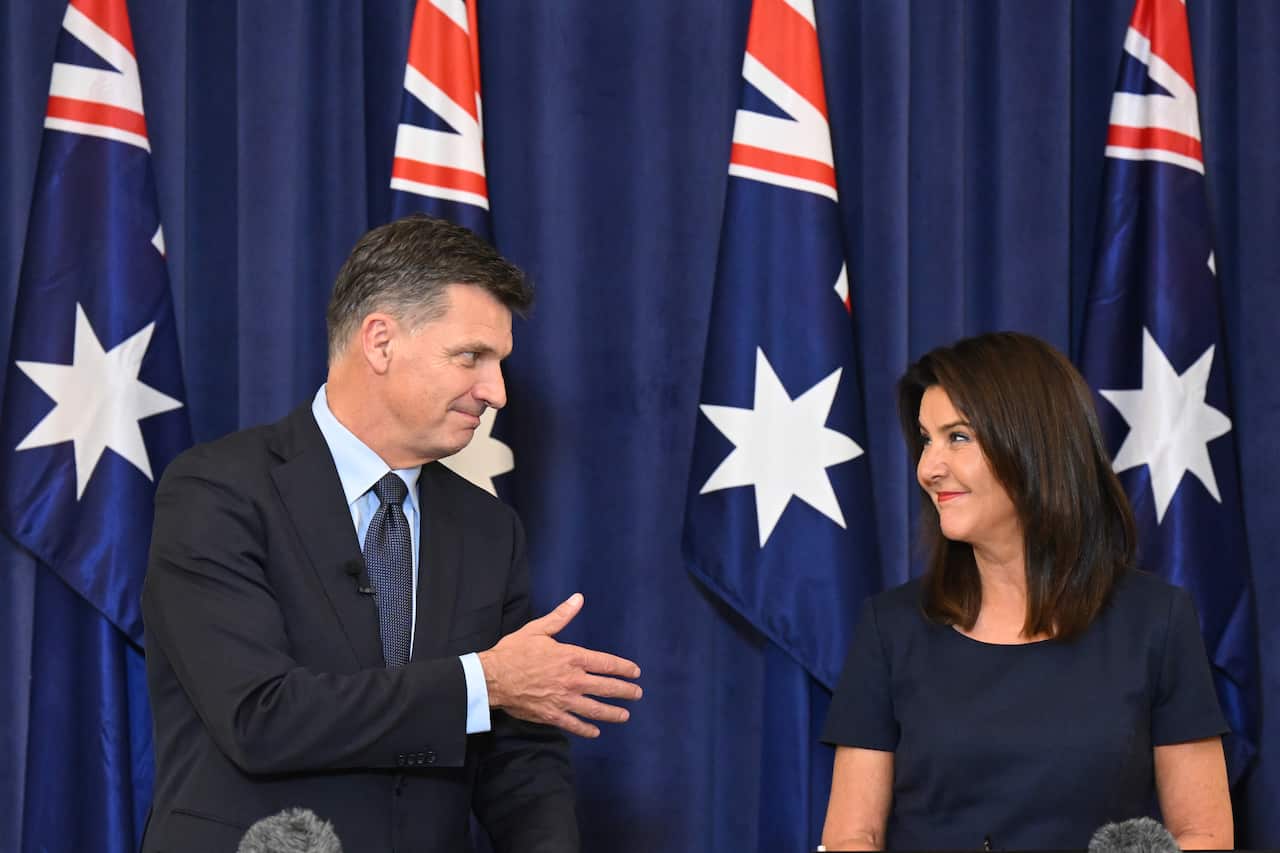
In his first remarks as leader, Taylor emphasised that the party stands for “lower inflation, lower interest rates, and lower taxes”.
Taylor acknowledged his mistake in opposing Labor’s lower tax policy in the last election in an attempt to neutralise the issue.
However, Welsh said it was immigration that “broke the camel’s back”, arguing that “resorting to a culture war style approach” without a strong policy to back it up turned voters to One Nation.
“The Liberal Party is still bound by that centrist sort of flank that it’s got … so they could never go on immigration to the kind of places that One Nation can go,” he said.
Addressing immigration, Taylor said: “It is clear that numbers have been too high and standards have been too low. And our policy will be for lower numbers and for higher standards.”
Welsh added that for a party struggling to keep female voters, the ousting of its first female leader will hurt its centrist and moderate flank, many of whom have been moving to Labor or teal independents.
What’s the pathway forward for Taylor?
Welsh said it doesn’t matter who’s sitting in the top job, Ley or Taylor, unless they can address core economic issues and policy spaces “they’ve been trying to avoid”.
“You can’t address this problem unless you talk about big business, unless you talk about tax, unless you talk about housing, unless you talk about climate,” he said.
“There’s some policy issues that are pretty heavy and problematic for the Liberal Party to deal with because of the way it’s composed and comprised as an organisation.”
Zareh Ghazarian, associate professor in politics and international relations at Monash University, says the shift to conservative Taylor presents “an opportunity” for these topics to be debated.
“I’d expect discussions and debates that weren’t prominent, such as debates about immigration, energy policy, to really become at the forefront of what the Liberal Party starts to talk about,” he told SBS News.
He said they are “timely and prominent issues”, not just in Australia, but around the world.
Farrer by-election ‘gettable’ for One Nation
Taylor’s first test will come in the Farrer by-election, a seat Ley has held since 2001.
Welsh argues the rural NSW rural seat is “gettable for One Nation” as it demographically favours those voters.
He said it will be important in demonstrating how deep the shift in voting lies, predicting the trend away from the Liberals will “persist”.
“It looks like it’s more than just a protest vote,” he said.
“It’s got that sort of deep aspect tool, which is about what the Liberal Party stands for as a brand.”
A significant part of the increase in One Nation support is coming from traditional Liberal voters, predominantly gen X and baby boomers, Welsh said.
For the latest from SBS News, download our app and subscribe to our newsletter.


