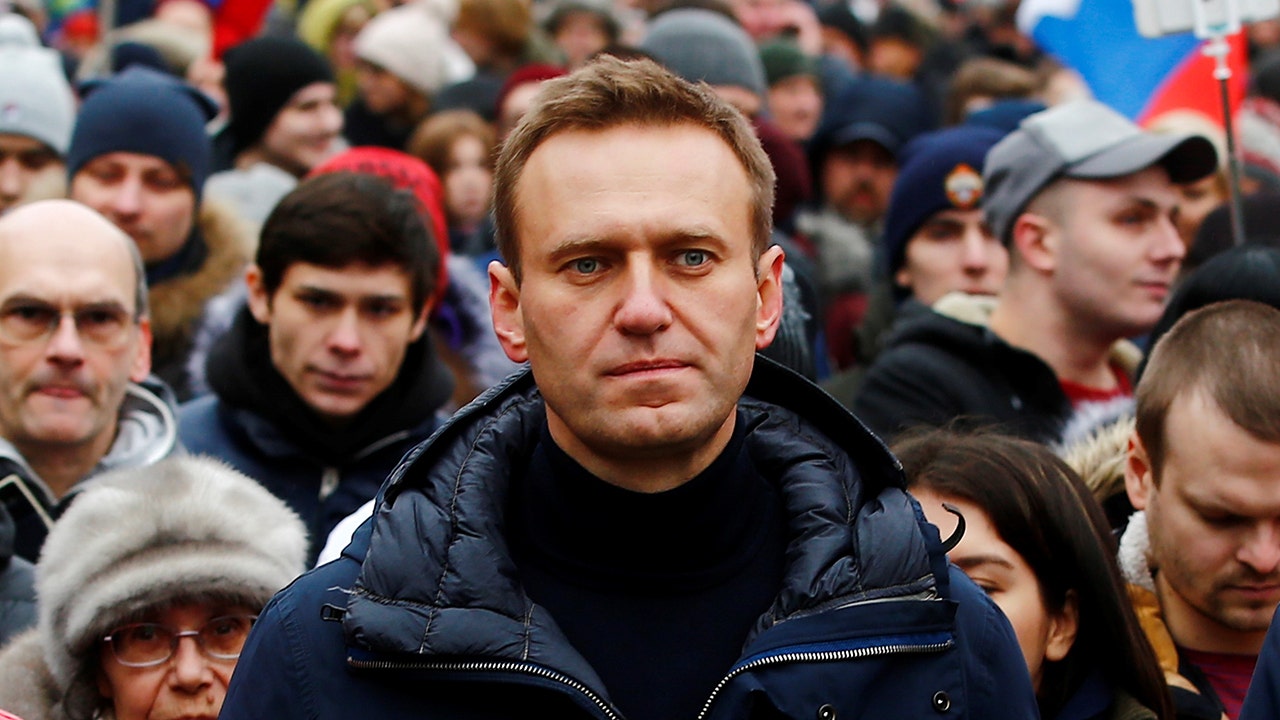

According to the United Kingdom, Sweden, France, Germany, and the Netherlands, Alexei Navalny was assassinated by Russia using a specific type of frog-derived poison.
In a unified declaration released on Saturday, these NATO allies expressed “confidence” that the Russian opposition leader was poisoned by the Russian authorities with a potent toxin called epibatidine, typically found in South American poison dart frogs.
Notably, these frogs are not indigenous to Russia.
The statement from these countries emphasized, “While Russia asserted that Navalny’s death was due to natural causes, the presence of epibatidine and associated symptoms strongly suggest poisoning as the real cause. Given that Navalny passed away while imprisoned, Russia had both the capability and opportunity to administer this toxic substance.”

This determination was reached following an analysis of samples collected from Navalny’s remains.
The conclusion was made based on samples taken from Navalny’s body.
Navalny, one of Russian President Vladimir Putin’s most powerful opponents, died in a Russian prison in Siberia in 2024 after he decided to return to his home country in 2021.
Navalny was immediately detained upon his return on charges that included fraud and contempt of court that were widely considered to be politically motivated.
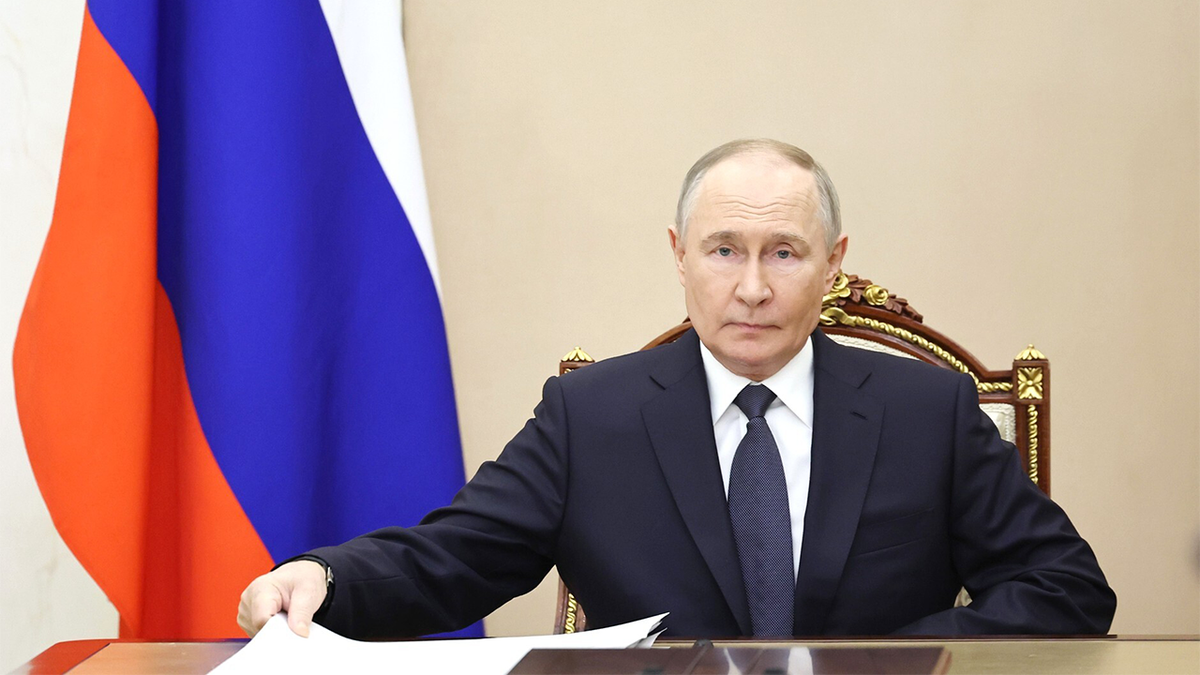
Russia has been accused by several European countries of poisoning Alexei Navalny to death. (Kremlin Press Office/Handout/Anadolu via Getty Images)
The activist was famously brought to a German hospital in 2020 to recover after Western powers, including the U.S., accused Russia of poisoning him with a nerve agent known as Novichok that was developed by the Soviet Union.
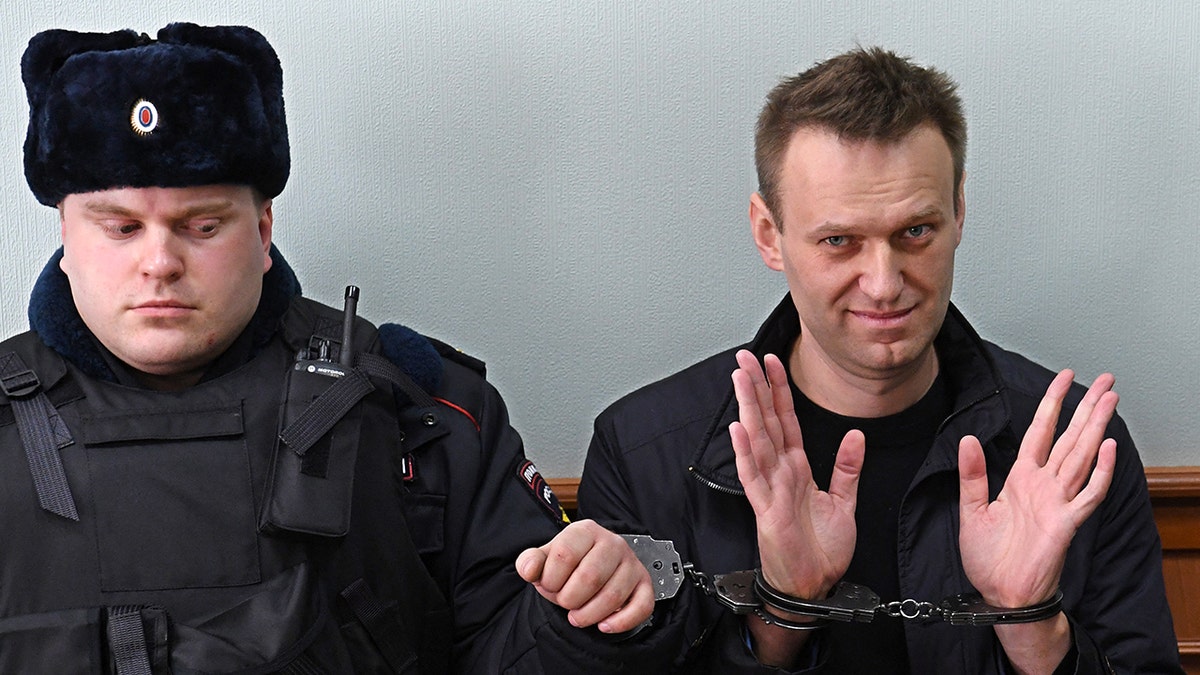
Alexei Navalny after an arrest in Russia in 2017. (Kirill Kudryavtsev/AFP via Getty Images)
“Russia’s repeated disregard for international law and the Chemical Weapons Convention is clear,” the statement said, adding that Russia was also widely believed to have used Novichok in England in 2018, leading to the death of a British woman named Dawn Sturgess.
“These latest findings once again underline the need to hold Russia accountable for its repeated violations of the Chemical Weapons Convention and, in this instance, the Biological and Toxin Weapons Convention,” the statement said.
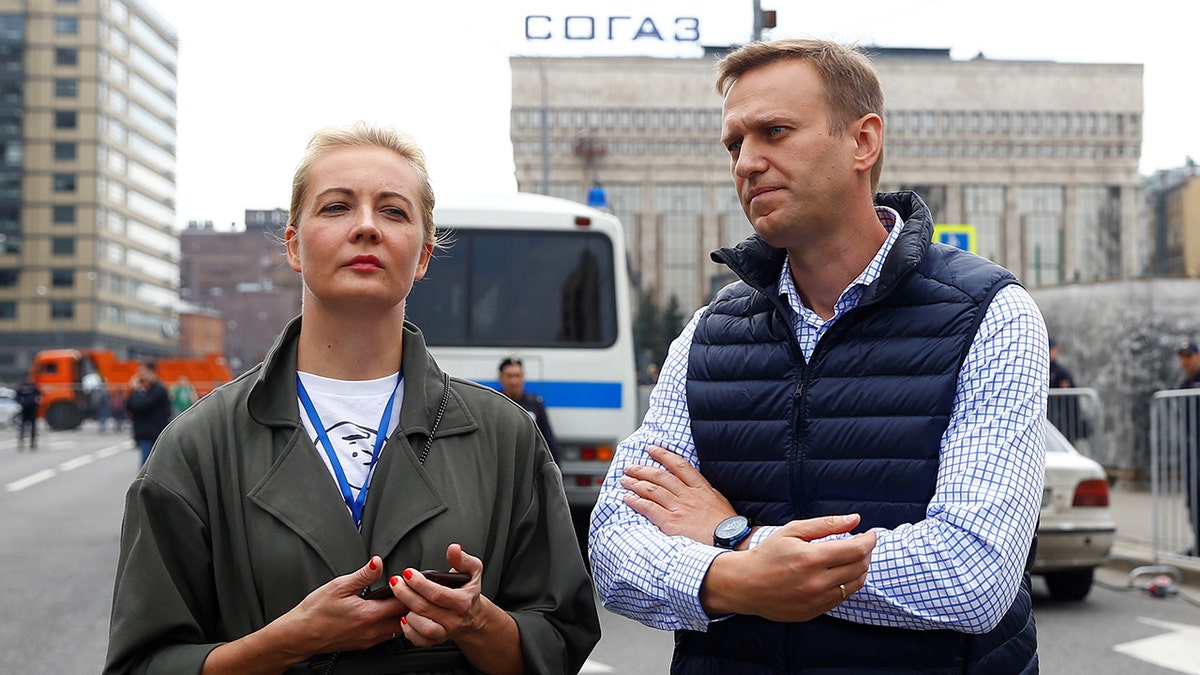
Alexei Navalny with his wife Yulia in 2018. (Sefa Karacan/Anadolu Agency/Getty Images)
The countries added that they had written to the director general of the Organisation for the Prohibition of Chemical Weapons to “inform him of this Russian breach of the Chemical Weapons Convention.”