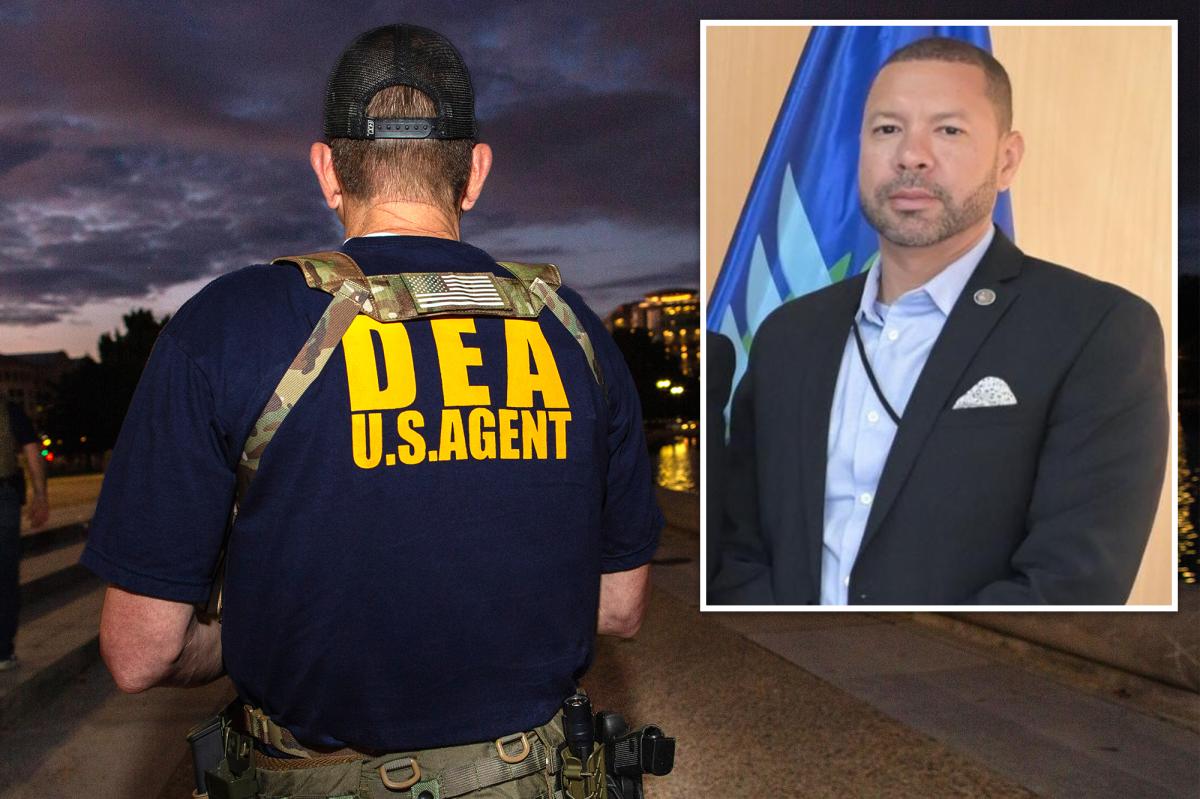

A supervisor from the US Drug Enforcement Administration’s office in the Dominican Republic has been arrested amid an investigation into the misuse of a US visa program intended for confidential informants. This information was shared by a current and a former US official familiar with the case, who spoke to The Associated Press on Thursday.
This arrest coincides with the Trump administration’s sudden closure of the anti-narcotics office in the Caribbean country, citing what it described as a “disgusting and disgraceful violation of public trust.”
The individual arrested, Melitón Cordero, was detained as part of an investigation spearheaded by the US Department of Homeland Security, according to the two sources.

The officials spoke anonymously to the AP due to the ongoing nature of the investigation.
Details surrounding the arrest remain scarce, and attempts to reach Cordero via his cellphone were unsuccessful.
At this time, neither the Department of Homeland Security nor the DEA has provided comments in response to requests for information.
Earlier Thursday, US Ambassador Leah F. Campos said she has closed the DEA’s office until further notice without providing a reason.
âIt is a disgusting and disgraceful violation of public trust to use oneâs official capacity for personal gain,â she wrote on X. âI will not tolerate even the perception of corruption anywhere in the Embassy I lead.â

Dominican Foreign Affairs Minister Roberto Ãlvarez said the closure had nothing to do with the Dominican government but was part of an internal US investigation.
Every year, the DEA, FBI and other federal law enforcement agencies sponsor the entry to the United States of hundreds of foreign nationals who might otherwise be considered inadmissible due to their association with criminal activity.
Over time, many of the individuals, who are expected to assist investigators, become eligible for permanent residency.
A 2019 report by a Justice Department watchdog identified several lapses in the visa program, finding that law enforcement had lost track of as many as 1,000 sponsored individuals, posing risks to public safety or national security because of the individuals’ involvement with criminal activity.
The Dominican Republic is a major transit zone for narcotics leaving South America and law enforcement authorities in the country have long worked closely with their US counterparts.
In late November, Dominican President Luis Abinader announced that he was authorizing the U.S. government to operate inside restricted areas at San Isidro Air Base and Las Américas International Airport to help in its fight against drug trafficking.