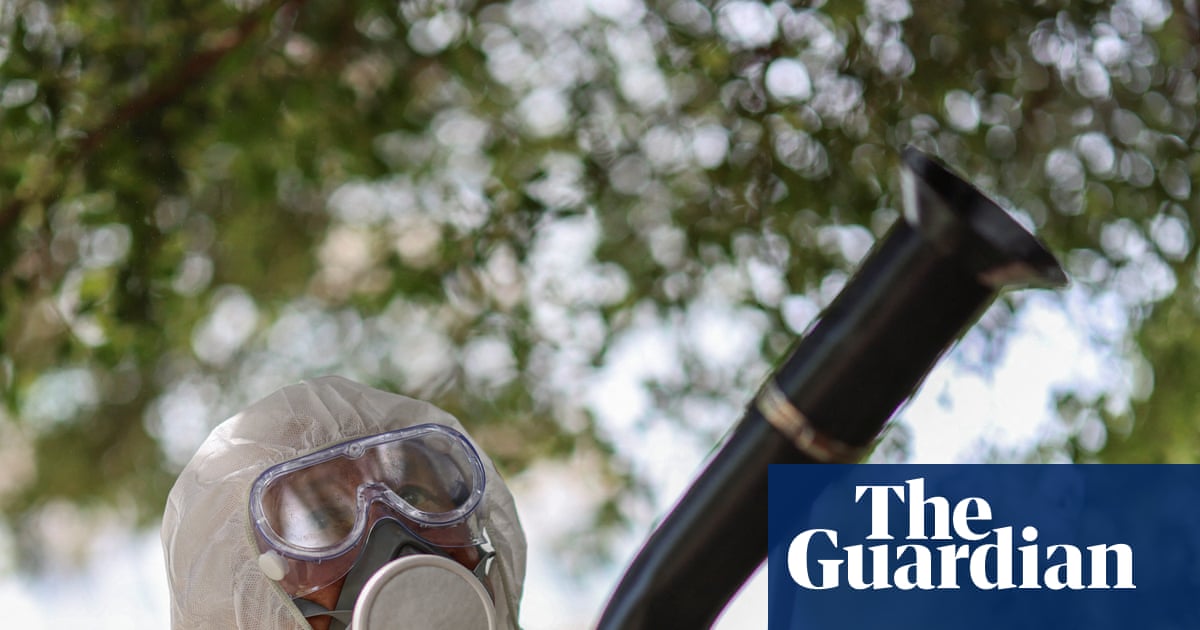

A recent study reveals that chikungunya, a severely painful tropical illness, can now be spread by mosquitoes throughout much of Europe.
The rise in temperatures, attributed to the ongoing climate crisis, has extended the potential infection period to over six months annually in countries like Spain and Greece, and up to two months in southeastern England. Researchers warn that with continuous global warming, the disease is poised to advance even further north.
This research is groundbreaking as it thoroughly examines how temperature affects the virus’s incubation period in the Asian tiger mosquito, which has been proliferating in Europe over the past few decades. The findings indicate that the minimum temperature required for infection is 2.5°C lower than previous estimates, a revelation that researchers describe as “quite shocking.”
Originating in Tanzania in 1952, the chikungunya virus was initially limited to tropical areas, where it causes millions of infections annually. The disease results in intense and prolonged joint pain, posing a severe health threat, particularly to young children and the elderly.
While Europe has seen sporadic reports of chikungunya across more than ten countries, significant outbreaks involving hundreds of cases have hit France and Italy in recent years.
Sandeep Tegar of the UK Centre for Ecology and Hydrology (UKCEH), who led the study, notes, “Europe’s warming rate is nearly twice that of the global average, making the lowered temperature threshold for virus transmission particularly alarming. The northward spread of this disease seems inevitable.”
Dr Steven White, also at UKCEH, said: “Twenty years ago, if you said we were going to have chikungunya and dengue in Europe, everybody would have said you were mad: these are tropical diseases. Now everything’s changed. This is down to this invasive mosquito and climate change – it really is as simple as that.
“We’re seeing rapid change and that’s the worry. Up until last year, France had recorded 30-odd cases of chikungunya over the last 10 years or so. Last year, they had over 800.” The virus was carried by travellers from French overseas territories in the tropics where there were outbreaks, including Réunion.
The Asian tiger mosquito (Aedes albopictus), which bites during the day, is moving northwards across Europe as temperatures rise. It has been detected in the UK but is not yet established. There are costly vaccines for chikungunya but the best protection is to avoid being bitten.
Dr Diana Rojas Alvarez, who leads the World Health Organization’s team on viruses transmitted by insect and tick bites, said: “This study is important because it indicates that transmission [in Europe] might become even more evident over time.” She added that chikungunya can be devastating, with up to 40% of people still experiencing arthritis or very severe pain after five years.
“Climate has a huge impact on this, but Europe still has the chance to control these mosquitoes from spreading any further,” she said. Community education on removing the still water where mosquitoes breed is one important tool, while wearing long, light-coloured clothing and using repellent prevents bites. Health authorities also need to set up surveillance systems, she said.
When a mosquito bites an infected person, the chikungunya virus enters its gut. Then, after an incubation period, the virus is present in the mosquito’s saliva, meaning it can infect the next person it bites. But if that incubation period is longer than the lifespan of the mosquito, the virus cannot spread.
The study, published in the Journal of Royal Society Interface, used data from 49 earlier studies on chikungunya virus in tiger mosquitoes to determine the incubation time across the full range of temperatures for the first time.
The study found the cut-off temperature for transmission is 13C-14C, meaning infections can occur for more than six months of the year in Spain, Portugal, Italy and Greece, and for three to five months of the year in Belgium, France, Germany, Switzerland and a dozen other European countries. The minimum temperature was previously estimated at 16C-18C, meaning there is a risk of chikungunya outbreaks in more areas and for longer periods than previously thought.
The new work gives much more detailed information on the areas at risk. “Identifying specific locations and the months of possible transmission will enable local authorities to decide when and where to take action,” Tegar said.
Outbreaks in Europe are sparked by infected travellers returning from tropical regions and being bitten by local tiger mosquitoes, which then spread the disease. Until now, Europe’s cold winters have stopped tiger mosquito activity and acted as a firebreak for the disease from one year to the next.
However, scientists are starting to see all-year-round tiger mosquito activity in southern Europe, meaning chikungunya outbreaks are likely to amplify as the continent warms. The UKCEH team is investigating this issue. “Our intuition is that we’re going to get much bigger outbreaks because you don’t have this natural firebreak,” White said.
There have not yet been any local transmissions of chikungunya reported in the UK, but there were a record 73 cases among people who contracted the virus abroad between January and June 2025, almost three times higher than in the same period in 2024.
White said: “It is important there is continued action to try to prevent the tiger mosquito from establishing in [the UK] because this highly invasive species is capable of transmitting several infections that can cause serious health conditions including chikungunya, dengue and Zika viruses.”