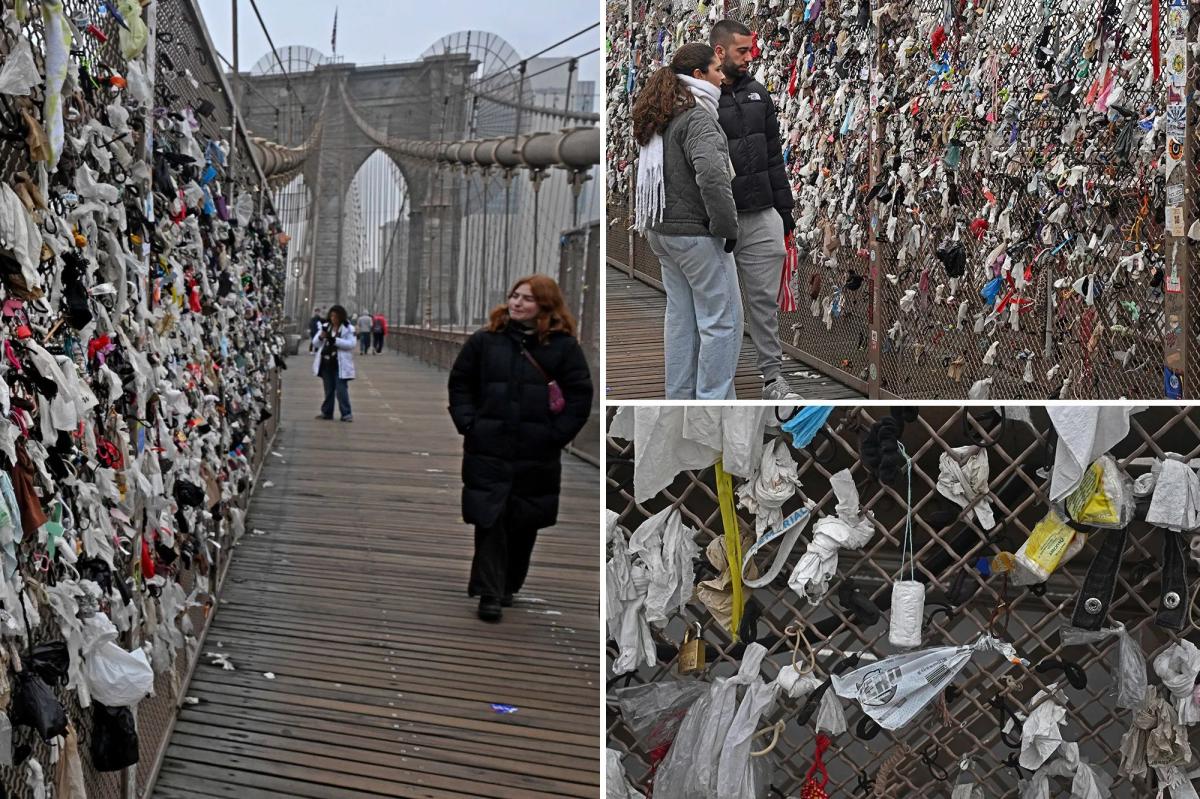


Brooklyn’s iconic bridge has become the latest canvas for a peculiar trend sweeping through the city, as visitors leave behind an array of trashy tokens. The bridge, a beloved symbol of New York, is now littered with everything from hairbands and tissues to more unsavory items like condoms and even underwear.
These unsightly offerings are tied to a beleaguered fence at the bridge’s center, accumulating at such a rapid pace that volunteer cleanup teams struggle to keep up. The influx of debris has become a daily occurrence, much to the dismay of those attempting to maintain the bridge’s aesthetic charm.
Helen Burton, visiting from Birmingham, England, recounted her family’s spontaneous contribution to the clutter. “We literally just walked past it and seen it and got excited,” she shared, describing how her daughters and a friend attached hair ties—known as “bobbles” in the UK—to the fence.
The family, unaware of the trend before their walk, found themselves captivated by the quirky ritual and eager to join in. “It’s something we had on us, so we thought it’s quite nice!” Burton explained, highlighting the casual nature of their participation.
This trend, while adding a personal touch for tourists, poses a persistent challenge for those dedicated to preserving the bridge’s cleanliness and integrity. As the city grapples with this unconventional form of expression, the battle to keep the Brooklyn Bridge pristine continues.
The group had not heard of the trend before embarking on their stroll across the landmark, but were eager to participate.
“We can leave something here to show that we’ve been here,” said Amelie, 13, with her sister, 11-year-old Jess, adding that the trash heap seemed “authentic.”
The nasty trend has been plaguing the Brooklyn Bridge on-and-off for years, but skyrocketed in recent weeks as the city’s attention was seized elsewhere by the recent cold snap and monster snow dumping — prompting locals to take matters into their own hands to clean up the embarrassing trash heap.
“I walk over the bridge almost every day. And one day I was just like ‘I’ve had enough!’” said Ellen Baum, of Prospect Heights, who has documented her impressive trash collection on social media every day since Feb. 3.
It takes Baum roughly 90 minutes to clear a “section” of the fence — or the short spacing between the two poles — but the undeterred tourists continue to walk up and tie their candy wrappers even as they watch her removing the trash.
“It’s just f–king disgusting,” said Baum, 37, saying she’s been met with “detractors” who say the trash wall is a symbol of global art.
“I just disagree completely. The interactions and conversations that take place on the bridge are the art. The bridge itself is the art. We don’t need to put literal trash on it,” she continued.
“There is no other like monumental, or landmarks that people would think it’s OK to do this. I don’t know why people are compelled to do it. I also have a lot of love in my life, and I’ve never once felt compelled to tie literal trash to a fence to show it.”
On Monday, with the help of Pick Up Pigeons, a volunteer group of trash collectors, Baum ripped off nearly 13 pounds “of tissues, hair ties, receipts, and Band-Aids” from the Brooklyn Bridge.
But by Wednesday, an entire wall of trash was still standing, and The Post watched as dozens of pedestrians added their own pieces to the repulsive mosaic.
“It’s good luck,” one litterbug said after tying plastic to the fence.
Darcey Baldock, 16, of London, stopped to tie a scrunchie to the pile “because everyone else is.”
“The bridge is so iconic, and it’s like leaving a part of us behind,” her mother, Victoria, added.
The family admitted that the scene wasn’t “very pretty,” and would look better if tourists decided to leave behind personal items like bracelets or locks — which is illegal — rather than tissues, plastic and underwear.
Plenty of passersby showed visible signs of disgust on their faces as they strolled past the trash heap.
“It’s not the best look, but it is New York,” said Marilie Padua of Toronto, who accused all the tourists defacing the iconic bridge of having “empty thoughts.”
The Department of Transportation, which is responsible for caring for the Brooklyn Bridge, said it conducts routine cleaning sweeps along the pedestrian pathway, but could not say how often the patrols take place.
The agency also would not say how many tickets have been handed out in recent months for littering.
“The iconic Brooklyn Bridge has been called ‘America’s Eiffel Tower,’ and cluttering it with debris detracts from the enjoyment of everyone who uses the bridge and burdens the hard-working crews who maintain this historic landmark,” a spokesperson said in a statement.
The trash plague is an apparent escalation of the tourist problem that the city has been trying to curb on the Brooklyn Bridge for a decade.
Previously, tourists had overburdened the landmark with “love locks” in a poor imitation of the iconic Pont des Arts bridge in France — which buckled under the weight of the metal latches.
Thousands of locks continue to litter the Brooklyn Bridge, and there are several piles of clipped locks ditched across the wooden deck.