Key Points
- Donald Trump inaugurated his “Board of Peace” with a pledge of $10 billion from the US.
- The new institution’s ultimate mission has drawn questions due to its opaque nature.
President Donald Trump of the United States has pledged $10 billion in support, with Muslim-majority countries also committing funding and troops for Gaza, as he inaugurated a new initiative known as the “Board of Peace.” This institution’s ultimate goals have sparked some questions.
Trump convened international allies—although notably few from the Western democracies that typically align with the U.S.—to celebrate his peace efforts. This comes at a time when he is positioning U.S. military forces close to Iran and issuing threats of potential conflict.
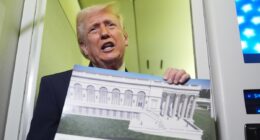
During the meeting, Trump wielded a gavel in the refurbished Washington premises of what was once the U.S. Institute of Peace. The building has been repurposed and renamed in honor of the 79-year-old Republican leader. Trump praised the “powerful people” who became part of his board.
Despite significantly reducing foreign aid in the past, Trump declared that the United States would contribute $10 billion to the new board.
Additionally, Qatar, Saudi Arabia, and the United Arab Emirates each committed to providing at least $1 billion in support.
White House Press Secretary Karoline Leavitt announced that the initiative has secured pledges totaling over $6.5 billion, which likely does not include Trump’s offer.
Trump did not explain exactly where the money would go and whether Congress had approved the contribution he announced for the institution, which has drawn criticism for its opaque nature.
Trump will wield veto power over the “Board of Peace” and can remain its head even after leaving office, while countries that want to stay on permanently, rather than enjoy a two-year stint, will need to pay $1 billion.
Troop pledges
The board came together after the Trump administration, teaming up with Qatar and Egypt, negotiated a ceasefire in October to halt two years of devastating war in Gaza.
The plan’s second phase calls for the disarmament of Hamas, whose unprecedented October 7, 2023 attack on Israel triggered the massive offensive.
In a first for an Arab country, Morocco announced it was ready to send police as well as officers to the nascent International Stabilisation Force.
The force’s American commander, Major General Jasper Jeffers, said that Albania, Indonesia, Kazakhstan and Kosovo were also sending troops and announced that an Indonesian officer would serve as his deputy.
Indonesia, the world’s largest Muslim-majority country, earlier said it was ready to send 8,000 troops, nearly half of the 20,000 sought.
Trump hailed Indonesian President Prabowo Subianto, who attended, calling the former military officer accused of human rights abuses in East Timor a “tough cookie”.
Nickolay Mladenov, a veteran Bulgarian diplomat named high representative for Gaza by the United States, also announced the beginning of recruitment for a post-Hamas police force in Gaza and said 2,000 people had applied in the first hours.
Despite the truce, Gaza’s health ministry says Israeli forces have killed at least 601 people since it took effect.
Foreign Minister Gideon Saar, representing Israel at the meeting, demanded disarmament of Hamas and “a fundamental deradicalisation process” in Gaza.
Mixed attendance
In a speech, Trump denounced domestic opponents, highlighted stock market gains and endorsed the political fortunes of several leaders on stage, including populists Viktor Orban of Hungary and Javier Milei of Argentina.
He also issued a new warning to Iran, warning of potential US strikes in 10 days if the clerical state does not agree to major concessions starting with its nuclear program.
Few Western nations joined the board. Britain and Germany sent their ambassadors to Washington as observers, while Canada and France shunned the meeting entirely.
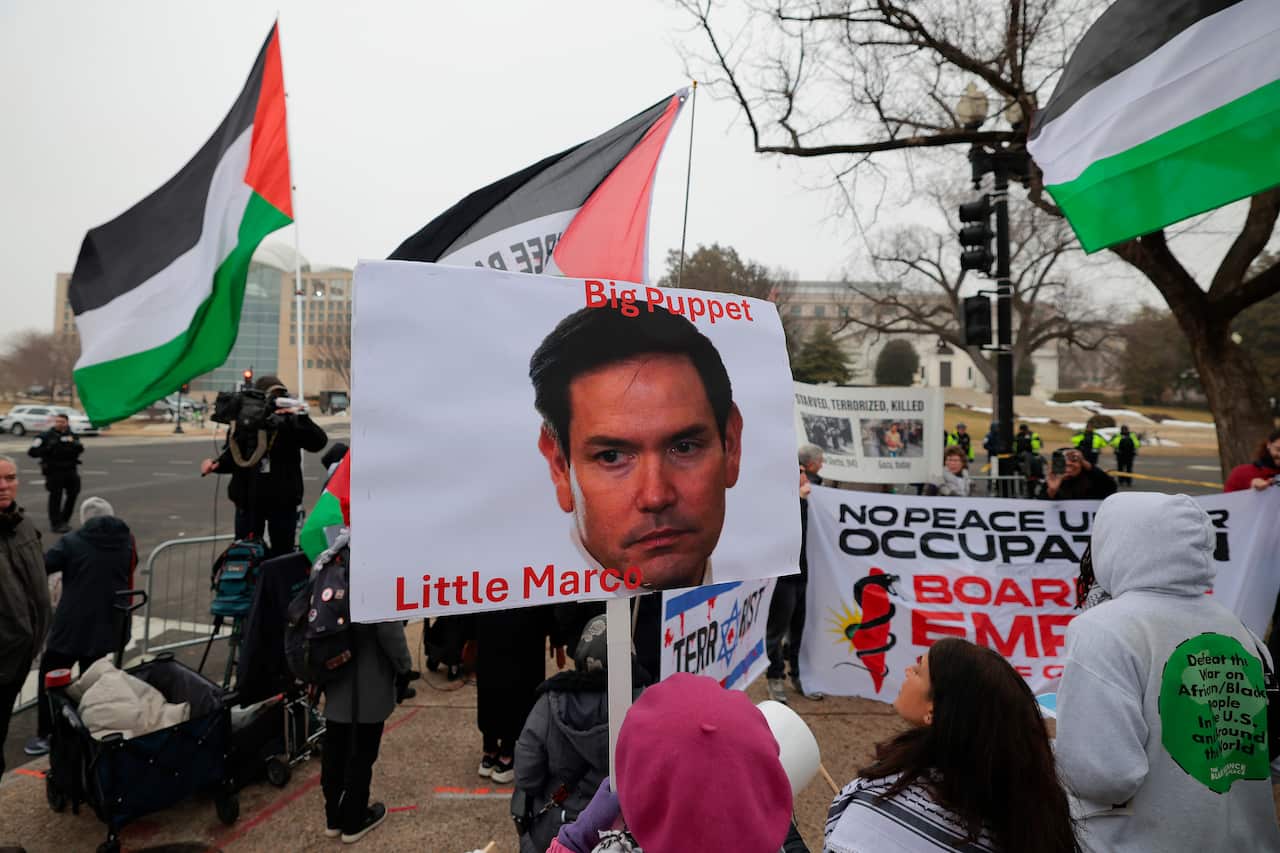
French Foreign Minister Jean-Noel Barrot criticised the European Commission for attending as an observer, saying it did not have a mandate to do so.
Prime Minister Edi Rama of Albania, a steadfast US ally, dismissed European concerns that Trump was trying to “replace the UN”, to which he drastically cut US support.
“But if it helps shake that agonising giant and, Inshallah, wake it up, then God bless the Board of Peace,” Rama said.
For the latest from SBS News, download our app and subscribe to our newsletter.