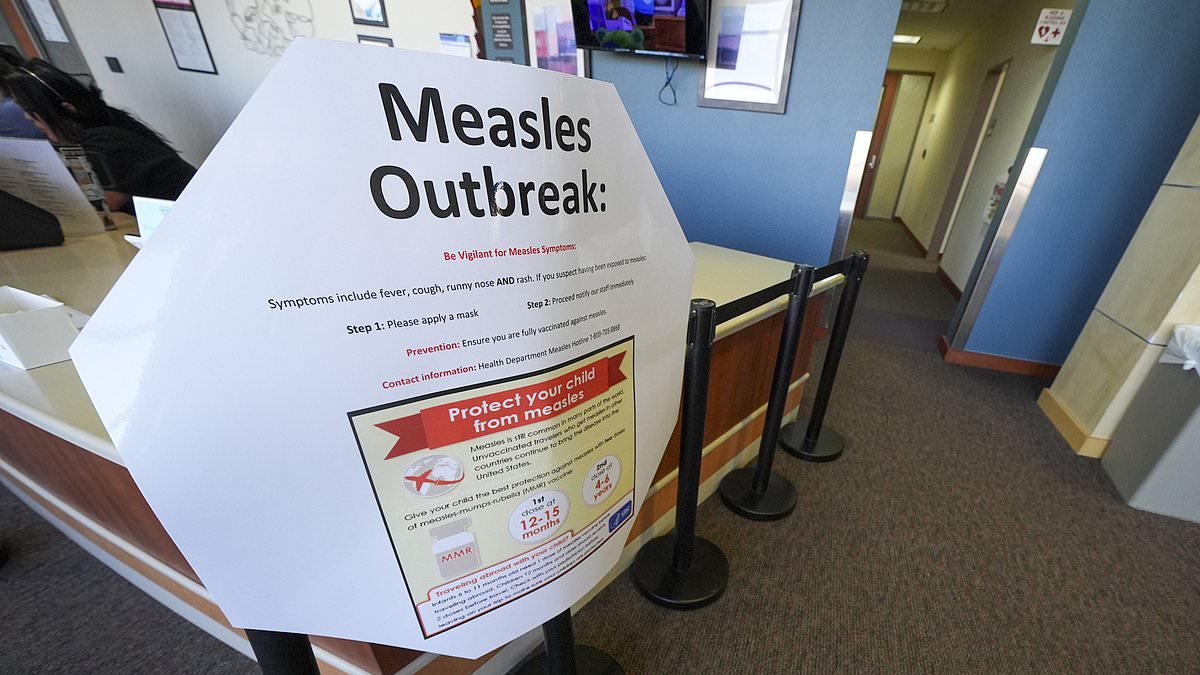

The United States is on the brink of reaching a significant new milestone, as nearly 1,000 measles cases have been reported in just the last two months.
This year, the US has documented 982 cases of measles, a stark increase from the 284 cases reported at the same time last year. In 2025, the total number of measles infections climbed to 2,281, according to data from the Centers for Disease Control and Prevention (CDC).
South Carolina has emerged as the focal point of this extended outbreak. The South Carolina Department of Public Health has verified 979 measles cases since the outbreak’s onset in early October 2025, with more than 800 of these cases occurring in the recent two months alone.
The current measles outbreak, which began last year, is the largest the nation has seen since the disease was declared eliminated 26 years ago. At least 38 individuals have required hospitalization due to the virus. Over 10 percent of measles cases in 2025 necessitated hospital care, predominantly affecting children and teenagers, as reported by the CDC.
Hospitalizations are often due to severe complications from measles, such as pneumonia, respiratory failure, and brain swelling, known as encephalitis.
Encephalitis occurs in about one in every 1,000 measles patients and proves fatal for 20 percent of those affected. It can result in permanent intellectual disabilities or deafness and, in some instances, can be fatal.
Florida is also seeing an uptick. Since the start of the year, the health department has confirmed 92 cases, 66 of them in Collier County, where the outbreak is largely centered at Ave Maria University, just outside Naples.
America is on the brink of losing the measles-elimination status it has maintained for 26 years, a designation that would officially mean the virus is once again spreading routinely within US borders between people.

Measles causes more than just a rash. It can lead to pneumonia, severe diarrhea, brain swelling (encephalitis) and permanent brain damage and it kills roughly 1 to 3 of every 1,000 children who become infected (stock)
Many of the measles outbreaks raging across the country carried over to 2026 from last fall, at which point two children and one adult had died.
South Carolina health officials have confirmed six new measles cases since Friday, pushing the outbreak total to 979.
The CDC has a delay in reporting, resulting in numbers between state and national databases often differing.
Following South Carolina in the states with the most concerning ongoing outbreaks are Utah with 300 cases, Florida with 64, Arizona with 36 and Washington state with 24.
Measles is 97 percent preventable with two doses of the MMR vaccine. Even a single dose provides 93 percent protection that lasts for decades
But measles vaccination rates have been on the decline for years.
In the US, children receive the first dose of the measles, mumps, and rubella (MMR) vaccine between 12 and 15 months of age, and the second dose between four and six years old.
MMR vaccination rates among US kindergarteners have fallen below the 95 percent target needed to prevent measles outbreaks every year since the pandemic began.
That leaves roughly 286,000 kindergarteners unprotected. And the more unvaccinated children in a school, the greater the risk of an outbreak.
For the 2024-2025 school year, 39 states fell below the 95 percent threshold for widespread immunity, up from 28 before the pandemic.

South Carolina’s outbreak now stands at 973 total cases after adding 11 this week. The state leads the nation in 2026 with 632 cases since January. Meanwhile, the CDC has confirmed seven new outbreaks so far this year

The US has confirmed 982 measles cases in 2026 alone, threatening to strip the nation of the ‘eliminated’ status it has held since 2000
Sixteen states dropped below 90 percent, compared to just three in 2019-2020. Idaho reported the lowest rate at 78.5 percent, while Connecticut reported the highest at 98.2 percent.
Health officials in South Carolina said on Tuesday: ‘Vaccination continues to be the best way to prevent measles and stop this outbreak.’
Unlike some vaccines that mainly prevent severe illness, the measles shot is potent enough to stop most infections before they ever take hold.
Studies consistently show that when vaccinated people do get measles, their cases are far milder, and potentially less contagious, than those in unvaccinated individuals.
The latest data from the CDC shows that 94 percent of people infected with measles this year were not previously vaccinated.