

A developer’s plan to construct a towering 56-story luxury building on public land in Greenpoint, adjacent to the East River, has sparked significant outrage among a community already inundated with upscale high-rises. This neighborhood has been waiting for a promised waterfront park for two decades. This situation presents an early challenge for Mayor Mamdani, testing how he will uphold his pledge to prioritize parks and open spaces while navigating developers’ attempts to leverage the housing crisis to bypass zoning laws and neglect community obligations.
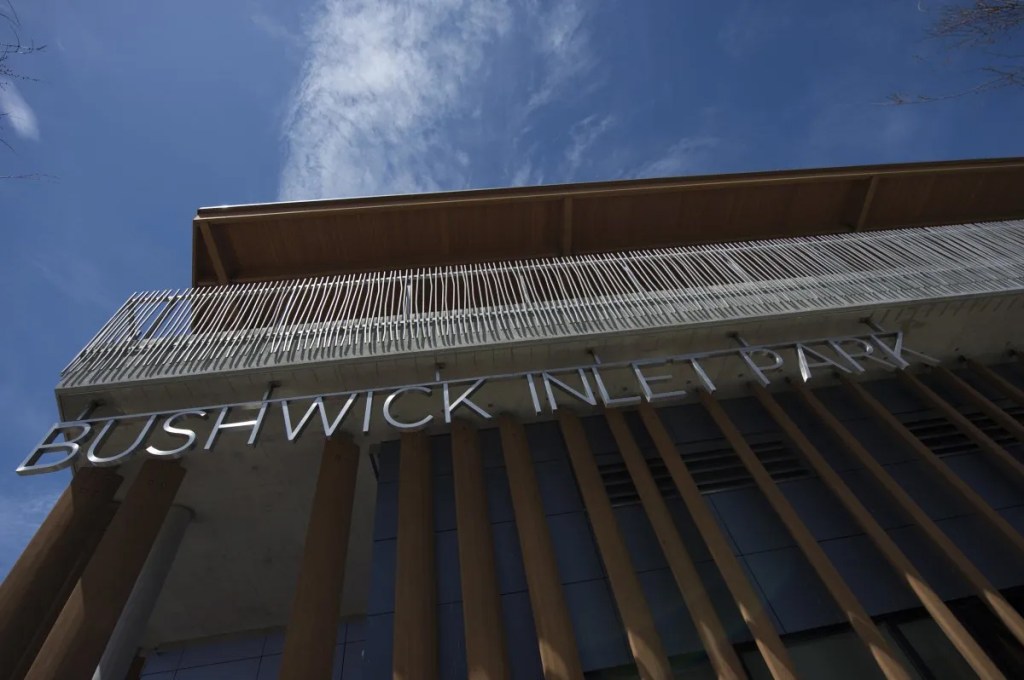
The proposed luxury development is centered on land owned by the MTA, located along a waterfront area opposite Midtown Manhattan. In 2005, the city committed to transforming this area into the impressive Bushwick Inlet Park during a rezoning of Greenpoint and Williamsburg to permit high-rises by the river. The high-rises quickly materialized, yet two decades later, much of the intended park space remains inaccessible and contaminated, remnants of the heavy industry that dominated the waterfront for over a century.
To safeguard the park, the 2005 rezoning imposed a 14-story height limit on buildings on the MTA land, designated an adjoining waterfront lot as parkland, and mandated a 40-foot public esplanade along the riverbank. Now, The Gotham Organization aims to overturn these provisions with a comprehensive rezoning plan. This plan proposes removing the park designation, narrowing the public walkway, and allowing the construction of 56-story and 41-story luxury towers adjacent to the park on the MTA land, which the agency has tentatively agreed to lease.
The proposed Gotham towers would be positioned next to Bushwick Inlet, a rare natural embayment and ecological asset slated to open this spring. Our organization, Save the Inlet, emerged to defend the inlet from such large-scale developments, continuing the work of Friends of Bushwick Inlet Park, which has spent the past 20 years advocating for the city to fulfill its 2005 rezoning promises.
The community, already frustrated by the prolonged delay in the park’s completion, is vehemently opposed to the idea of 100-story structures overshadowing Bushwick Inlet. Close to 5,000 local residents have signed a petition against the project, and hundreds have participated in recent Community Board meetings initiating the review of Gotham’s rezoning proposal. Local Councilmember Lincoln Restler strongly opposed the plan, emphasizing that public land should serve public interests and any development should guarantee the completion of Bushwick Inlet Park.
Despite the backlash, Gotham is pushing forward, largely touting the inclusion of affordable housing in its towers. However, it has come to light that nearly half of this “affordable” housing would be located in a separate building, distant from the waterfront—a classic “poor door” scenario—with some rents linked to household incomes of $162,000 for families of four. This so-called “affordable” offering is Gotham’s bait to justify erecting high-end towers by the water, where monthly rents could soar to $20,000.
No one can accuse Greenpointers of being NIMBYs. Greenpoint and Williamsburg welcomed nearly 30,000 new housing units between 2010 and 2024, more than any other district in the city. Meanwhile, Greenpoint has one of the city’s lowest ratios of open space, and the proposed project would make it even worse with nearly 3,000 additional residents.
With a new mayor committed to truly affordable housing and more open space, now is the time to stop private developers seeking to use public land to build luxury housing while devastating nearby parks. Rather than tearing up the 2005 rezoning agreement with the Greenpoint-Williamsburg community, New York City should turn its attention to completing Bushwick Inlet Park, which can be a spectacular public space for the entire city.
Thompson leads Save the Inlet, and Dunn is a member of the group.