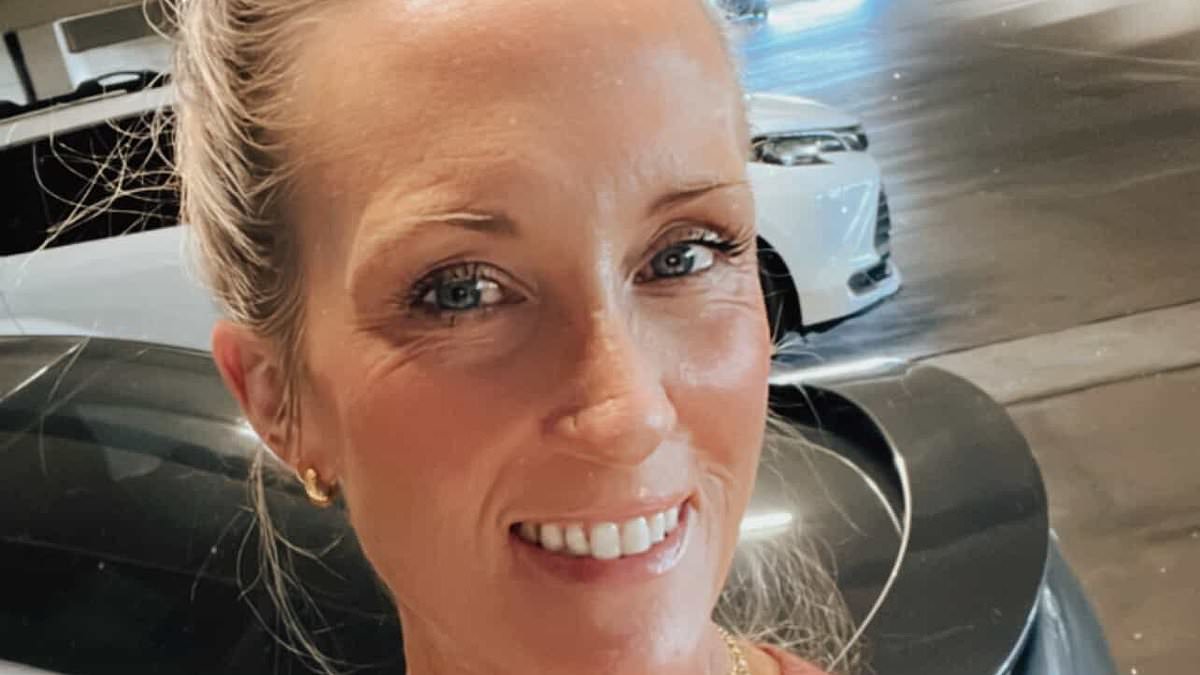

Kory Feltz lives in constant fear that every new skin blemish could evolve into a life-threatening tumor.
“Each morning, I examine my body with bated breath, dreading the discovery of something unfamiliar,” she confessed.
“The anxiety of facing another cancer diagnosis is a lingering presence—always there, even if it fades into the background,” she added.
For nearly two decades, the 46-year-old has bravely confronted cancer. Her battle began in 2007 at the age of 27. During a routine treatment for varicose veins, she unexpectedly found a lump in her calf.
Tests soon revealed it to be squamous cell carcinoma (SCC), the second most prevalent form of skin cancer in the United States. It took three surgical procedures to completely eradicate the cancer.
Residing in Huntington Beach, California, Feltz initially believed that the worst was over.
But just one year later, she discovered basal cell carcinoma on her face. There were yet more surgeries to rid her of the disease and she was given a clean bill of health, until 2015, when a seemingly harmless pink pimple on her lip sent her hurtling back to where she began.
‘I recognized it because it mimicked the one on my leg. It presented as a small pink pimple with a tiny white head. I tried to pop it, but nothing came out.
‘The white head remained. Within a week, it began to resemble a tiny cauliflower.’

Kory Feltz, a 46-year-old mother-of-two from California, was first diagnosed with skin cancer in 2007. She has since had repeated bouts of the disease
Feltz was forced to wait a month for a dermatology appointment, which she says led to the growth expanding to nearly an inch on her upper left lip.
‘I was terrified, knowing how much had been taken from my leg and having first-hand surgical experience with these cancers,’ she said. ‘I was frantic, scared and filled with guilt and anger that I had done this to myself.
‘I went into the office to show them my lip and beg for an earlier appointment. After the front office staff saw it, they fit me in that day due to a cancellation. I was in surgery within two weeks.’
Feltz went into surgery in December 2015, an operation that still haunts her to this day.
She claims she woke up multiple times during surgery to feel doctors ‘tugging’ on her face.
‘It scared me beyond belief, I was under heavy sedation and could do nothing. I was paralyzed,’ she said.
To keep the cancer at bay, Feltz has since undergone skin freezes, biopsies, injections, light therapy and Mohs surgery – a common outpatient procedure done under local anesthesia that is meant to remove as much cancerous tissue as possible without damaging surrounding healthy skin.
She also uses topical chemotherapy cream twice a day for two weeks at a time to target precancerous lesions, but the treatment is brutal.
The side-effects include nausea, headaches, body aches, mouth sores and extreme fatigue. By the final days of treatment, she says her skin becomes cracked, bleeding and painfully raw. The effects of chemo and skin cancer have been particularly hard for her husband of 21 years, Paul, and her two sons, who are 19 and 13.

Feltz’s face after surgery to remove basal cell carcinoma from her lip

Topical chemotherapy has left Feltz with skin damage in the past, as seen above
‘The chemo cream treatments have been the hardest for them so far,’ Feltz said. ‘The moaning in pain during showers, while reapplying the chemo cream, or when putting on Aquaphor or a pain-relieving ointment, is difficult to hide.
‘They visibly tense up when I tell them it’s almost time to start treatment again. My husband has modeled such natural caregiving that the boys have picked up on it beautifully.
‘I do share some of the emotions and realities with them – not only so they understand the importance of sunscreen, but also because we have an open relationship and talk about our feelings often. It is very hard on them.’
Skin cancer is most often caused by DNA damage from ultraviolet (UV) radiation from sun exposure or artificial sources like tanning beds. Feltz believes tanning beds and failing to use sunscreen in her 20s are to blame for her cancer.
‘What beats me up the most is the guilt,’ she said. ‘Knowing I chased a tan obsessively – tanning without SPF, using tanning beds. I feel like I should have known better, like I did this to myself.
‘That shame can be louder than the diagnosis some days. And yet, I still wake up and face it even when I’m scared or exhausted.’
Feltz also said she struggles to leave the house some days over fears of strangers staring at her scars and discoloration of her skin.
‘My reflection reminds me of what I’ve lost. The surgeries have changed my face and my body,’ she said.

Feltz believes tanning and not wearing sunscreen led to her skin cancer

Feltz is now encouraging others to get their skin checked regularly
‘I drool because of the deformity left behind, and I see people stare. I feel embarrassed and insecure. It’s like cancer took my body from me and I don’t get a say in what happens to it anymore.’
Two decades after her ordeal began, Feltz is urging others to check their skin regularly and know the signs of skin cancer, which include new or changing moles, unusual growths and skin color or texture changes.
‘I think what people should know is that skin cancer doesn’t end after the surgery. It follows you. It lives in your thoughts, in your routines, in the way you look at your own body,’ she said.
‘It’s not just scars; it’s fear, guilt, pain, and learning how to exist in a body that feels different. But it’s also resilience.
‘And if my story makes even one person choose SPF, get a skin check or skip a tanning bed, then at least some of this has a purpose.’