
Qatar’s energy minister has issued a stark warning that oil prices could soar to over $150 per barrel, posing a significant threat to global economies.
Saad al-Kaabi has highlighted that the ongoing conflict in the Middle East might trigger a fresh energy crisis.
Currently, the price of oil hovers around $85 per barrel, a notable increase from earlier this year when it was mostly between $60 and $65.
In an interview with the Financial Times, al-Kaabi expressed concern that such a spike in oil prices could potentially destabilize the world’s economies.
He cautioned that, “If this conflict persists for several weeks, global GDP growth will be adversely affected. Energy costs for everyone will rise.”
He further warned of potential shortages in certain products, leading to a domino effect that could disrupt supply chains and impede factory productivity.

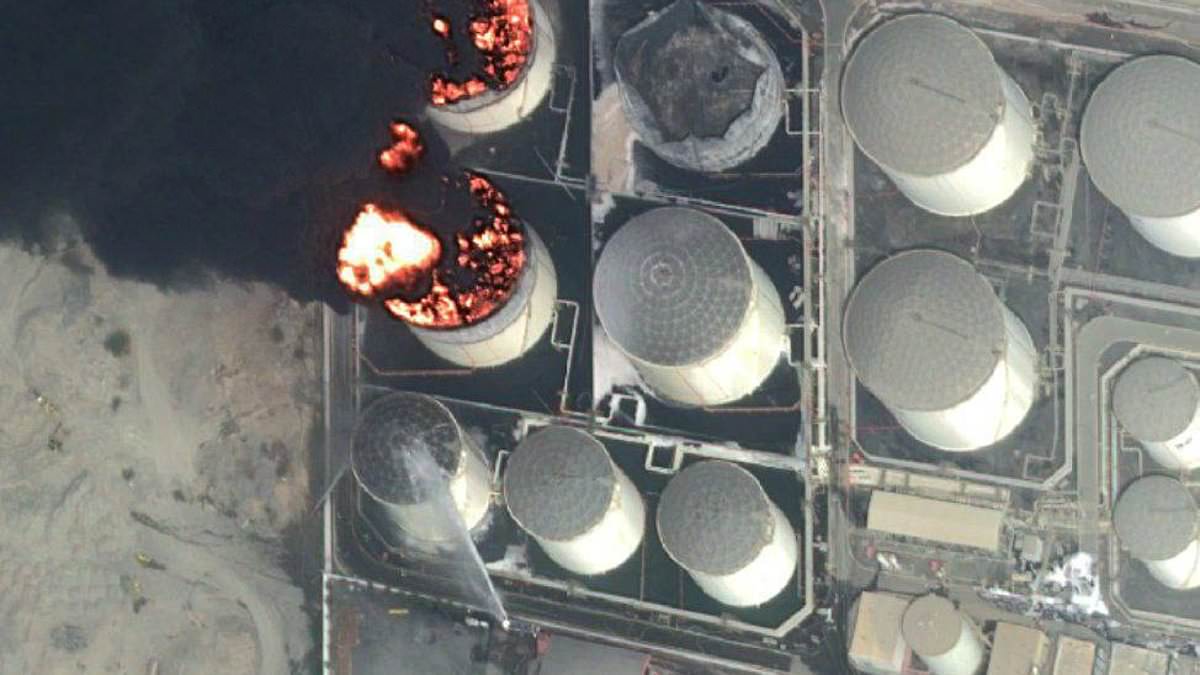
Under attack: Satellite imagery yesterday shows a large fire at Fujairah Oil Industry Zone, in the UAE
He warns Gulf energy exporters could shut down production, and that in turn would drive the price of oil up.
He told the FT that even if the war does end soon, it is likely to take weeks or months for production cycles to return to normal.
That comes after an Iran drone strike hit its largest liquefied natural gas plant earlier in the week.
Oil is on track for its biggest weekly gain since 2022, as conflict in the Middle East disrupts markets and adds to fears of a fresh bout of inflation.
Brent crude trimmed earlier losses to sit above $85 a barrel this morning, but prices have soared nearly 20 per cent this week.
It followed a brief retreat on Thursday after the US signalled its intention to curb surging prices with measures that include allowing the Treasury to trade oil futures.
The Middle East conflict has sent energy markets into a tailspin, as Iran effectively shut the key shipping route the Strait of Hormuz.
Economists have warned a prolonged spike in oil and gas prices could add to inflation and push central banks to tighten policy.
Already, petrol prices in Britain have been nudging higher and energy firms have pulled many fixed tariffs for households – with warnings the Ofgem set price cap will rise sharply in July, if the conflict continues.

Soaring prices: Attacks in the Gulf have seen the price of gas and oil soar, with Qatar’s energy minister warning oil could hit $150 a barrel
That comes after gas prices spiked on Monday and Tuesday.
Qatar is the second largest producer of LNG. Not a huge amount of Qatar gas is exported to Europe, but Mr Kaabi warns that Asian buyers will look to buy whatever gas is available.
This in turn will drive up prices.
Mr Kaabi told the FT that he expects more Gulf countries to call force majeure in the coming days.
Joshua Mahony, chief market analyst at Scope Markets, said: ‘Oil prices have continued to rise, as we head towards the biggest weekly gain in four years as hopes of a swift resolution in Iran fade.
‘For markets, they are waking up to the possibility of a sharp increase in energy costs and inflation if this conflict runs on for weeks, with the differing levels of storage available within each country signalling that one-by-one we could see production facilities shut down without the ability to export or store their oil.’
The price of oil is at its highest level in about eight months, since the US dropped ‘bunker-buster’ bombs on Iranian nuclear facilities in June.
The Middle East is the biggest and most vital oil-producing region across the globe.
The Strait of Hormuz on Iran’s southern border – Iran’s target for strikes – is also a fundamental transport network for shipping oil to various markets.
This crucial trading route sees around 21 million barrels per day – which is approximately a fifth of the world’s oil trade – pass through its waters.
The 100-mile stretch links the Persian Gulf to the Gulf of Oman and to the Arabian Sea and the Indian Ocean, with any threat of the waterway becoming blocked likely to spark a rise in oil pricing.
The RAC says if oil prices hit $90 a barrel, the average price at the forecourt will rise beyond 140p a litre for unleaded. At $100, it would go to 150p.
Mr al-Kaabi also warns gas prices could hit four times the level they were before the conflict started.
He told the FT: ‘In addition to energy, there will be a halt on all other trade in between the [Gulf] and the world, which will have a significant effect on the economies of the [Gulf] and all the trading partners around the world.’

War report: Experts said interest rates could rise back above 4% to deal with an inflation shock triggered by a surge in oil and gas prices
Hope of an interest rate cut vanish
The surge in oil and gas prices is set to feed through to higher household energy bills.
Analysts at Cornwall Insight said the energy price cap is on course to rise by £160 to £1,801 in July – more than offsetting the £117 cut coming in April, which was announced by regulators before the US-led strikes on Iran.
The Resolution Foundation went even further, saying the turmoil could add £500 to a typical bill and one percentage point to inflation.
Ruth Curtice, chief executive at the think tank, said: ‘If increases to oil and gas prices are sustained, we could see inflation back at 3 per cent by the summer.’
The Bank of England has cut rates six times since August 2024
The threat of a new inflation shock has shattered hopes of interest rate cuts.
The Bank of England has cut rates six times since August 2024 – from 5.25 per cent to 3.75 per cent.
But the chances of another reduction later this month have tumbled from around 80 per cent last week to just 12 per cent.
And the National Institute for Economic and Social Research said the next move may in fact be up.
It said a ‘persistent shock to energy prices may force the Bank of England to raise rates back above 4 per cent’.
Helen Miller, director of the Institute for Fiscal Studies, said: ‘If war in the Middle East drags on that will be unambiguously bad news for all of us.’