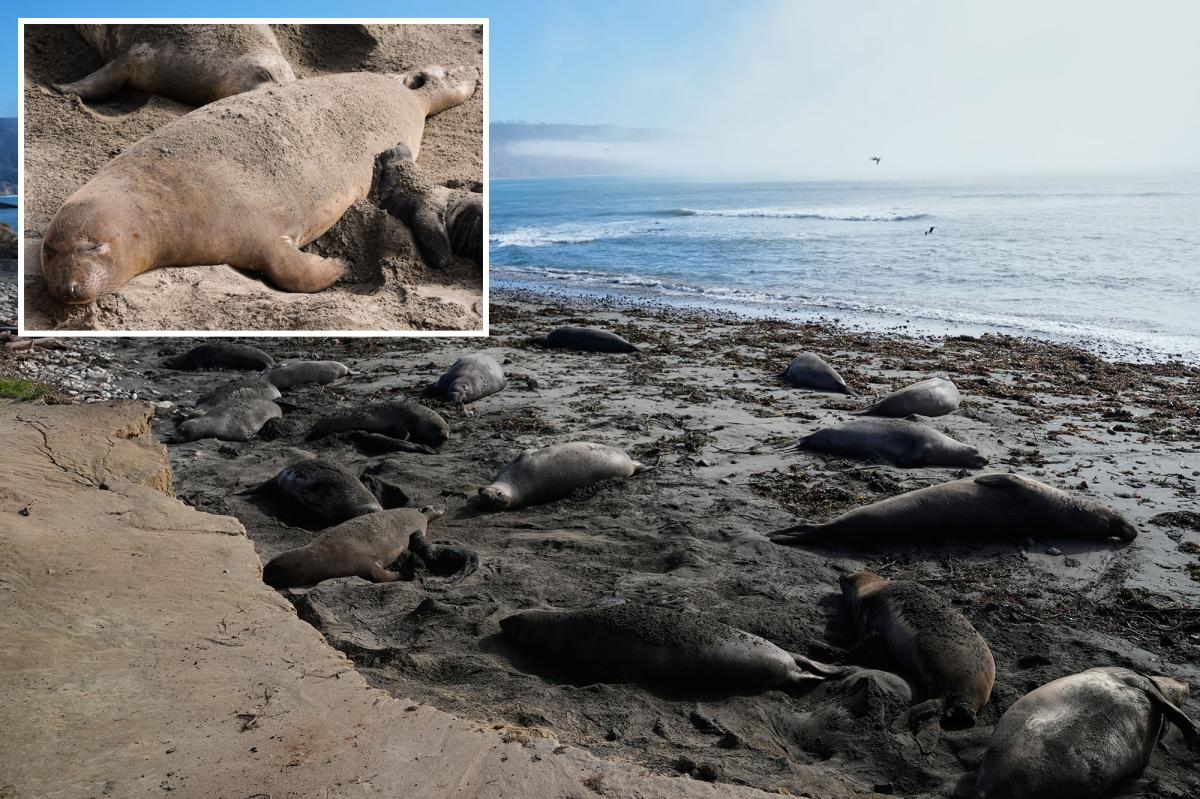

A severe outbreak of highly pathogenic avian influenza (HPAI) is sweeping through California’s Bay Area, leaving devastation in its wake and prompting state authorities to close down a popular wildlife attraction.
The crisis began at Año Nuevo State Park, situated about 50 miles south of San Francisco, where a strain of H5N1 bird flu has severely impacted the local elephant seal community. Initially, there were just a few casualties, but the situation quickly escalated into a full-scale emergency, claiming the lives of at least 47 elephant seals.
Researchers are raising concerns after the virus was identified in a California sea lion and a southern sea otter.

“We certainly didn’t expect to find a sea otter,” said Patrick Robinson, the director of the Año Nuevo reserve, during a press conference on Thursday. He painted a bleak picture of the daily reality, with at least two dead and two infected animals discovered each day.
The park has had to cancel its renowned guided tours, and officials are cautioning the public as the virus has spread to sections of the public beaches.
Download The California Post App, follow us on social, and subscribe to our newsletters
California Post News: Connect with us on Facebook, Instagram, TikTok, X, YouTube, WhatsApp, LinkedIn.
California Post Sports: Follow us on Facebook, Instagram, TikTok, YouTube, X.
California Post Opinion: Share your thoughts.
California Post Newsletters: Subscribe now!
California Post App: Get it here!
Home delivery: Register now!
Page Six Hollywood: Subscribe here!
The specific strain, identified as A3, was first tracked in Eurasia in 2022 before making its way across the Pacific Flyway. While it previously ravaged fur seal colonies in Russia, this marks the first time this deadly variant has hit the Pacific coast.
It’s not just mammals in the crosshairs. Western gulls, common murres, and Brandt’s cormorants are dropping in droves, while the local peregrine falcon population is reportedly taking a hit due to the same relentless strain.

While health officials are urging the public to keep their distance, the risk to humans remains low.
“While the risk to the general public remains very low and there’s no evidence of seal-to-human transmission, to limit the potential transmission to humans we are asking the general public to avoid contact with sick or dead animals, including marine mammals and birds,” Dr. Catherine Sallenave, an infectious disease specialist in San Mateo County, said.
“And we’re reminding people to keep their pets on a leash while on the beach and not approach wild animals.”
For now, the message to Bay Area beach goers is simple: Stay away from the seals and sick animals.