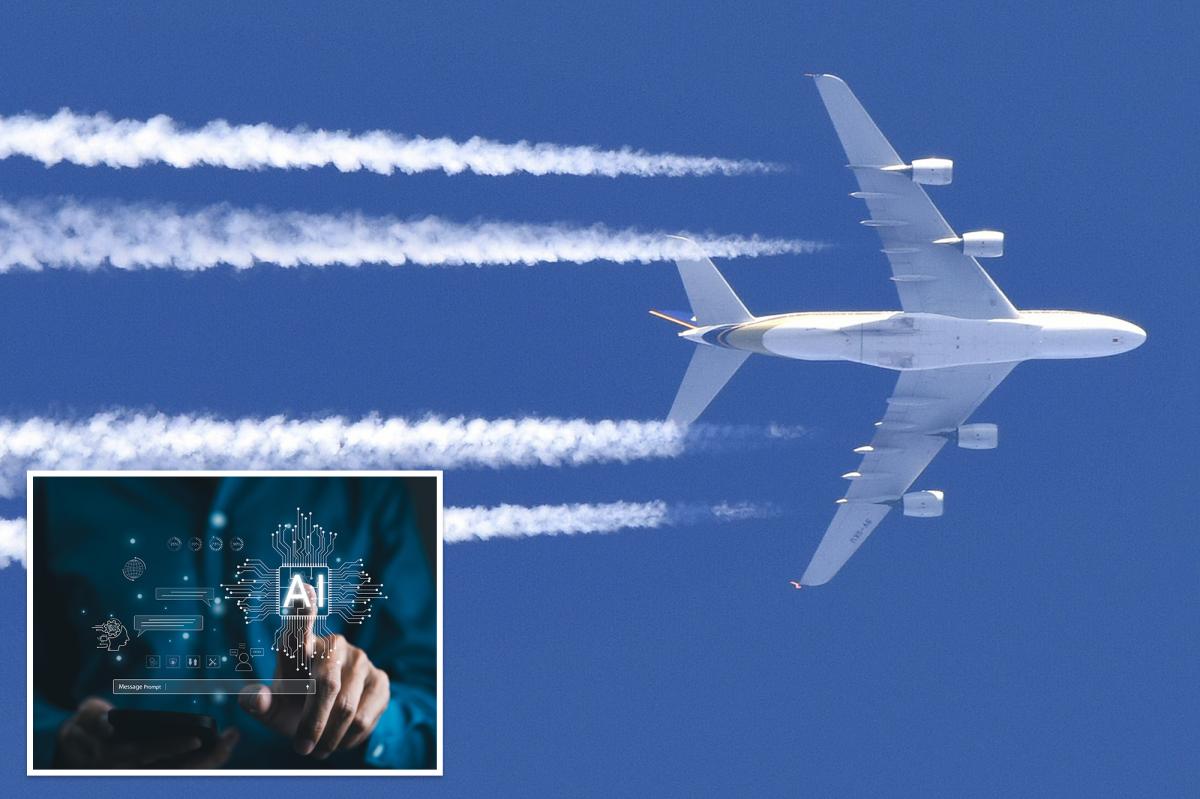


On Thursday, American Airlines and Google announced a breakthrough in reducing the environmental impact of flights through the use of an AI-driven forecasting tool designed to minimize contrail formation.
Contrails, or condensation trails, occur when aircraft fly through cold, moist air, resulting in ice crystals forming around engine emissions. These trails contribute to global warming by trapping heat in the atmosphere. Google’s artificial intelligence technology forecasts where these contrails are likely to develop, enabling American Airlines to integrate these predictions into their flight planning systems. This allows pilots to adjust altitudes or select alternative routes to avoid contrail-prone areas without compromising safety.
Both companies highlighted the potential of this tool to serve as a cost-effective and scalable climate solution within the aviation sector.
As the aviation industry faces increasing demands to address climate change, understanding the impact of contrails is critical. Despite their seemingly benign appearance, these trails account for approximately 1% to 2% of the planet’s warming, according to Contrails.org, a research organization striving to mitigate aviation’s environmental footprint. This organization collaborated on the initiative, which is backed by the Breakthrough Energy group, founded by Bill Gates.
While transitioning to cleaner alternatives like sustainable aviation fuel can significantly cut emissions and reduce contrail formation, this option remains costly compared to minor route adjustments.
Contrails often dissipate quickly, but in particularly humid conditions, they can persist for extended periods, exacerbating their warming effect. Studies suggest that slight route or altitude changes could substantially reduce this impact, using only a small increase in fuel consumption—a hypothesis that this trial aimed to explore.
Testing on flights from the U.S. to Europe
The trial involved 2,400 flights from the U.S. to Europe. In research shared in a blog post Thursday, Google said half were given a route option to avoid creating contrails and the other half were the control group.
For the 112 flights that flew that option, they formed 62% fewer contrails compared to the control group, the paper said. The researchers estimated that reduced the climatological warming from those flights by about 69%.
The trial started in January 2025 and ended in May. Flightkeys, the flight planning service used by American Airlines, joined the airline, Google and Contrails.org in the collaborative work.
“We know that aviation is one of the hardest, most difficult sectors to decarbonize,” Dinesh Sanekommu, who leads Google’s work on contrails, said in an interview. “We think there’s a way that AI can help make that a reality. And the hope is, whether it’s these AI-based forecasts, whether it is doing these operational scientific demonstrations together, they all add a little bit of evidence and generate a bit of data that helps make the right decisions in the long run.”
This built on earlier work by Google, American Airlines and Breakthrough Energy. They partnered in 2023 to reduce the warming effects of contrails and did a smaller test where the flights were identified manually versus integrated into the flight planning system.
As for what’s next, Sanekommu said they need to do a larger trial and they want to work with all the other flight planning software providers to build contrail forecasts and avoidance features into their products
Showing the way for other airlines
One of the biggest deterrents for airlines in adjusting a route is the potential cost of extra fuel, but the trial found no statistically significant difference in fuel usage observed between the two groups.
It’s also a challenge to coordinate among pilots and air traffic controllers over different airspace regions internationally, said Thomas Walker, who researches aviation climate impacts at the Boston-based Clean Air Task Force. CATF has been talking with other major airlines about avoiding contrails, Walker said, and “there’s been a little bit of pushback.”
Jill Blickstein, vice president of sustainability at American Airlines, said the trial showed it wasn’t difficult for dispatchers and pilots to file and fly alternative plans to avoid contrails.
The North Atlantic region is a hot spot for contrails, making attempts to avoid creating them there particularly effective, added Walker, CATF’s senior transportation technology manager.
Walker said there have been trials in Europe to adjust routes, and this is the largest one he has heard of in the United States, which is “a pretty big step in the right direction.” He said he hoped American Airlines’ positive results will encourage other airlines to participate.
American Airlines said it’s not yet making contrail avoidance a routine part of its regular flight planning process. The airline said it hopes to continue working with its partners on additional studies, potentially involving different flight routes and times of day, that could help answer important scientific questions.