
As businesses grapple with escalating costs and the fallout from the Iran conflict, a significant number of UK workers face potential job losses this year.
Recent statistics reveal that last year saw redundancy warnings soar to their highest since 2020, with over 300,000 positions identified as vulnerable, leading to compensation payouts nearing £478 million.
While 2025 was already a challenging year for redundancies since the pandemic, projections for 2026 suggest an even grimmer outlook.
According to a Freedom of Information request by the Liquidation Centre, 315,605 jobs were earmarked for potential layoffs in 2025—a substantial 45% rise from 2021—with a total payout of £478 million.
Furthermore, analysis shows that during the first two months of 2026, 736 companies reported proposed redundancies, endangering 56,396 jobs—a 9% increase compared to the same period last year.
The Liquidation Centre noted, “As redundancy notices are usually filed weeks or months before actual job cuts occur, the high numbers recorded in 2025 might extend into early 2026.”
It said it believes 2026 could see as many as 327,227 redundancies, with 11,622 more jobs lost than in 2025.
‘Britain’s labour market is showing increasing strain as businesses struggle to battle rising operational costs, less demand, and ongoing economic uncertainty’, it said.
The unemployment rate reached 5.2 per cent in the final quarter of 2025, with experts warning it could hit 5.5 per cent by the end of the year as the impact of the Middle East conflict filters through to businesses.
The FOI request revealed that the number of HR1 advance notice of redundancy forms issued in February 2026, at 430, was ‘almost identical’ to February 2009, at 433, shortly before the recession peak.

Worsening: Last year was the most dismal year for potential UK redundancy warnings since Covid, Liquidation Centre said
It marks a worrying trend of rising redundancy numbers over the past few years. The data shows that there were two million UK redundancy warnings issued between 2020 and 2025, with 2025 the ‘most severe’ year for warnings in the past five years.
Richard Hunt, a director at Liquidation Centre, said: ‘Redundancies are happening at a rapid pace in the UK as the economy continues to change and industries adapt. This includes increased automation and the use of artificial intelligence.
‘Unlike in 2020, when redundancies were largely driven by a single crisis, the rise in redundancy warnings in 2025 appears to reflect more ongoing pressures on employers.’
He added: ‘2026 is already shaping up to be an unfortunate record year for redundancies.

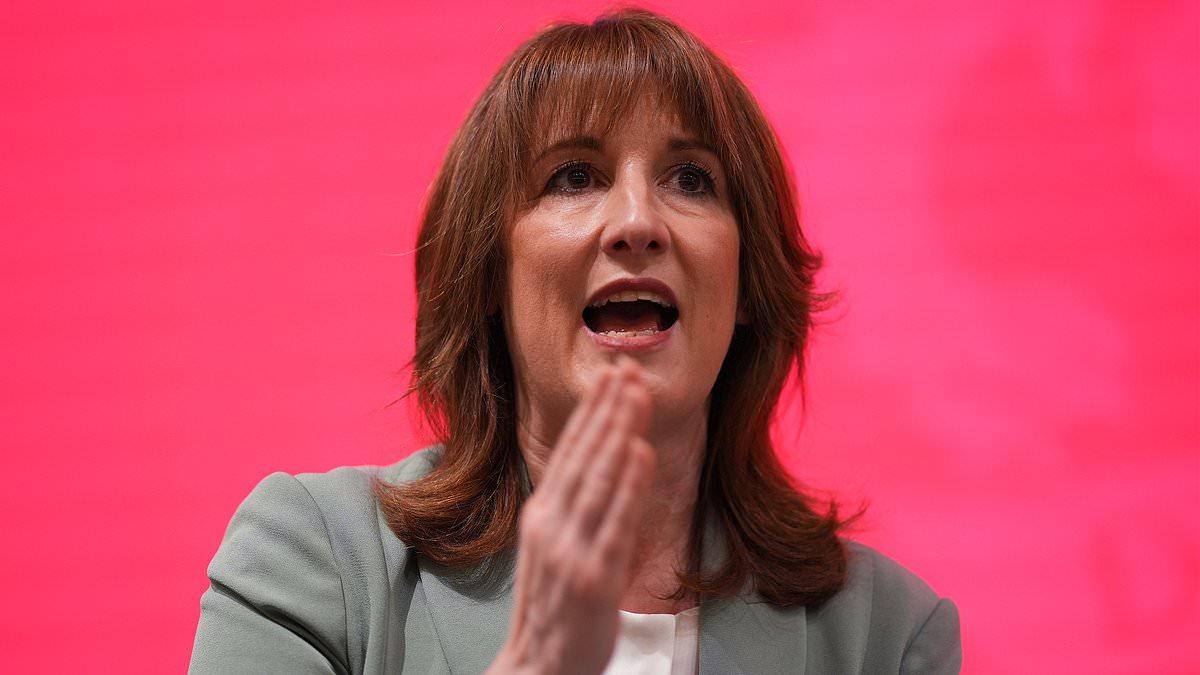
Policy: Chancellor Rachel Reeves has already hiked employer national insurance costs
‘Increased competition, cost of living, taxation, and wage inflation are all key contributing factors. Global political uncertainty also often has a knock-on effect on businesses around the world, and the UK is no exception.
‘Disrupted trade and supply chains, rising operating costs, and poor business confidence are likely to add further strain for businesses.’
Many employers are feeling the pressure amid rising operating costs, wage inflation, and policy changes such as higher employer national insurance contributions.
How the Iran war will affect jobs
The picture for 2026 UK redundancies is looking far from rosy to date, particularly amid rising uncertainty prompted by the war in Iran.
Rob Long, chief of staff at CV-Library, told This is Money: ‘The redundancy rate has been increasing since 2022, and we’ve seen a decline in the number of employees on company payrolls over the last two years. But there were signs of positivity in the labour market over the last two months with the number of vacancies advertised higher than last year.’
Redundancies are hitting businesses of all sizes, with major brands announcing a slew of job cuts.
This week, Bentley unveiled plans to cut 275 jobs in the UK – around 6 per cent of its workforce – as the carmaker said it faced a ‘challenging global market environment’.
Meanwhile, banking group Close Brothers is cutting about 600 jobs in the UK and Ireland over the next 18 months.
The Iran war could prompt another round of redundancies for businesses already vulnerable to rising costs.
Martin Rayner, a director at Compton Financial Services, told Newspage: ‘UK businesses are facing something of a perfect storm, with higher National Insurance, rising minimum wages pushing up pay across the board, new employment costs and still-elevated borrowing and overheads all feeding through at once.’
He added: ‘There had been some hope that falling interest rates would ease that pressure, but geopolitical tensions such as the Iran situation could delay rate cuts and keep financing costs higher for longer.
‘Continued cost pressures are likely to drive more restructuring, particularly in sectors already operating on tight margins, which will lead to job losses. The hospitality sector is likely to be one of the most affected.’
Kate Underwood, founder of Kate Underwood HR and Training, added: ‘The Iran war will trigger redundancies because businesses can’t absorb another shock.
‘Supply chains break, energy costs spike, revenue drops. Manufacturing, logistics, construction, hospitality get hit first.’
DIY INVESTING PLATFORMS
AJ Bell
AJ Bell
Easy investing and ready-made portfolios
Hargreaves Lansdown
Hargreaves Lansdown
Free fund dealing and investment ideas
interactive investor

interactive investor
Flat-fee investing from £4.99 per month
Freetrade

Freetrade
Investing Isa now free on basic plan
Trading 212

Trading 212
Free share dealing and no account fee
Affiliate links: If you take out a product This is Money may earn a commission. These deals are chosen by our editorial team, as we think they are worth highlighting. This does not affect our editorial independence.
Compare the best investing account for you


