
An incident involving an attempted breach at a nuclear missile base in Scotland has led to the arrest of an Iranian man and a Romanian woman, according to a statement from Police Scotland on Saturday.
The authorities reported that the incident occurred around 5 p.m. on Thursday when an alert was raised about two individuals attempting to gain access to HM Naval Base Clyde.
The suspects, identified as a 34-year-old Iranian man and a 31-year-old Romanian woman, have been charged in connection with the incident. They are scheduled to appear in Dumbarton Sheriff Court on Monday, March 23, as investigations continue, Police Scotland confirmed. The agency also mentioned that enquiries are ongoing.
Efforts to obtain further details from Police Scotland by Fox News Digital are underway.
According to the Times, as reported by the Telegraph, the duo was denied entry to the base due to not having the necessary passes. They were subsequently arrested nearby under suspicions of “acting suspiciously in the vicinity.”
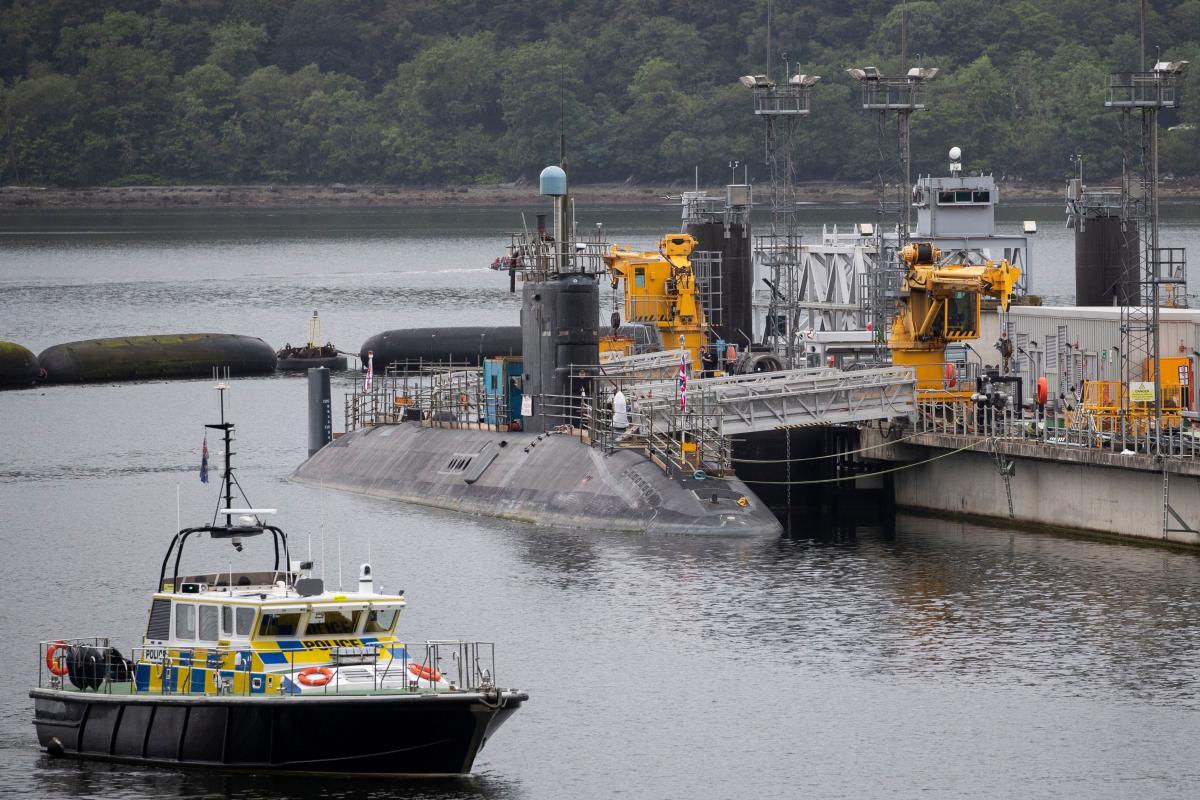
HM Naval Base Clyde, more commonly referred to as Faslane, serves as the principal location for the United Kingdom’s missile fleet.

The Royal Navy says the base is home “to the core of the Submarine Service, including the nation’s nuclear deterrent, and the new generation of hunter-killer submarines.”
Follow The Post’s coverage of the United States’ airstrikes on Iran:
The U.K. Parliament says the Royal Navy currently operates a fleet of nine submarines, with the entire fleet based at HM Naval Base Clyde.

“Five of those are conventionally-armed nuclear-powered attack submarines of the Astute class. A further four are ballistic missiles submarines (SSBN) of the Vanguard class that comprise the UK’s submarine-based nuclear deterrent,” it added.
A Royal Navy spokesperson said in a statement to Fox News Digital on Friday, “Police Scotland have arrested two people who unsuccessfully attempted to enter HM Naval Base Clyde on Thursday 19 March. As the matter is subject to an ongoing investigation, we will not comment further.”