
Medical professionals are sounding the alarm about the potential dangers of taking medications without eating first.
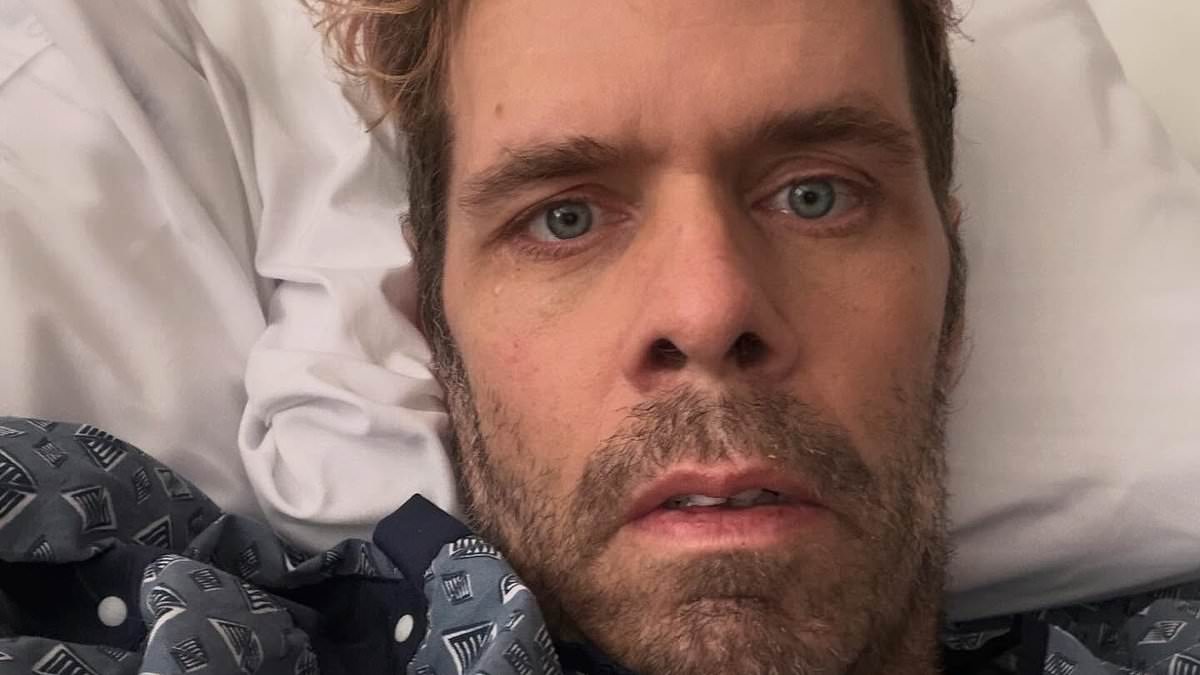
Recently, Perez Hilton, the well-known gossip blogger, shared that he had been hospitalized for 21 days due to what he termed his own ‘foolishness.’
At 47, Hilton took to social media to explain that after contracting the flu, he was prescribed an unspecified medication. He admitted to taking it for a week without accompanying it with food.
Hilton believes this practice led to him developing an ulcer, a painful lesion in his stomach lining.
The pain became so severe that he was unable to walk and needed emergency medical attention.
According to Hilton, the ulcer eventually perforated, meaning it tore through his stomach wall, allowing harmful bacteria and toxins to enter his bloodstream.
Hilton said the perforation caused an infection that led to sepsis, the body’s overreaction to an infection that causes the immune system to mistakenly attack healthy organs and tissues.
‘My stupidity landed me in the hospital for 21 days… It was the worst and best thing that’s ever happened to me,’ Hilton said.
‘Because I have been taking all of this medication without food for a week, I developed an ulcer then a perforation and then sepsis. People die of sepsis.’

Perez Hilton said earlier this week that taking medication without food led him to develop an ulcer, which later turned into sepsis. He is pictured in the hospital
Sepsis, which kills 300,000 Americans every year, or one every 90 seconds, can cause multi-organ failure and long-term complications such as amputations.
Doctors speaking with the Daily Mail, who did not comment on Hilton’s specific situation, explained that taking medications with a meal slows gastric emptying, keeping the medicine in the stomach longer so it is more effective.
Eating also stimulates the production of stomach acid and bile, which increases the body’s ability to absorb the drugs and prevent irritation leading to ulcers.
‘Taking your prescription medicine after you eat will help protect your stomach lining and make it easier for your body to tolerate the medication.
‘The food in your system serves as an additional barrier against gastrointestinal irritation from the medication,’ Dr Blen Tesfu, internal medicine physician and medical advisor at UK-based healthcare marketplace Welzo, told the Daily Mail.
But with continued use of a medication, especially on an empty stomach, Tesfu said ‘the stomach will be exposed repeatedly to these types of irritations, which could develop into severe complications such as gastritis or ulcers.
‘Additionally, certain medications stimulate stomach acid production in addition to weakening the natural barrier of protection for the stomach. When a patient is exposed to both, they have an increased risk of developing internal bleeding or long-term problems with their digestive system.’

Doctors speaking with the Daily Mail warned particularly against taking NSAIDs without food (stock image)
He also noted that food ‘may affect how quickly a medication enters our bloodstream.’
‘Sometimes, this may slow the process of absorption slightly. This can help lower the irritation level that may occur from the medicine. The food we eat can also increase the effectiveness of a particular medication by increasing its bioavailability,’ he added.
‘It is for these reasons that each person should follow the specific directions given with their prescribed medication.’
Without food to act as a cushion, however, some medications can irritate stomach lining, leading to severe pain, nausea and inflammation.
A major risk comes with over-the-counter nonsteroidal anti-inflammatory drugs (NSAIDs) such as ibuprofen and aspirin, commonly taken for aches, pains and fevers from illnesses like the flu.
‘NSAIDs and aspirin pose a significant risk for gastrointestinal complications when taken on an empty stomach or when taken for prolonged periods, even with food,’ Dr David Shapiro, associate professor of surgery at the University of Connecticut, told the Daily Mail.
He explained that ulcers can perforate through two mechanisms. In one, the lining of the stomach, called the mucosa, can become irritated. This decreases the production of prostaglandin, which protects gastric lining by increasing blood flow to that lining and healing the stomach.

Hilton is seen in 2022. He spent 21 days in the hospital due to sepsis and is now recovering at home

Hilton, seen above in his recent YouTube video, noted his mistake was ‘stupid’ and could have been prevented
When these natural protective factors are blocked, the stomach becomes vulnerable to acid, bile salts and pepsin, an enzyme that helps digest proteins, ‘each creating an environment that results in ulcer formation,’ Shapiro noted.
‘This is not to say that NSAIDs are inherently dangerous,’ he added. ‘When taken properly, they can each help prevent high fevers, treat inflammation in injuries, and help decrease discomfort, but most are recommended to take for short periods and with food.’
Estimates vary, but studies suggest anywhere from two to 14 percent of about 4 million US ulcer patients per year suffer perforations.
‘Perforated peptic ulcer represents a life-threatening situation that can result in sepsis,’ Shapiro warned, pointing toward an estimated mortality of 30 percent and long-term complications such as amputations in half of patients.
‘Food affects medication absorption in a variety of ways, and it depends on the patient, the medication independently and can also be a medication-specific concern for individual patients, so it’s important to draw one conclusion: listen to the recommendations from your doctor and pharmacist,’ Shapiro said.