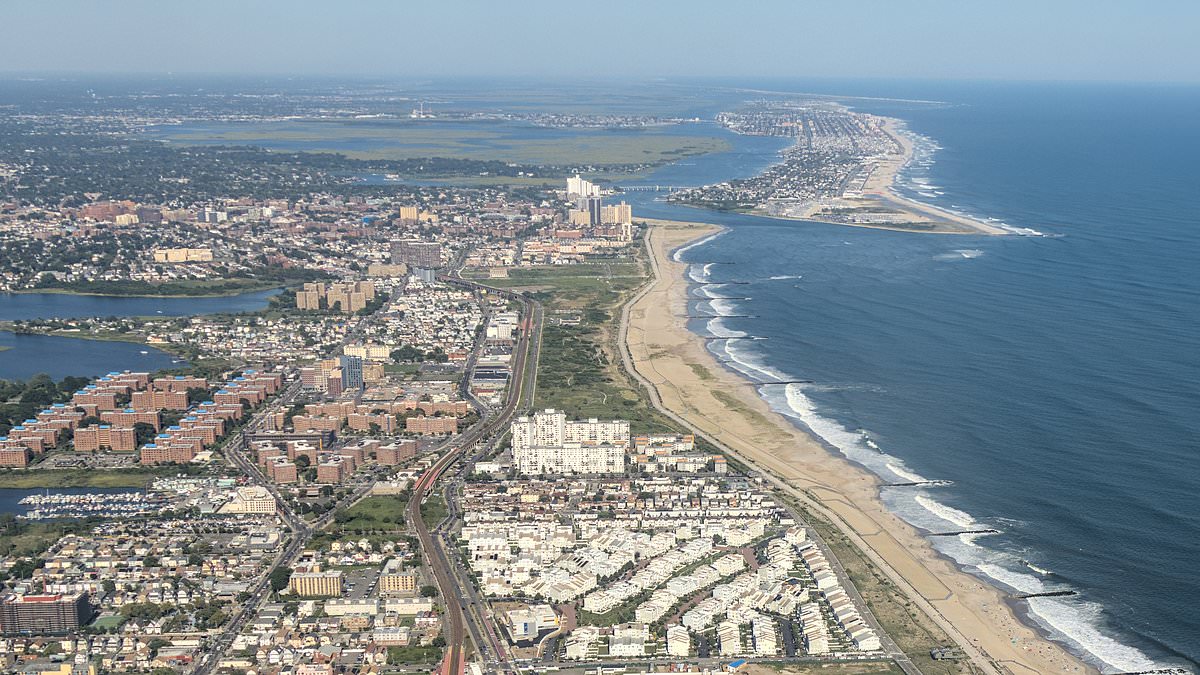

In the wake of a significant maritime incident, authorities have issued a stern advisory for visitors at a New York beach to maintain a distance of 300 feet from the shoreline. This precautionary measure follows the unexpected arrival of a massive 40-foot whale carcass on Rockaway Beach in Queens earlier this week.
Concern has mounted over the potential hazards posed by the decomposing whale, particularly the risk of an explosion. As the body decays, natural processes lead to the production of gases like methane, which can accumulate within the whale’s body, causing it to swell and possibly burst under pressure.
Experts note that the timeframe for such an explosion varies, ranging from several days to a couple of weeks post-mortem, influenced by various environmental conditions. The situation underscores the importance of safety protocols in managing such incidents.
The Atlantic Marine Conservation Society (AMSEAS), in collaboration with the city’s parks department, is spearheading efforts to address the situation. They have emphasized the need for public cooperation by urging individuals to contact trained responders if they encounter marine animals in distress. The Society advises maintaining a safe distance—150 feet from dolphins and porpoises, and 300 feet from whales—to ensure both human and animal safety.
A dead whale on a beach can explode anywhere from a few days to a couple of weeks after death, depending on environmental factors.
‘The best way to assist these animals, and keep them and yourself safe, is by calling trained responders and maintaining a 150-foot distance from dolphins and porpoises and a 300-foot distance from whales,’ said the Atlantic Marine Conservation Society (AMSEAS), which is coordinating the removal of the carcass with the city’s parks department.
‘It is important to remember that whales in the surf are still dangerous, even when deceased,’ AMSEAS stated.
The organization is set to conduct a necropsy examination today in hopes of uncovering the cause of death.

The alert comes amid fears the carcass could explode, as gases produced during decomposition continue building inside the animal’s body. Picturd is a whale expoloding off the California coast in 2023

Officials are urging people at a New York beach to stay 300 feet away from the shoreline on Friday
AMSEAS said on Thursday it received reports from an aerial survey team about a whale carcass floating offshore approximately 15 miles south of Long Island.
The organization also confirmed the mammal was the same one observed floating off the shore on Wednesday and identified it as a Sei whale.
Sei whales remain endangered after their numbers were heavily depleted by commercial whaling in the 19th and 20th centuries.
The incident comes amid growing concern among scientists about a rise in whale strandings and deaths along the Atlantic coast in recent years.
While whales washing ashore is not unusual, strandings have been tracked more closely as environmental conditions in the ocean continue to change.
Marine biologists say large whale strandings have remained elevated along the East Coast for several years.
Federal officials have previously declared ‘Unusual Mortality Events’ when clusters of deaths occur, particularly during winter months.
Experts say causes can range from natural factors to human-related threats such as ship strikes or fishing gear entanglement, though it is often difficult to identify a single cause for any individual death.

The warning comes after a massive 40-foot dead whale washed up on Rockaway Beach in Queens this week

AMSEAS said on Thursday it received reports from an aerial survey team about a whale carcass floating offshore approximately 15 miles south of Long Island
As investigators examine the latest carcass, responders will look for signs of injury or environmental stress that could help explain the whale’s death and provide insight into broader patterns affecting marine mammals along the East Coast.
While it is unknown how long the carcass has until it explodes, Californian boaters in 2023 captured the event in real-time.
A group of whale watchers spotted what appeared to be a lifeless humpback in the Pacific Ocean.
The boat pulled alongside the carcass, spewing water from its mouth and gas trapped in the abdomen vacated, triggering an eruption of its internal organs – including its spleen, small intestines and stomach.
The event allowed the dead whale to sink slowly to its final resting place on the deep-sea floor. The clip was first posted on the Ozzy Mans Video Licensing account, which credits Shayne for capturing the moment.
The humpback in the video began to sink after the gas was released, but its body is too large for it to likely land on the seafloor intact.
National Geographic reports that entire communities will grow around the carcass.
Swimming scavengers will first appear, including sharks, which will tear off the tissue and break up the body.
Then, creatures that feast on bones will arrive to finish the job – but the entire body will not disappear for at least another 30 years.