
IN BRIEF
- Last week, Israel said it would seize southern Lebanon as far as Litani River.
- Israeli attacks have reportedly killed more than 1,100 people in Lebanon, including children and medics.
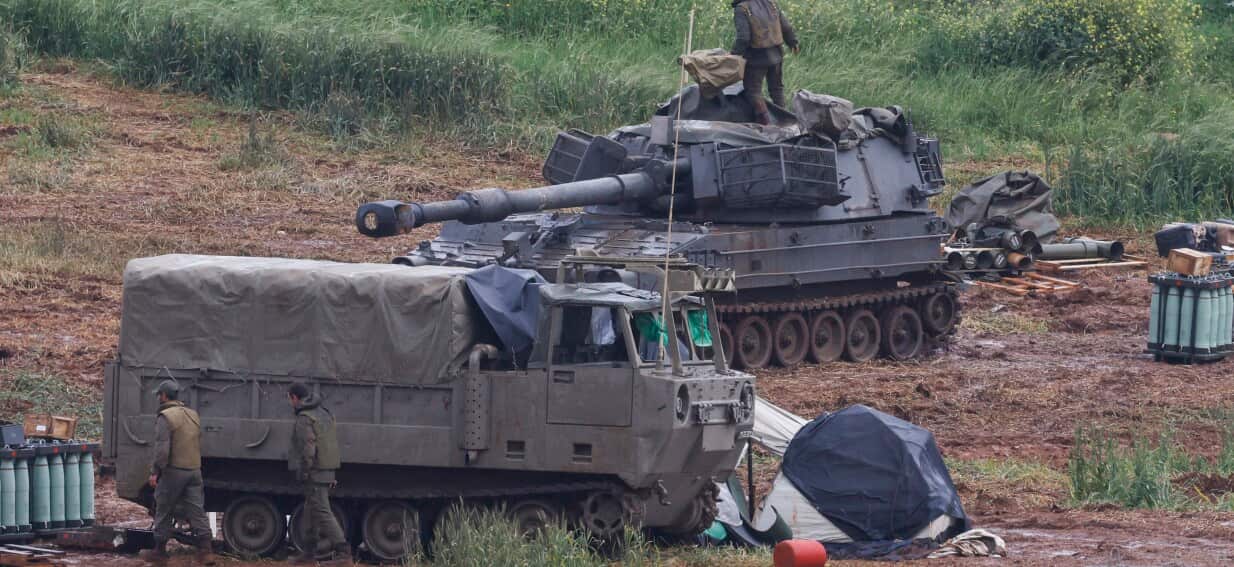
On Monday, Israeli Prime Minister Benjamin Netanyahu announced that he has directed the military to intensify its incursions into southern Lebanon.
Recently, Israel declared its intention to establish a “buffer zone” reaching up to the Litani River. Netanyahu’s latest remarks leave it unclear whether he refers to this previously mentioned area or aims to capture additional territories.
In a video statement from Israeli Northern Command, Netanyahu stated, “I have now instructed to further expand the existing security zone in order to finally thwart the threat of invasion and to push the anti-tank missile fire away from our border.”
His office did not provide additional information on the matter, and it has yet to be deliberated by the security cabinet.
Just last week, Defence Minister Israel Katz mentioned that Israeli forces would “control the remaining bridges and the security zone up to the Litani,” a river flowing into the Mediterranean Sea approximately 30 kilometers north of Israel’s border.
The escalation follows rocket attacks on Israel by Iran-backed Hezbollah, which began after the United States and Israel targeted Iran on February 28.
More than 400 fighters from Hezbollah have been killed since the Lebanese armed group launched the opening salvos of a new war with Israel on 2 March, sources familiar with Hezbollah’s count told Reuters news agency.
Israeli strikes and ground operations have killed more than 1,100 people in Lebanon, including children, women and medical personnel, according to the Lebanese health ministry.
The Israeli military has said four of its soldiers have been killed in fighting in southern Lebanon.
Jessica Genauer, associate professor of international relations at the University of NSW, said Israel’s objective to create a so-called “security buffer” in Lebanon dates back decades, “punctuated with moments of outright war” between the two countries.
Israeli troops occupied part of southern Lebanon for 18 years, from 1982 until 2000.
“The aim there from the Israeli side was to try to permanently occupy a security buffer zone, where they could guarantee that they would not see offensive action take place towards Israel from the southern part of Lebanon,” Genauer told SBS News.
“What happened in practice was Hezbollah, which formed in the early 80s with the backing of Iran, primarily to resist the existence of Israel in the region. From the very formation of Hezbollah, there has been ongoing conflict between Hezbollah and Israel, and that drags in the Lebanese state and the people of Lebanon as well.”
Netanyahu said the decision aimed to strengthen Israel’s security position along its northern frontier.
“We eliminated thousands of Hezbollah terrorists, and above all, we eliminated the immense threat of 150,000 missiles and rockets that were intended to destroy the cities of Israel,” he said.
“However, Hezbollah still has a residual capability to launch rockets at us … we are determined to fundamentally change the situation in the north.”
Israel and Hezbollah signed a ceasefire agreement in November 2024, which was brokered by the previous US government, though this served to lessen the strikes from both sides rather than end them completely.
As part of the agreement, the Lebanese army was going to regain control of its territory, and Hezbollah’s infrastructure in southern Lebanon would not be allowed to be rebuilt, while Israel would gradually withdraw its remaining forces from the region.
For the latest from SBS News, download our app and subscribe to our newsletter.


