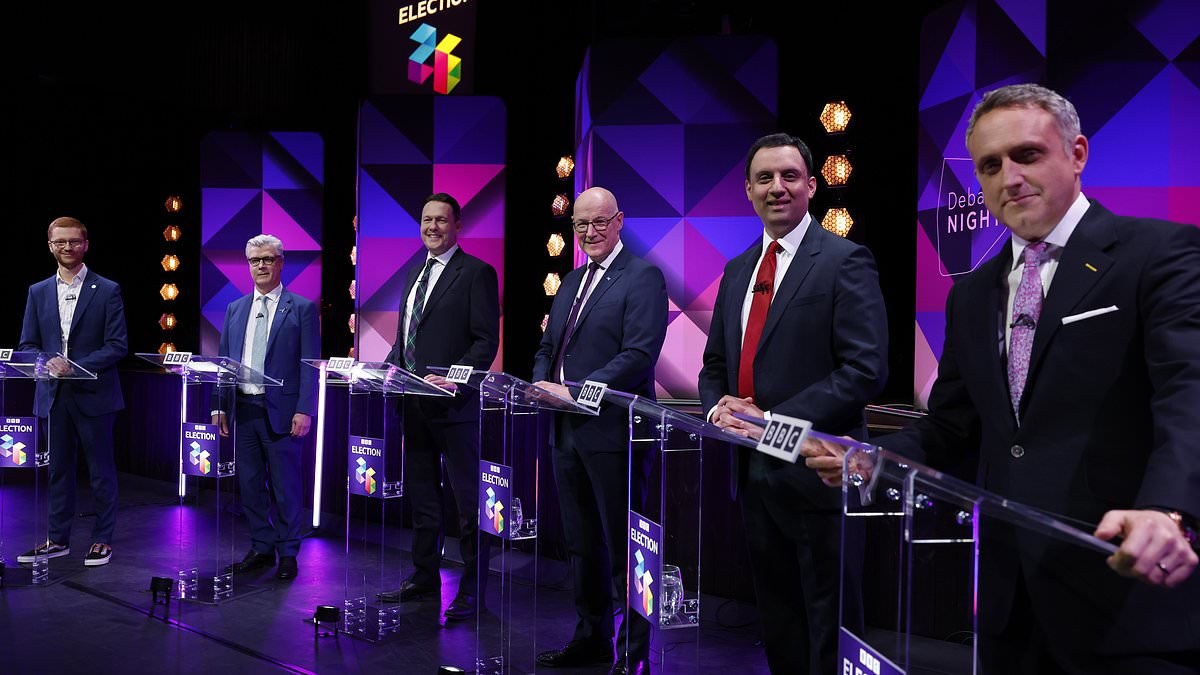

The first debate of the Holyrood election campaign unfolded in a room in Paisley, where the six party leaders gathered with an audience and TV cameras. One might have expected a more dynamic setting, perhaps even lions on a diet, to match the gravity of the event.
“With just 25 days to go,” announced the BBC’s Stephen Jardine, “it’s your chance to decide who should run Scotland.” The options, as presented, were the candidates assembled around him, each bringing their unique flair to the debate.
John Swinney stood out as sharp and reliable as a No. 2 pencil, though perhaps not much more thrilling. Meanwhile, Anas Sarwar seemed to have perfected the art of interruption, punctuating his points with frequent pauses.
Russell Findlay added his own edge to the proceedings, managing to appear intimidating even while promising tax cuts. His presence was a reminder that politics can be both menacing and appealing.
Further along the line, where Willie Rennie once stood, was Alex Deserves-Better. He seemed to have acquired his surname by consistently lamenting, “We deserve better than this,” after his opponents spoke—a sentiment many viewers may share.
Completing the line-up was Malcolm Offord, a surprisingly subdued populist. His soft-spoken demeanor and downward gaze were reminiscent of someone in a hostage video, lacking the energy one might expect from a campaign trail veteran.
Finally, there was Ross Greer, the only one who hadn’t bothered to wear a tie.
In the studio audience, who were presumably being punished for something, a very nice lady confessed she might not vote and asked the party leaders to convince her otherwise.

Scotland’s party leaders went head to head in the first live TV debate ahead of next month’s Holyrood election
Swinney told her the SNP would ‘always be on Scotland’s side’, which makes you wonder what they’d be like if we crossed them. The snappiest answer came from Anas Sarwar: ‘The SNP have had their chance. They’ve had 20 years. Give me five.’
Jardine described Offord as ‘the new kid on the black’, and if you thought that was an unfortunate slip of the tongue, it was nothing on the Reform Scotland leader’s admission that about one-third of people he’d encountered on the doorstep were planning on not voting. Maybe it’s the way he tells them.
Audience sympathies shifted as the programme progressed, with Swinney racking up a few applauses on Labour’s broken energy promises and Greer getting a hearty clap for pledging to nationalise the whole sector.
Sarwar’s constant interruptions finally paid off when, midway through another Swinney stream of self-exculpation, he barked at the first minister to ‘take some responsibility’, which found favour with the crowd. The Labour leader was the golden boy once again when he got tore into the SNP over the ferries fiasco.
There was a good bit of stall setting-out, since this was the first time most voters will have been encountering these fellows.
Findlay was firmly a man of the right, even repeating the Iron Lady’s dictum about there being ‘no such thing as public money, only taxpayers’ money’. Greer lurched in the opposite direction, denouncing Thatcherite policy in the energy markets.
Truth be told, the once nimble-footed Swinney looked tired compared to the Green leader, who seized on Wes Streeting’s dismissal of calls for another independence referendum to accuse the Westminster government of ‘democracy denial’.
A bold accusation from someone whose entire platform is ramming fringe legislation through parliament against overwhelming voter opposition, but he was definitely the more energetic of the nationalist axis.
Independence dominated the second half of the programme to an extent that should disabuse anyone of the notion that the question is dead and buried.
For or against, the audience kept chiming in with their views on the constitutional debate. Sarwar made a decent fist of arguing that this election was about ‘the here and now’ and Findlay revived the Ruth Davidson era talking point about ‘getting on with the day job’.
For or against, the audience kept chiming in with their views on the constitutional debate. Sarwar made a decent fist of arguing that this election was about ‘the here and now’ and Findlay revived the Ruth Davidson era talking point about ‘getting on with the day job’.
It was a very shouty affair but Jardine got them all back on friendly terms by making the final question about how to celebrate a Scotland victory in the world cup. I believe that’s going to happen more than I believed any of the chancers on that stage last night.