
With markets reeling from a fuel crisis, the upcoming Federal Budget presents a crucial challenge for the Albanese administration. A prominent economist has cautioned that poor policy decisions might escalate the cost-of-living burdens faced by Australians.
Shane Oliver, the chief economist at AMP, emphasized that the Budget serves as a unique chance to recalibrate the economy. He highlighted five essential areas that the government must address to enhance living conditions.
Oliver expressed concern that the oil supply disruption, stemming from conflicts involving Iran, could tempt the government into adopting short-term popular measures instead of pursuing substantial reforms.
“It seems probable that some form of relief for the cost-of-living impacts of the conflict will be introduced,” he remarked.
“However, any such relief or economic stimulus needs to be carefully measured and precisely directed towards those in genuine need, such as low-income earners and businesses facing high energy costs that could lead to their closure,” he added.
“During the pandemic, while stimulus measures were timely, they were not sufficiently targeted and arguably excessive, contributing to the inflationary issues observed as the economy rebounded,” Oliver noted.
Cut government spending by around $100billion

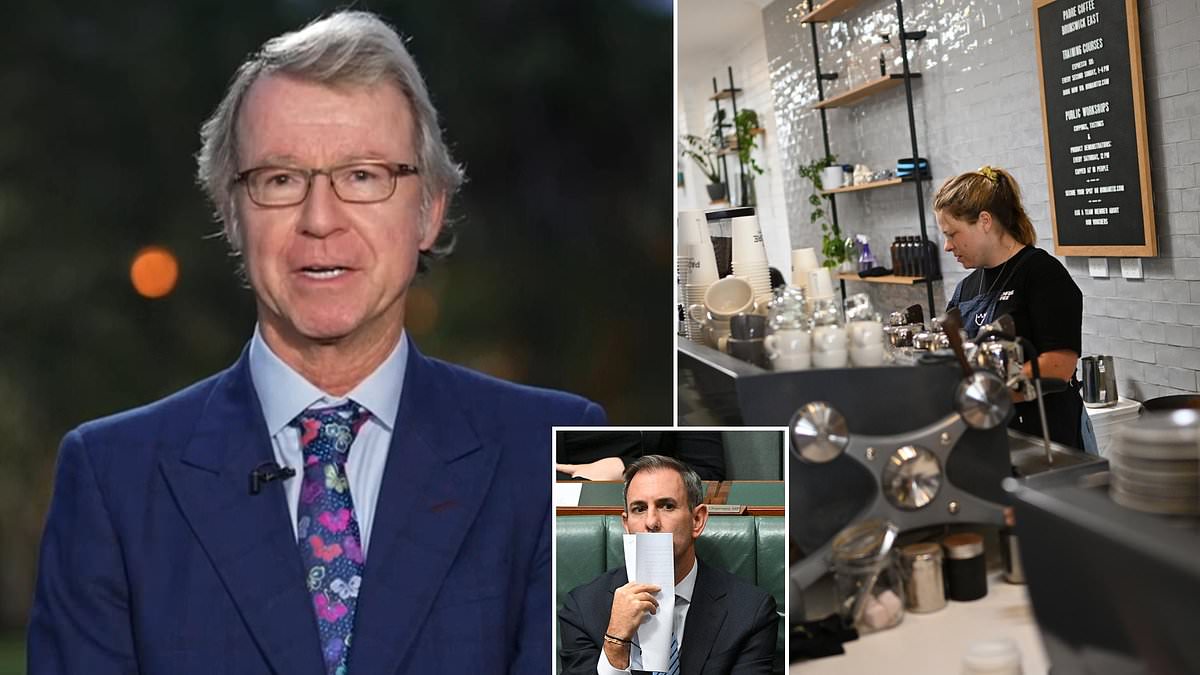
Treasurer Jim Chalmers (pictured) will hand down the federal Budget on May 12

AMP chief economist Shane Oliver provided a list of five things the Albanese government should address in this year’s budget
The government has already spent nearly $7billion on electricity rebates for all households and small businesses, while the home battery subsidy scheme has suffered a $5billion cost blowout.
Oliver said far deeper restraint was needed, arguing federal spending had surged to record highs and would need to be cut by around $102billion.
‘The pandemic and its aftermath have seen public spending, federal, state and local, surge from a 40-year average of around 22.5 per cent of GDP to 28 per cent,’ he said.
He said the Budget should focus on freeing up economic capacity to help ease inflation.
‘This would require cuts to the NDIS, more aggressive cuts to the public service and more means testing of welfare,’ he said. The government this week signalled it would reform the NDIS – kicking at least 160,000 people off the program by 2030.
‘This would also require the Government to save most of any new revenue windfall flowing from higher energy prices due to the War and higher than expected iron ore and gold prices.’
Those concerns are shared by the Business Council of Australia, which has criticised what it sees as poorly targeted spending.
In a pre‑budget submission to Treasurer Jim Chalmers, the business group warned billions were flowing to health, aged care, electricity rebates and home batteries for programs that are largely not means-tested, while welfare payments were falling behind.

Business Council of Australia chief Bran Black (pictured) said welfare churn is increasing
‘The government is spending more on subsidising services for the wealthy and spending is moving away from being a genuine social safety net,’ BCA chief executive Bran Black told the AFR.
‘Welfare churn is increasing – the government taxes middle and higher-income households, then provides funding back to the same households.’
Serious tax reform and not just tax hikes
Oliver said the government needed to pursue genuine tax reform rather than relying on ad‑hoc revenue grabs.
Labor has flagged possible changes to property capital gains tax concessions and is reported to be considering a minimum tax on trusts, an export levy on gas producers and extending road‑user charges to electric vehicles.
‘Each of these have merit, the 50 per cent capital gains tax discount is too generous, some make excessive use of negative gearing, trusts allow an unfair tax advantage, gas projects arguably receive an unfair advantage relative to petroleum projects and EVs have an unfair advantage as they don’t pay fuel excise,’ he said.
‘But if this is all the Budget has on tax, it will be a tax hike and not real tax reform.’
Oliver said Australia relied too heavily on income tax, which accounts for 62 per cent of revenue compared to just 35 per cent in other OECD countries.

Prime Minister Anthony Albanese (pictured) has flagged possible changes to property tax concessions as well as extending road‑user charges to electric vehicles
He argued shifting more of the tax burden to the GST was the fairest way to improve intergenerational equity.
‘This would take political courage, but is the direction we should be moving in,’ he said.
Oliver said what was needed was much lower personal tax rates with higher thresholds, a higher GST, and replacing stamp duty with a broad‑based land tax.
Significant productivity enhancing reforms
Oliver added productivity, or output per hour worked, had stalled over the past decade and lifting it was essential to improving living standards.
Mr Black said excessive regulation was a major reason productivity was being held back.
He said in Victoria, a café owner needs 37 separate licences and approvals before they can pour the first coffee, while a tradie on the Gold Coast needs to pay hundreds of dollars in permits just to fix a tap over the NSW border.
‘That kind of red tape adds cost, slows things down and makes it harder to keep goods moving and shelves stocked,’ he said.

In Victoria a café owner needs 37 separate licences and approvals before they can pour the first coffee according to the Business Council of Australia
‘With global volatility already pushing up prices, cutting that duplication would help bring down costs for Australian households and businesses.
‘This cost is ultimately borne by businesses, workers and Australian families at the checkout.’
Reform the Charter of Budget Honesty
Finally, Oliver warned the Charter of Budget Honesty needed reform to restore discipline to federal finances.
Introduced under the Howard government in 1998, the Charter was designed to promote transparency in the budget process, but Oliver said its impact had been weakened by the growing use of so‑called ‘off‑budget’ spending.
He said labelling spending as ‘investment’ obscured the true state of the budget and weakened accountability, even though it still added to public debt.
Oliver said projects justified on the grounds of boosting domestic manufacturing or ‘supply chain resilience’ should be subject to independent cost‑benefit analysis by bodies such as the Productivity Commission.
Without that scrutiny, he warned, taxpayers risk footing the bill for costly, politically attractive projects that deliver little economic return.


