

HAVANA – As the afternoon sun cast its warm glow over Old Havana, a group of senior citizens quietly entered the Church of the Holy Spirit. Inside, they gathered for a simple yet hearty meal consisting of ground meat, rice, red beans, and crackers with a dab of mayonnaise, all complemented by a robust cup of Cuban coffee.
Before indulging in their meal, the group recited a blessing in unison, “May the Lord bless from his height, the meal our belly will take with delight,” a cherished tradition observed thrice weekly in the church’s dining area.
Among the attendees was Carmen Casado, an 84-year-old former chemical engineer, who regularly joins the group. Her monthly pension of 2,000 Cuban pesos, equivalent to a mere $4 on the informal market, barely covers her needs. Living alone without any children or overseas remittances, she relies heavily on these church meals.
Casado explains that these meals are crucial in supplementing the limited rations she receives from state-run stores, known as bodegas, which provide essentials like bread, rice, and beans at no cost.
“For retirees like us with minimal pensions, this is a lifeline,” Casado says with urgency. “What we receive from the bodegas simply isn’t sufficient.”
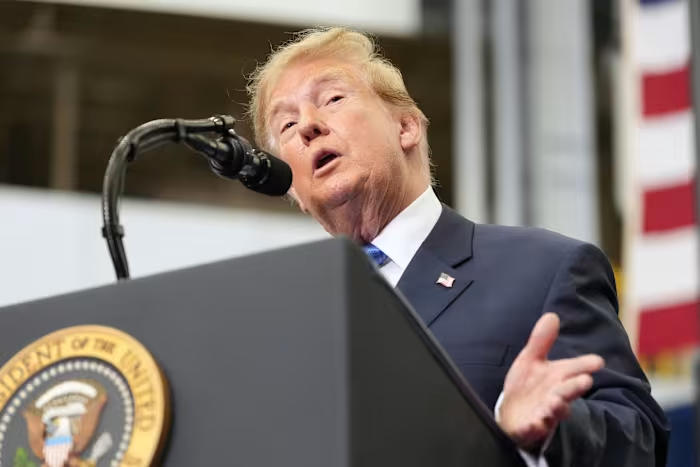
The elderly population is particularly vulnerable to the severe economic difficulties plaguing the island, a situation that has deteriorated notably since the start of the year following a stringent oil embargo by U.S. President Donald Trump.
Most are former government employees — teachers, doctors, nurses, technicians, custodians, lawyers — whose pensions are usually less than $10 a month and who must face cuts to the basket of goods that have been subsidized for decades, as well as the loneliness brought on by the growing emigration of young people.
They were young when Fidel Castro entered Havana and lived through all the major events on the island, from the Bay of Pigs invasion to U.S. President Barack Obama shaking the hand of Raúl Castro in 2016.
Now, their revolutionary spirit is being tested in the latest crisis, which is forcing them to sell cigarettes on the streets, line up for a loaf of bread and seek free meals offered by churches and some state institutions.
An aging country
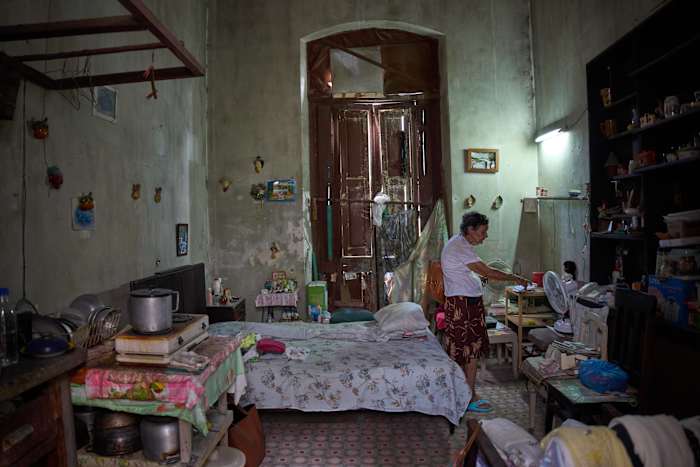
After lunch, Casado walked the four blocks home to tend to household chores she still performs without assistance. Her home is on the second and top floors of a 19th-century building that, like many in the capital, is falling apart.
Born in 1942, Casado was a teenager when the revolution led by Castro triumphed. Her life has spanned the island’s most defining moments, from the 1962 Missile Crisis to the so-called Special Period following the collapse of the Soviet Union. She also lived through the 1970s and 80s, when the island’s economy was heavily subsidized by the Soviets and when the Cuban system seemed to promise a brighter future.
“This is our life; we were born and raised here,” she said.
Even before the economic crisis worsened and before the wave of emigration over the past five years, Cuba was already one of the countries with the oldest populations in Latin America, a trend nudged further by high life expectancy and low birth rates.
According to Cuba’s National Bureau of Statistics, by the end of 2024, almost 26% of the population was aged 60 or older. That is almost twice the regional average of 14.2% in the same year, according to the Economic Commission for Latin America and the Caribbean, CEPAL.
The last five years have seen a population decline in Cuba of nearly 1.5 million, primarily due to migration. The number of Cubans residing on the island, which stood at 11.1 million, has fallen to just 9.7 million.
The impact of the crisis and the exodus of youth is visible at a glance. Elderly people walk the streets alone —some rummaging through trash, others standing in long lines for the bread and rice provided by the ration book, the basic subsidized foods the state guarantees to every Cuban.
The plight of the elderly is so critical that the government recently authorized private entrepreneurs to operate elder care services and residential facilities, a move marking a significant departure from the island’s traditional model of total state control.
Casado insists that she is still privileged. She is mentally sharp and has no physical impairments — she doesn’t even use a cane — and manages entirely on her own. Her only medication is half a tablet for blood pressure, which, “so far,” remains available at the state-run pharmacies.
Despite the poverty and loneliness, she continues to have faith in the government and blames the country’s woes on the United States.
“We’re doing everything we can here to move the country forward,” she said. “But the thing is, we have a very powerful enemy, and he’s right there, right on our doorstep.”
___
Copyright 2026 The Associated Press. All rights reserved. This material may not be published, broadcast, rewritten or redistributed without permission.