
The tense standoff between the United States and other nations regarding the ongoing economic repercussions of the Iran conflict has dominated discussions at this week’s high-level IMF meetings.
Amid this backdrop, a new and alarming threat to the global economic, financial, and security landscape has quietly surfaced, gaining urgent attention.
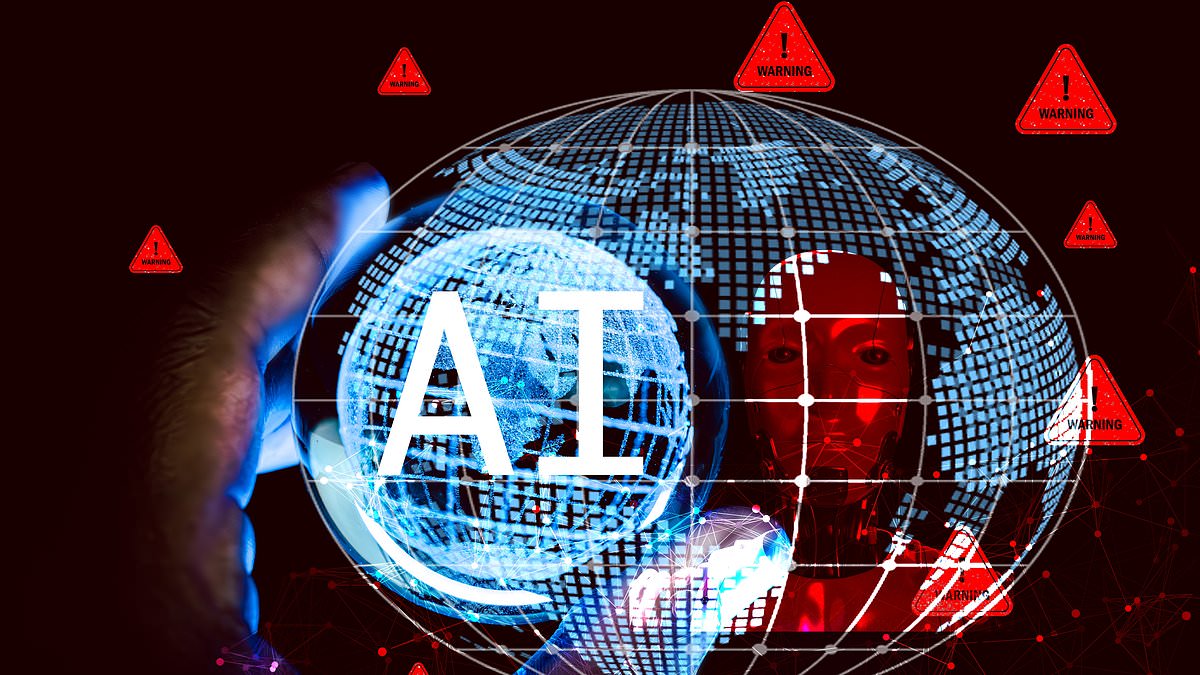
San Francisco-based company Anthropic has announced the creation of a powerful tool by its engineers, known as Claude Mythos, which is deemed too potent to be released to the public.
This revelation has put U.S. officials, central bankers, and finance ministers on high alert.
Anthropic describes Mythos as offering a ‘next generation’ capability for offensive cyber operations, capable of breaching previously secure software systems and uncovering hidden vulnerabilities.
Just as governments and businesses worldwide are starting to adapt to the rapidly evolving capabilities of artificial intelligence, this new technology emerges, posing serious threats to national security, official financial systems, and corporate stability.

On the attack: Anthropic may unsuspectingly have increased odds that Mythos falls into the hands of those able to penetrate robust cyber defences
Britain knows from the damaging cyber attacks on Marks & Spencer, the Co-op and Jaguar Land Rover in the last year the impact on financial performance.
Anthropic says Mythos found a flaw in code that had been tested five million times without detection.
It regards Mythos as so lethal that it is the first AI model ever to be restricted from users because of its destructive cybersecurity potential. In response to this capability, it chose a limited distribution of the tool to several tech firms and banks to pre-emptively test, identify and defend vulnerabilities at scale.
The consortium – named Project Glasswing – comprises Amazon, Apple, Google, Cisco, CrowdStrike, JPMorgan Chase, Microsoft and Nvidia.
There already is an ongoing legal dispute between Anthropic and the Pentagon over whether their existing access to military systems breaches ethical guidelines.
Despite this fracture, the US government is considering whether it should allow Claude Mythos access to critical systems.
The Bank of England, in common with other UK government agencies, finds itself under frequent attack from hackers.
It constantly upgrades its cyber defence capabilities and, so far, vital parts of its work, such as bank payments systems, have proved well protected.
Yet if Claude Mythos is as lethal as Anthropic purports, it could in wrong hands be truly devastating to Britain’s sophisticated financial markets.
London, after all, is the centre of foreign exchange derivative trades, with a daily turnover of $4.32 trillion alone.
The speed at which Anthropic engineers have come up with the latest tool rocked financial leaders. Regulators are being asked to grapple with an unknown technology which affects all financial institutions.
Among obvious worries is that Anthropic, by releasing Mythos to commercial players for testing, may unsuspectingly have increased odds that it falls into the hands of those able to penetrate robust cyber defences.
The tool emerged so speedily that there has been no opportunity to build measures to mitigate the onslaught.
Anthropic is also creating a fresh divide between the US and Europe and, for that matter, the rest of the world. It is giving US financial groups, such as JP Morgan, the ability to fix its systems. That might cause bad players to turn their attention elsewhere, such as the City of London.
That is a terrifying prospect.
DIY INVESTING PLATFORMS
AJ Bell

AJ Bell
Easy investing and ready-made portfolios
Hargreaves Lansdown
Hargreaves Lansdown
Free fund dealing and investment ideas
interactive investor

interactive investor
Flat-fee investing from £4.99 per month
Freetrade

Freetrade
Investing Isa now free on basic plan
Trading 212

Trading 212
Free share dealing and no account fee
Affiliate links: If you take out a product This is Money may earn a commission. These deals are chosen by our editorial team, as we think they are worth highlighting. This does not affect our editorial independence.
Compare the best investing account for you