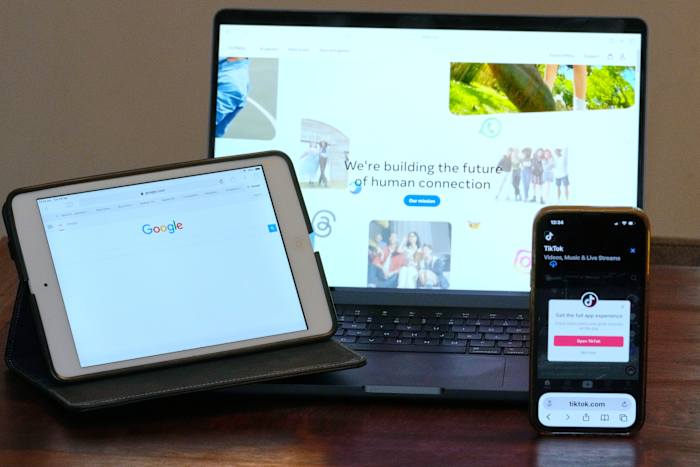


MELBOURNE – In a bold move to support the journalism industry, Australia is aiming to levy a tax on major digital corporations like Meta, Google, and TikTok. The proposed tax is part of an initiative to ensure these tech giants contribute financially to the work of news reporters.
On Tuesday, the Australian government unveiled draft legislation poised to be introduced in Parliament by July 2. The legislation seeks to create a financial incentive for social media companies to forge agreements with news organizations, thereby compensating them for journalism.
However, the proposal has not been without its critics. The digital platforms have responded, labeling it a “digital services tax” that misunderstands the rapidly changing landscape of the advertising industry. They argue that the measure would not result in a sustainable future for the news sector.
Prime Minister Anthony Albanese has been a vocal advocate for the initiative, stressing the importance of attributing a monetary value to journalists’ work. “It shouldn’t just be able to be taken by a large multinational corporation and used to generate profits for that organization with no compensation appropriate for the people who produce that creative content,” Albanese emphasized to reporters.
He further highlighted the necessity of investing in journalism, underscoring its critical role in maintaining a healthy democracy. Albanese’s comments reflect a growing global conversation about the balance of power and profit between digital platforms and traditional media outlets.
“We think that investment in journalism is critical to a healthy democracy,” he added.
It’s Australia’s second legislative attempt to make the platforms pay for the Australian news text and images that their users view.
Digital platforms had been pressured to strike deals with Australian news publishers to pay for journalism by legislation passed in 2021 that created the country’s News Media Bargaining Code.
The platforms chose to reach commercial deals with news creators rather than be forced into arbitration and have a judge set the price.
But they have since avoided renewing those deals by removing news from their services.
The proposed News Bargaining Incentive would charge major platforms that choose not to strike commercial deals with news publishers a 2.25% tax on their Australian revenue.
The platforms would be given offsets and their overall costs would be lowered if they agree to pay publishers for journalism, the government said.
The government expects the incentive would raise between 200 to 250 million Australian dollars ($144 million-$179 million) a year. That was about as much as the platforms paid news outlets when the News Media Bargaining Code was working at its peak.
The government would distribute that income among news organizations based on how many journalists each organization employed, Communication Minister Anika Wells said.
The tax would apply to Meta Platforms, which owns Facebook and Instagram, Google, which is owned by Alphabet Inc., and TikTok, which is majority-owned by U.S.-backed investors.
Opposing the proposed legislation, Meta said news organizations “voluntarily post content on our platforms because they receive value from doing so.”
“The idea that we take their news content is simply wrong. This proposed legislation, which would apply to platforms regardless of whether news content even appears on our services, is nothing more than a digital services tax,” Meta said in a statement.
“A government-mandated transfer of wealth from one industry to another, with no connection to the value exchanged, will not deliver a sustainable or innovative news sector. Instead, it will create a news industry dependent on a government-administered subsidy scheme,” Meta added.
Google said “we reject the need for this tax.”
“It ignores the fact that Google already has commercial agreements with the news industry, misunderstands how the ad market changed and mandates payments from some companies while arbitrarily excluding platforms like Microsoft, Snapchat and OpenAI — despite the major shift in how people consume news,” a Google statement said.
TikTok did not immediately respond to a request for comment.
All the targeted platforms are American. U.S. critics have argued that Australia’s News Media Bargaining Code had disproportionately cost American corporations.
Albanese was not concerned by potential pushback from the United States.
“We’re a sovereign nation and my government will make decisions based upon the Australian national interest,” Albanese said.
Copyright 2026 The Associated Press. All rights reserved. This material may not be published, broadcast, rewritten or redistributed without permission.