
The music world is mourning the loss of David Allan Coe, the controversial singer-songwriter who passed away on Wednesday at the age of 86.
According to a statement given to People, Coe’s representative announced that he died at approximately 5:08 p.m. The representative remembered him as a “Country Music treasure” who held a deep affection for his fans.
Renowned for being a “true outlaw,” Coe was celebrated as a great singer, songwriter, and performer. Despite his musical achievements, Coe often sparked controversy. His use of racial language in his lyrics and his public embrace of the Confederate flag made him a divisive figure in the industry.
Before his passing, Coe had been in intensive care, as reported by Page Six. His legacy includes iconic tracks such as “You Never Even Called Me by My Name” from 1975, “Longhaired Redneck” in 1976, “The Ride” in 1983, and “Mona Lisa Lost Her Smile” in 1984.
Over a career spanning nearly six decades, Coe released an impressive 42 studio albums, leaving an indelible mark on the country music landscape.
The artist went on to put out a total of 42 studio albums over nearly 60 years as a performer.

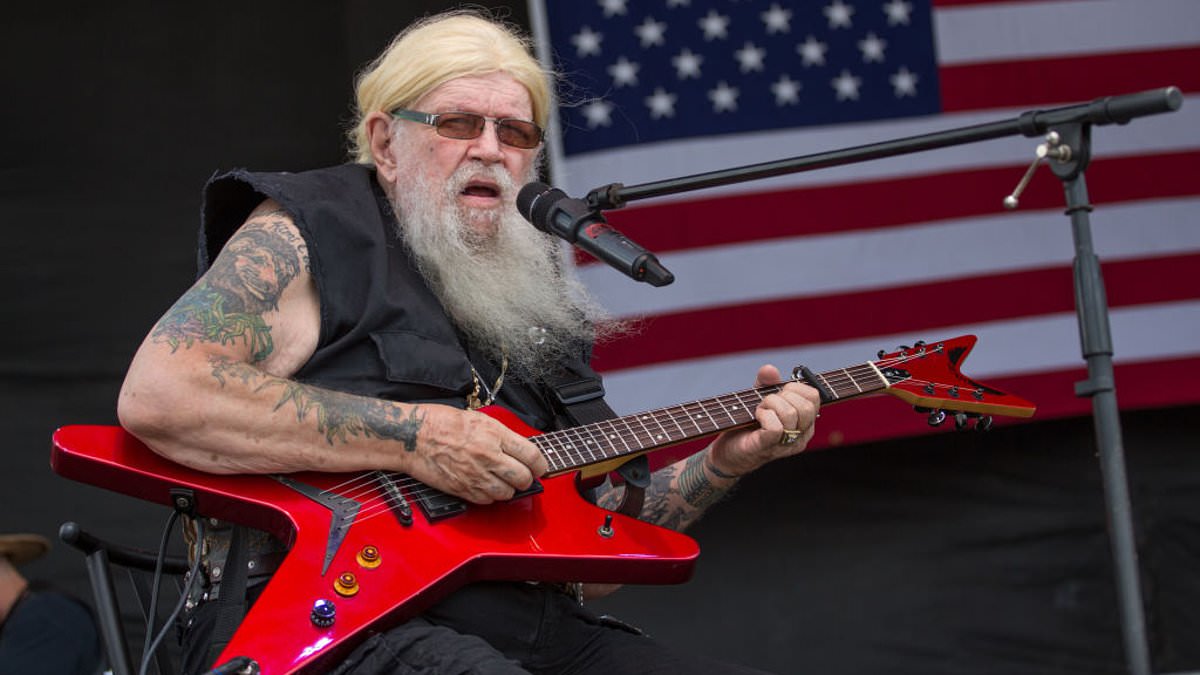
Controversial singer-songwriter David Allan Coe died at 86 Wednesday, his rep said. Pictured in Texas in 2019
The singer was born in Akron, Ohio, and was incarcerated for a chunk of his 20s, where he began to develop a fondness for music.
Following his release from custody in 1967, Coe relocated to Nashville, performing as a busker.
In 1970, he came out with a record called Penitentiary Blues.
Coe continued to work as a songwriter, penning the country chart-topping 1973 track Would You Lay with Me (In a Field of Stone) for Tanya Tucker.
Coe in 1974 released the record The Mysterious Rhinestone Cowboy, titled after the garb he donned onstage.
In 1975, Coe put out the album Once Upon a Rhyme, which included the track You Never Even Called Me by My Name, a top 10 hit on country charts.
More album releases came with 1976’s Longhaired Redneck and 1977’s Rides Again.
Coe also penned the 1977 track Take This Job and Shove It for Johnny Paycheck, for which he received a Grammy nomination.

The musical artist died at around 5:08 p.m. Wednesday, his representative said

Coe seen onstage in Austin Texas at Willie Nelson’s 4th of July Picnic in 2010
Speaking with Phoenix New Times in 1993 about the outlaw musical genre, Coe said, ‘I was singing that stuff for years. I was living it for years.
‘Willie [Nelson], Waylon [Jennings] – they just got more famous. I was the original outlaw.’
Regarding the aforementioned race controversy, Coe ‘in the early ’80’s … released very small quantities of two underground albums of songs that are among the most racist, misogynist, homophobic and obscene songs recorded by a popular songwriter,’ according to a 2000 report from The New York Times.
Coe went on to release the bootlegged material in 2000 via his website, but did not put his name on the material, the paper reported.
He denied the allegations of racism to the Country Standard Time, telling the publication that year the newspaper hadn’t given him a proper chance to issue a response to their report.
Coe told the Country Standard Time that he told the newspaper off-the-record, ‘They couldn’t call me a racist or White supremacist because that wasn’t true.’
He had dealt with health issues in recent years, including a 2021 hospitalization after catching COVID-19, Page Six reported. Two years prior to that, he had undergone a surgery to replace his knee.