Share this @internewscast.com
In brief
- Pentagon officials have fronted a US congressional committee, facing questions about the cost of the war in the Middle East.
- Defence secretary Pete Hegseth said the cost was justified given the US goal of preventing Iran from obtaining a nuclear weapon.
The ongoing conflict in the Middle East has led to a significant financial burden for the United States, amounting to an estimated US$25 billion (approximately $35 billion), according to a senior official from the Pentagon. This figure marks the first official estimate of the military’s expenses related to the war.
As the midterm elections loom just six months away, the Republicans, led by President Donald Trump, may struggle to retain control of the House of Representatives. Meanwhile, the Democrats, buoyed by favorable public opinion polls, are attempting to draw connections between the costly conflict with Iran and broader economic concerns.
Jules Hurst, currently serving in a key financial role at the Pentagon, disclosed to the House Armed Services Committee that the bulk of these expenditures has been allocated to munitions.
However, Hurst did not elaborate on whether the estimate accounted for future expenses, such as the costs associated with repairing and rebuilding damaged military infrastructure in the Middle East.
In response to Hurst’s disclosure, Representative Adam Smith, the leading Democrat on the House Armed Services Committee, expressed relief, stating, “I’m glad you answered that question. Because we’ve been asking for a hell of a long time, and no one’s given us the number.”
To put the cost into perspective, the $25 billion spent on the conflict matches the entire budget allocated to NASA for the current year.
But it is unclear how the Pentagon arrived at the $25 billion amount given that a source had told Reuters last month that the Trump administration estimated that the first six days of the war had cost the US at least US$11.3 billion ($15.8 billion).
Defence secretary defends war
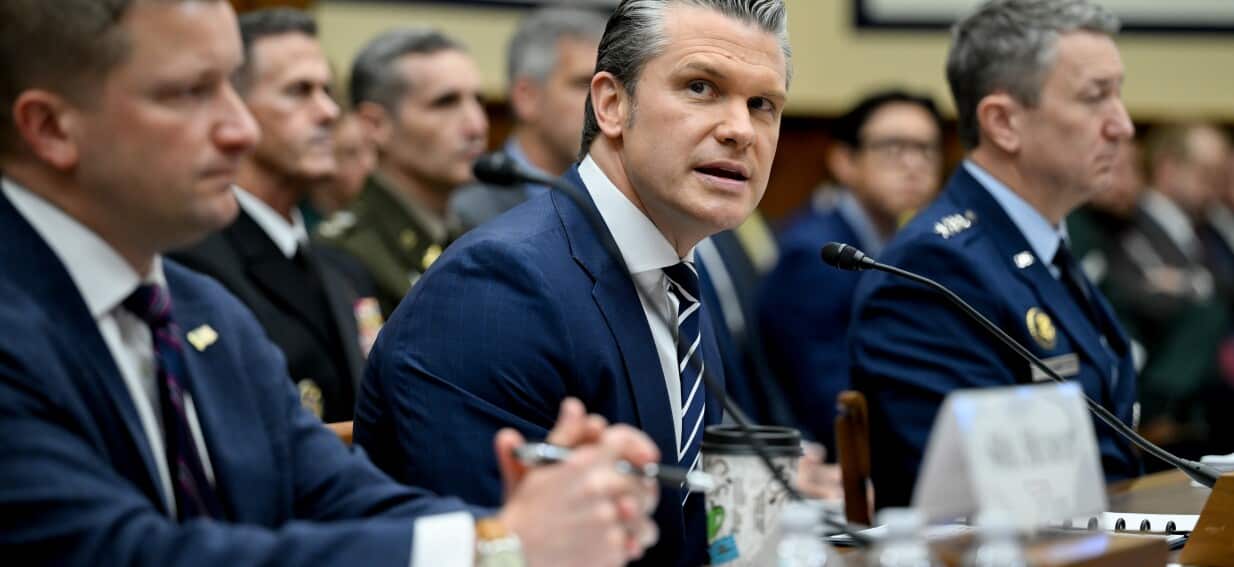
Defence secretary Pete Hegseth repeatedly clashed with congressional Democrats over the Iran war on Wednesday, in his first testimony to Congress since Trump launched the conflict two months ago.
Appearing before the House Armed Services Committee, Hegseth quickly struck a combative tone, saying in his opening remarks that the main challenge at this point is the “defeatist words of congressional Democrats and some Republicans”.
He told the committee that the cost was justified, given the US goal of ensuring Iran would not have a nuclear weapon.
“What would you pay to ensure Iran does not get a nuclear bomb? What would you pay?” Hegseth asked.
Smith took aim at the regional fallout from the war and its toll on both US troops as well as civilians, saying he wanted answers on where the conflict is going and “the plan to achieve our objectives”.
Representative John Garamendi, another Democrat, accused Hegseth of “lying to the American public about this war from day one”, describing events in the Middle East as a “geopolitical calamity, a strategic blunder, resulting in worldwide economic crisis”.
“Critical munitions have been expended at an alarming rate, depleting magazine levels below what is thought necessary to hold China at bay,” said Garamendi, also describing the conflict as a “quagmire”.
Hegseth sought to defend the war more broadly in fiery remarks, saying it was not a quagmire and attacking Democratic representatives as “feckless and defeatist” for criticising the unpopular conflict.
Midterms loom amid affordability crunch
The US and Israel started carrying out strikes against Iran on 28 February and the two sides are currently maintaining a fragile ceasefire.
The Pentagon has poured tens of thousands of additional forces into the Middle East, including keeping three aircraft carriers in the region.
Thirteen US troops have been killed in the conflict and hundreds wounded.
Few issues resonate with US voters more deeply than price increases, and the latest inflationary upswing is unsettling Republican insiders worried about their party’s prospects before November midterm elections that will determine control of the House and possibly the Senate.
Disruptions in shipments of oil and natural gas since the war started have caused a run-up in US gasoline prices and agricultural products such as fertilisers, on top of the long list of other high consumer prices.
The average US gasoline price on Tuesday rose to its highest level in nearly four years, according to data from the American Automobile Association.
Trump’s popularity has taken a beating since the US and Israel launched the war against Iran, which spread into neighbouring nations.
Just 34 per cent of Americans approve of the US conflict with Iran, down from 36 per cent in mid-April and 38 per cent in mid-March, a recent Reuters/Ipsos poll found.
For the latest from SBS News, download our app and subscribe to our newsletter.