
According to maritime intelligence reports, tankers under sanctions have been masquerading as Iraqi vessels to transport Iranian crude oil worth hundreds of millions of dollars. This development comes as former President Donald Trump escalates efforts to block Tehran’s oil exports through a port blockade.
The firm Windward AI revealed on Wednesday that several tankers subjected to U.S. sanctions are manipulating their location data. These tankers appear to be stationed off the coast of Iraq while they are, in reality, loading oil at Iranian ports.
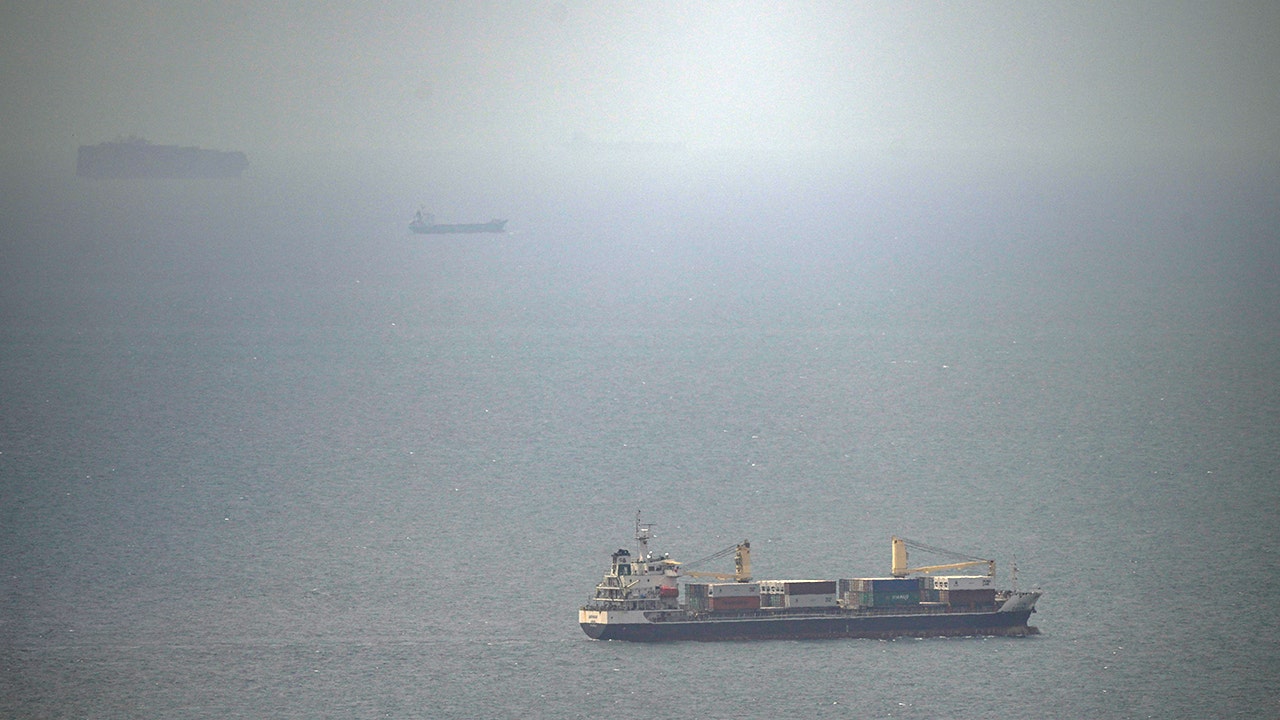
“Some of the tankers involved in this deception include four very large crude carriers (VLCCs): Alicia (IMO 9281695), RHN (IMO 9208215), Star Forest (9237632), and Aqua (IMO 9248473),” Windward AI shared with Fox News Digital. These ships reportedly use various flags, including fraudulent registries from Curacao and Malawi, to disguise their true operations.
Windward added, “Each of these VLCCs has the capacity to carry approximately 2 million barrels of oil. Combined, these four vessels could be transporting 8 million barrels, which at a price of $100 per barrel, amounts to a value of about $800 million.”
As these events unfold, former President Trump announced on Wednesday his intention to maintain the naval blockade on Iran. He insists on keeping the pressure until Iran consents to a deal that addresses U.S. concerns regarding its nuclear program.
This came as Trump said Wednesday he will keep Iran under a naval blockade until it agrees to a deal addressing U.S. concerns about its nuclear program.
The U.S. administration has demanded that Iran dismantle its uranium enrichment program, while Tehran maintains that enrichment is a sovereign right and nonnegotiable, leaving little room for compromise.
Windward AI noted a “cluster” of sanctioned tankers spoofing locations and seen to the West of the Strait of Hormuz.
“A cluster of 10 Iran-trading, U.S.-sanctioned tankers is now spoofing its AIS location to falsely appear at anchorages off Basrah, Iraq, as the blockade continues to constrict Iranian ports,” Windward explained.
“The vessels identified by Windward Multi-Source Intelligence are manipulating their signals to create a digital alibi,” the intelligence firm claimed.
“By broadcasting fake destination messages to Iraqi ports, the tankers appear to be in Iraqi waters while covertly sailing to Iran to load sanctioned oil.
“Once loaded, the vessels re-emerge on AIS to suggest a legitimate Iraqi origin for the cargo.”
The U.S. blockade on Iranian ports began April 13 as part of a broader effort to pressure Iran into renegotiating limits on its nuclear program.
The blockade has unfolded in stages, starting with naval deployments and restricted maritime enforcement to limit Iran’s oil exports and economic activity.
Windward said more than two dozen tankers are confined west of Hormuz as of Wednesday, with the blockade cutting Iranian oil loadings and exports by more than half.
“This deceptive practice is under intensified scrutiny as the vessels are part of a larger group of more than two dozen tankers currently confined west of Hormuz,” the firm said.
“The handysize tanker Paola and Long Range One tanker Adena, both signaling ‘Iraqi owner’ but linked to a sanctioned network.”
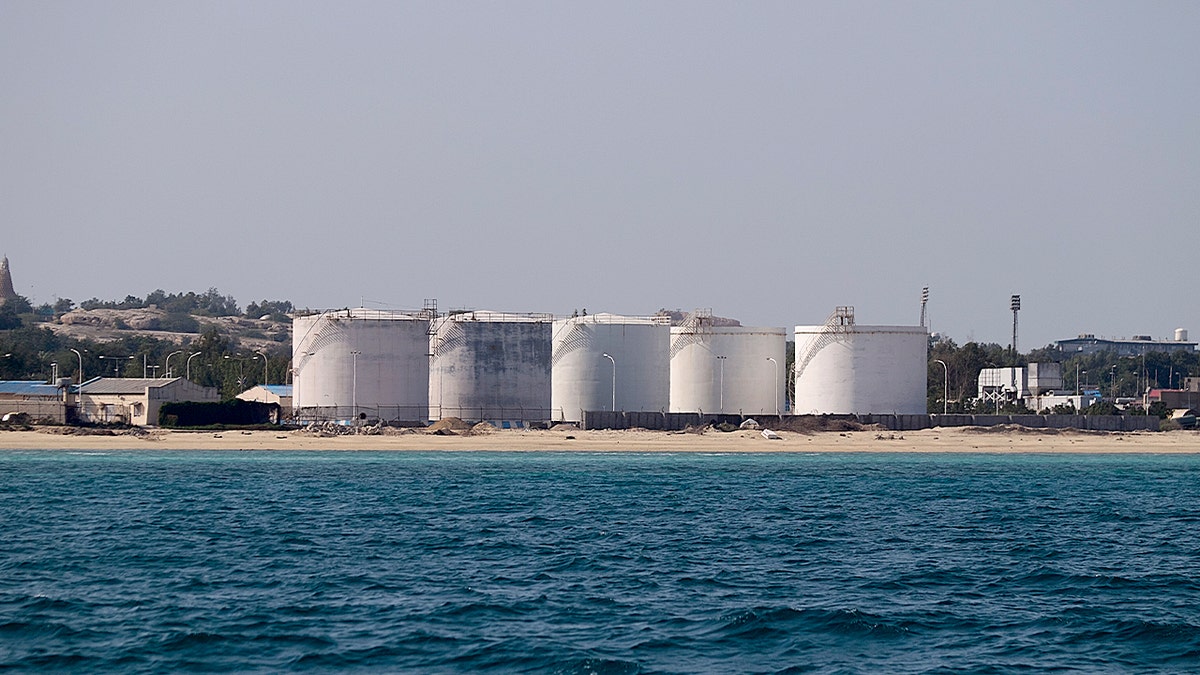
President Donald Trump weighs a potential attack on Iran’s oil hub at Kharg Island amid expert predictions of market chaos. (Morteza Nikoubazl/NurPhoto)
The firm claimed three medium-range tankers, including Aqualis, Kush and Charminar, and the LPG carrier Royal H (IMO 9155341), which was newly sanctioned in February, are displaying “erratic voyage trails to suggest a loading at the Iraqi port of Khor Al Zubair.”
“The tell-tale spoofing signs, including erratic patterns and fake port signals, highlight the shifting tactics used by the dark fleet as the blockade more than halves Iranian oil loadings and exports,” the firm said.
Meanwhile. Iran’s Mohammad Ghalibaf slammed U.S. policymakers Wednesday, including Treasury Secretary Scott Bessent, over the impact of the U.S. blockade of Iranian ports.
The parliamentary speaker cited “junk advice” and blamed the Treasury for pushing up oil prices.
“Three days in, no well exploded,” Ghalibaf said in a post shared on X.