
NEW DELHI, INDIA – APRIL 27: On a scorching summer day at Raisina Hill, individuals were seen shielding themselves from the sun’s intense rays on April 27, 2026, in New Delhi, India. The Delhi-NCR region has been grappling with severe heatwave conditions, with temperatures soaring between 42 and 45 degrees Celsius. (Photo by Raj K Raj/Hindustan Times via Getty Images)
Image Credit: Hindustan Times | Hindustan Times | Getty Images
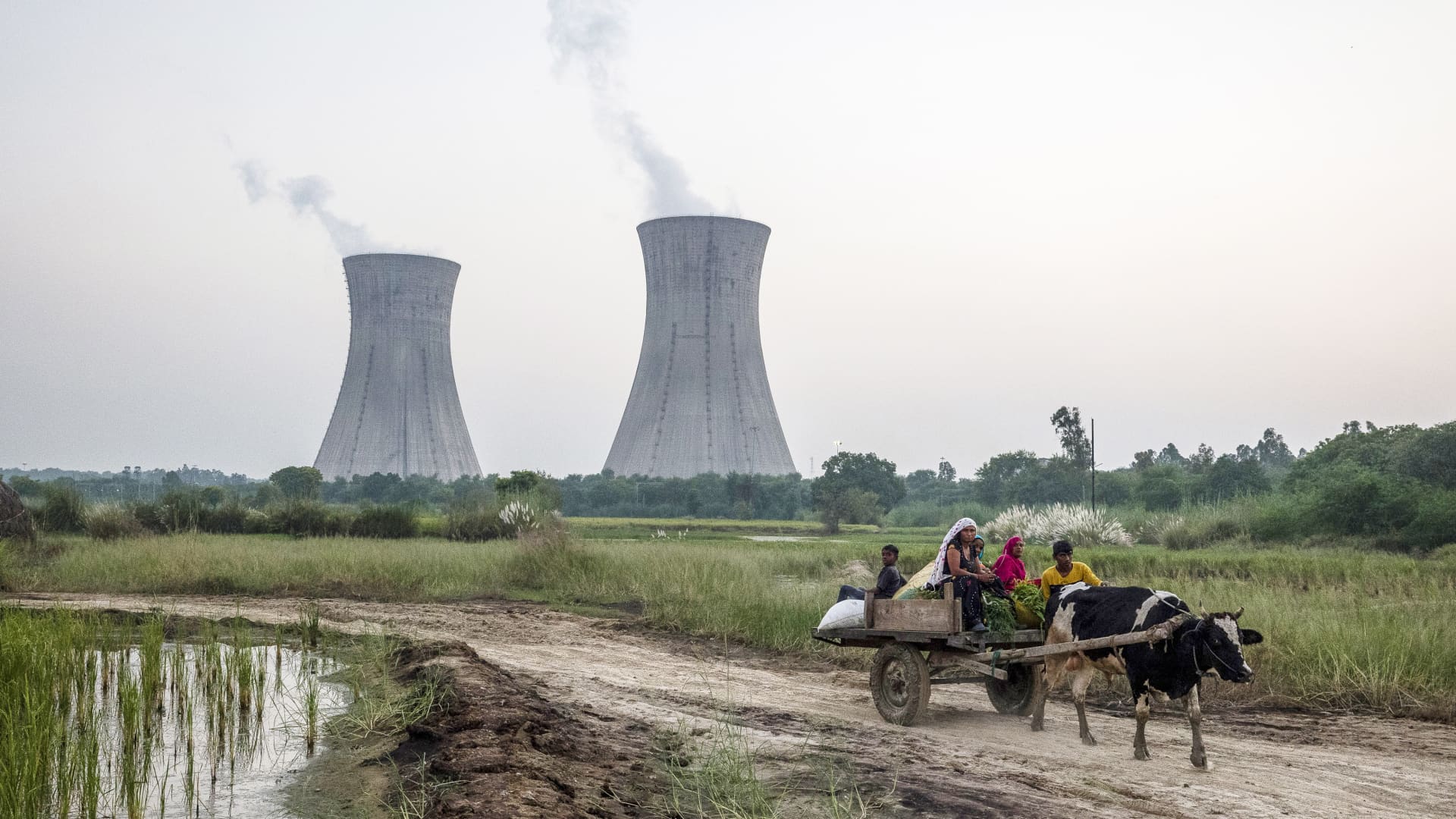
India, ranking as the third-largest emitter of carbon dioxide globally, is increasingly relying on coal to meet its energy demands. This shift is driven by disruptions in energy supplies due to the ongoing conflict in Iran and the pressing heatwave affecting the nation.
Currently, over 70% of India’s electricity is produced from coal-fired power stations. Energy analysts have shared with CNBC that this proportion is likely to increase throughout the year.
Back in February, India reported that more than 52% of its installed power generation capacity was derived from non-fossil fuel sources, primarily solar, hydropower, and wind. Despite this progress, coal-fired plants, responsible for nearly 43% of the total generation capacity, continue to be the primary energy source.
Data from S&P Global Energy reveals that coal-fired power generation in India rose to an average of 164.9 gigawatts in April, up from 160.7 gigawatts during the same period last year. This represents an increase of 5.6 gigawatts, or 3.5%, from the previous year.
About 4% of India’s installed power generation capacity is gas-fired and runs on liquified natural gas, of which about 60% is imported through the Strait of Hormuz.
Higher coal burn
The higher liquid natural gas prices have also made gas-based power generation economically unviable, said Girish Madan, director of corporate ratings at Fitch Ratings in Singapore. “So, coal-based power needs to share a higher burden in these peak summer months,” he added.
Electricity demand in India is rising as temperatures surge amid heatwaves. On April 27, data compiled by New Delhi-based air quality and temperature monitoring platform AQI showed that all 50 of the world’s hottest cities were in India.
“Heatwave conditions, with readings above 40-45 degrees C (Celsius), across several places in India have lifted power demand,” Andre Lambine, lead APAC short-term power and renewables research at S&P Global Energy, told CNBC in an email.
He added that while gas-fired generation rebounded in the last weeks of April, it remains “1.5 average gigawatts below 2025 levels, underscoring the continued displacement of gas by coal in the power mix.”
If the El Niño climate effect develops, there could be a “potential growth of 10% year over year for coal-fired power generation in India,” he said.
India is expected to experience relatively higher temperatures this month, which could result in “heat wave conditions across parts of Northwest, Central and West India, along with the East Coast,” the government said in a release on May 2.
NEW DELHI, INDIA – APRIL 26: People are seen out during a Hot day at Humayun’s Tomb, on April 26, 2026 in New Delhi, India.
Hindustan Times | Hindustan Times | Getty Images
While demand for coal is primarily driven by the power sector, other industries are also leaning on the fossil fuel, said Firat Ergene, lead Insights analyst for coal, petcoke, and cement at Kpler.
Additional demand is coming from industries such as cement producers, he told CNBC.
Supplies of petroleum coke, which is burned as fuel, have been disrupted by the Middle East conflict, pushing prices higher. This has prompted cement companies to substitute petcoke with coal, Ergene explained.
Last month, India vowed to reduce the emissions intensity of its economy by 47% by 2035, in line with its goal to become a net-zero country by 2070. India is the world’s third-highest emitter of carbon dioxide, after China and the U.S.
While India’s carbon dioxide emissions are still rising, the growth rate last year was the slowest in more than two decades, according to an analysis by the Center for Research on Energy and Clean Air, a policy think tank.