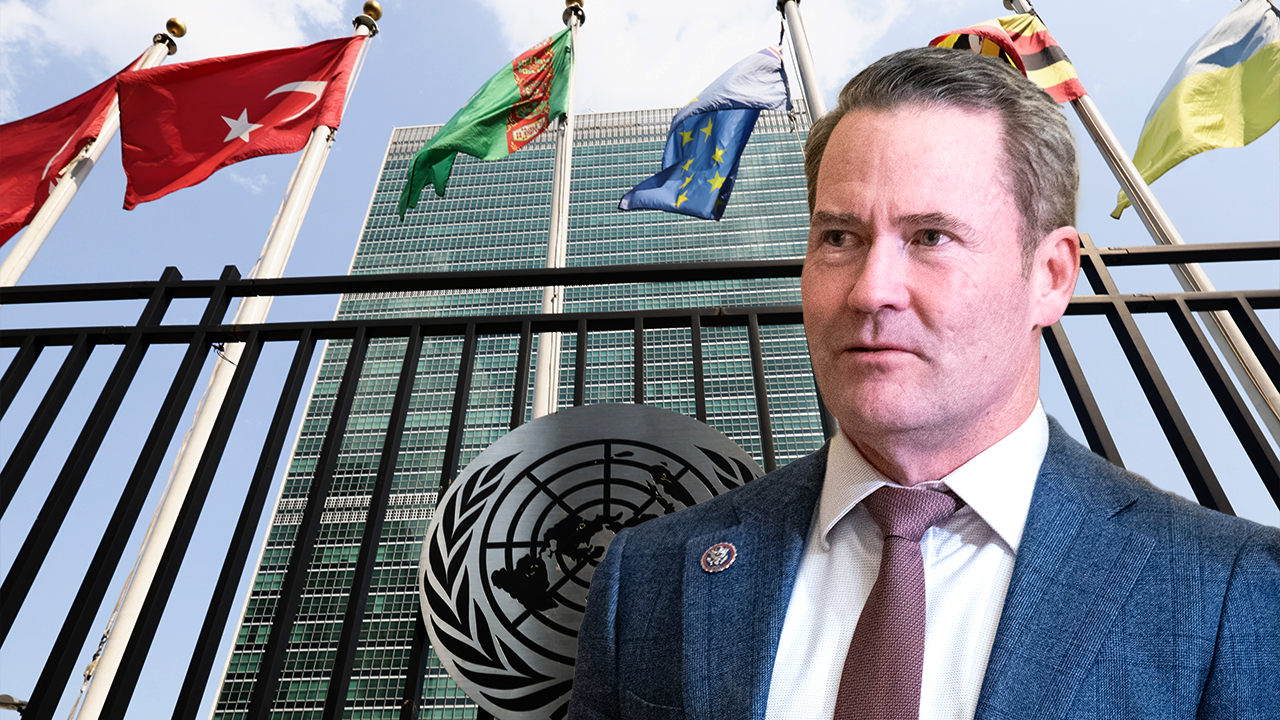

Waltz says Trump stripped Iran of ‘leverage’ with Strait of Hormuz blockade
U.S. Ambassador to the United Nations, Mike Waltz, has outlined the United States’ approach towards Iran, highlighting that President Donald Trump has strategically weakened Iran’s economic power by imposing a blockade on the Strait of Hormuz. Waltz insists that for Iran to regain normal international relations, it must halt its support for terrorism and abandon its nuclear program. He underscores the formidable presence of the U.S. military as a factor urging Iran towards direct peace talks.
The U.S. is pushing forward with a new United Nations Security Council resolution aimed at addressing Iran’s activities in the Strait of Hormuz. This initiative is part of the administration’s efforts to bolster its maritime operations with support from the international community.
On Monday, Mike Waltz, the U.S. Ambassador to the U.N., explained that this move is intended to hold Iran accountable for the mining of international waters, which threatens global shipping and aims to disrupt a vital trade route.
“The President and Secretary Rubio have directed us to collaborate with the Security Council alongside Bahrain and the GCC countries,” Waltz announced during a press briefing. “This resolution is a separate endeavor from Project Freedom but is obviously connected.”
He further stated, “The resolution will demand accountability from Iran for its clear breaches of international law.” This includes requiring Iran to cease the laying of sea mines, disclose their locations, and collaborate with the United Nations to establish humanitarian corridors crucial for global aid delivery by U.N. agencies.
U.S. Ambassador to the United Nations, Mike Waltz, addressed the United Nations Security Council at their headquarters in New York City on February 28, 2026, following airstrikes conducted by U.S. and Israeli forces on Iran. (Photo by Heather Khalifa/Reuters)
The diplomatic push comes as U.S. forces moved Monday to secure commercial shipping through the strait under President Donald Trump’s Project Freedom. U.S. Central Command confirmed American forces sank six Iranian small boats threatening vessels, underscoring the fragility of the ceasefire and the ongoing risks to global energy flows.
Waltz framed the effort as part of a broader push to set a global precedent.
“We can’t set a standard that if two countries have a conflict … you can then embark on collective punishment for the economies of the rest of the world,” he said.
When asked by Fox News Digital about the broader implications of Iran’s actions, Waltz said the U.S. is working to ensure that international waterways cannot be weaponized.
The United States is advancing a new United Nations Security Council resolution targeting Iran’s actions in the Strait of Hormuz. (AP Photo)
“You can’t start indiscriminately just throwing sea mines out into the ocean to sow doubt and fear into the international maritime community,” he said. “And you certainly can’t see it as a revenue source … no country has a right to punish the rest of the world as part of a conflict.”
He also pointed to the human toll of the crisis, noting that thousands of civilian mariners have been caught in the escalating tensions.
“These are captains, engineers, cooks, deckhands … they had no part in this conflict. They shouldn’t be forced to suffer,” Waltz said, adding that the administration is emphasizing the humanitarian aspect of ensuring safe passage and aid delivery.
Fox News Digital also asked whether the U.S. and its partners should look beyond securing the strait and consider long-term structural solutions to bypass it altogether.
“I know our Gulf partners and allies are seriously thinking through that,” Waltz said, referencing existing infrastructure such as Saudi Arabia’s East-West pipeline and export routes through the Gulf of Oman.
“I know they’re looking at additional alternatives to frankly diversify their pathways and diversify their economies,” he added.
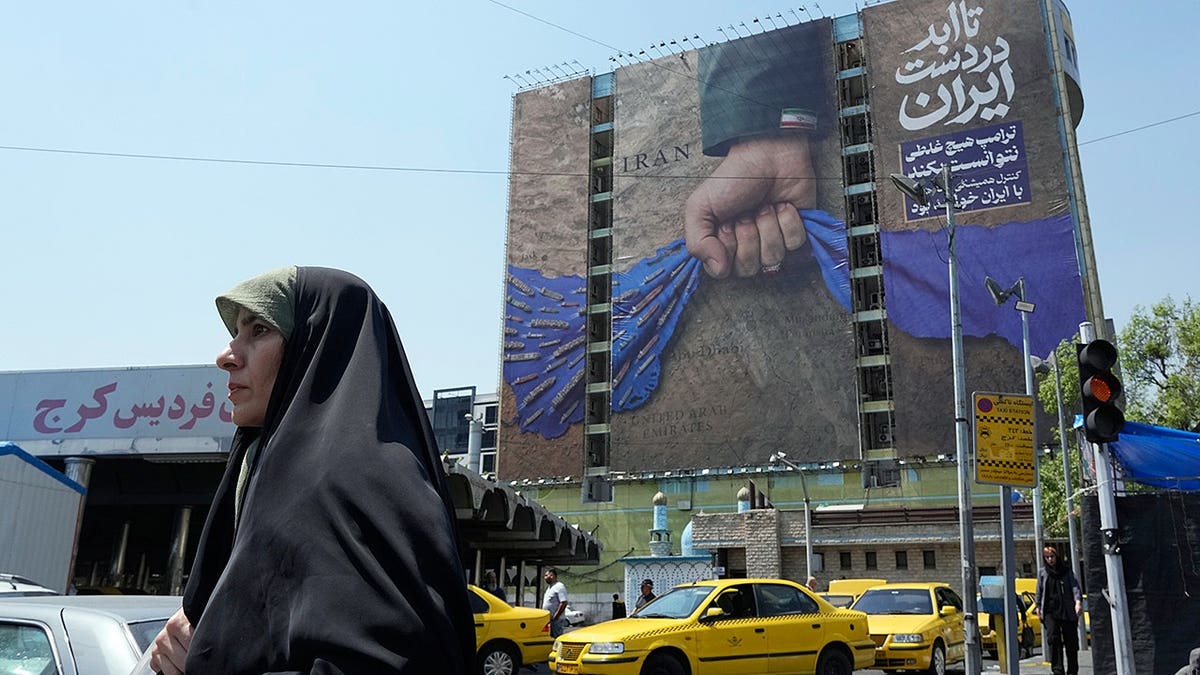
A woman walks past a billboard showing a military hand holding the Strait of Hormuz with Farsi text which reads, “In Iran’s hands forever,” “Trump couldn’t do a damn thing,” “The control of Strait of Hormuz will be Iran’s forever,” in Vanak Square, in northern Tehran, Iran, on April 16, 2026. (Vahid Salemi/AP)
While the U.S. military effort is focused on immediate stabilization, including guiding vessels and deterring Iranian harassment, Waltz stressed that the U.N. resolution is intended to address the broader international implications and prevent similar crises in the future.
Despite the push, questions remain about whether Russia and China will support the measure after a previous attempt in April failed to pass.
Waltz said the current proposal is narrower in scope and focused specifically on clear violations of international law, which he argued should make opposition less likely.
Fox News Digital reached out to the Iranian mission to the U.N. fo comment.