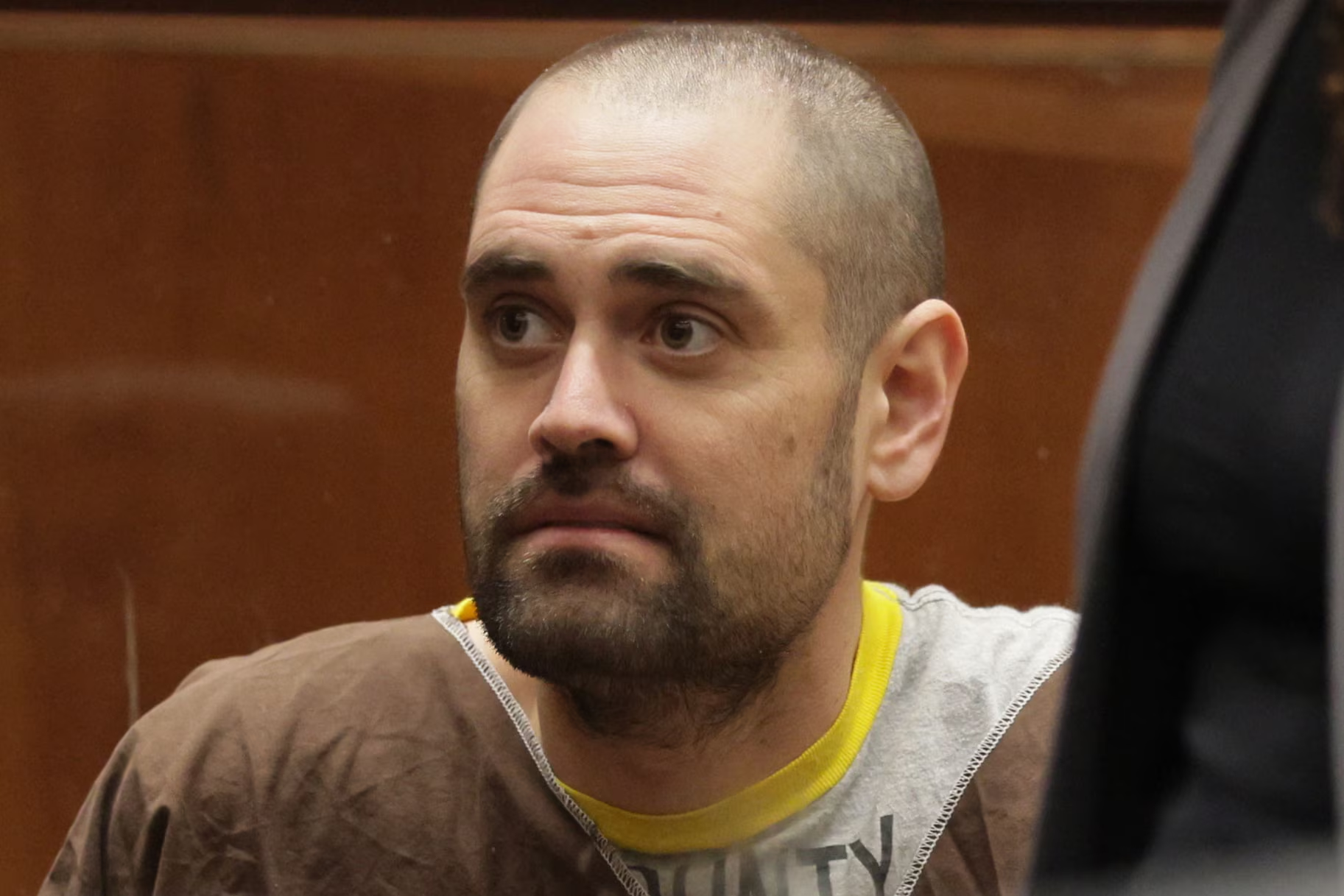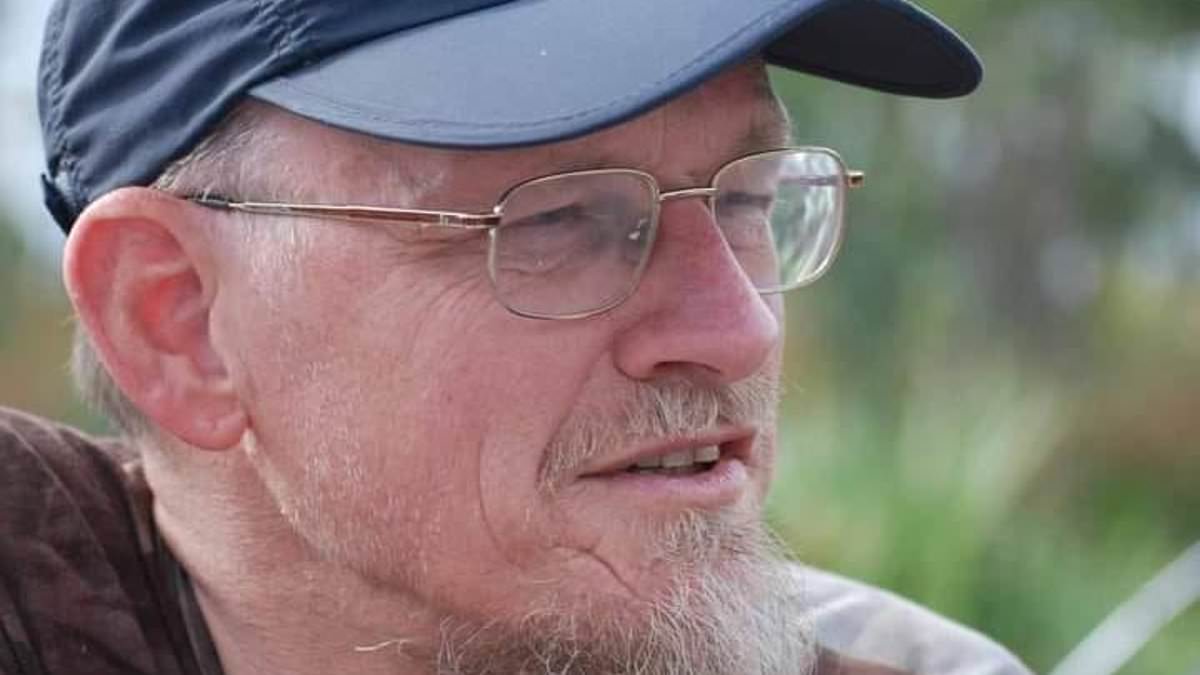

For the first time, an image has surfaced of the individual identified as patient zero in a tragic outbreak on a cruise ship, which has resulted in the deaths of three passengers and the infection of several others.
Leo Schilperoord, a 70-year-old ornithologist, embarked on the cruise aboard the MV Hondius with his wife following a birdwatching excursion to a landfill in Argentina.
Sadly, Mr. Schilperoord succumbed to Hantavirus while still on the ship, and soon after, his grieving wife Mirjam also passed away.
Mrs. Schilperoord had left the ship with her husband’s remains but began to feel ill as she was preparing to return to their home in the Netherlands from South Africa.
Although Mrs. Schilperoord briefly boarded a KLM flight from Johannesburg to Amsterdam, she was denied the ability to fly and died in a hospital the following day.
Despite previous reports suggesting that the couple contracted the Hantavirus during their birdwatching activity, the Mail on Sunday has disclosed that the outbreak likely originated 1,500 miles further north.
The Schilperoords, before joining the cruise, visited northern Patagonia, where there have been 101 confirmed cases of the disease, including 32 deaths, over the last several months.
Last night, speaking from Ushuaia, Juan Petrina, director of epidemiology for Tierra del Fuego state, told this newspaper: ‘The virus has never been here.
Ornithologist Leo Schilperoord, 70, boarded the MV Hondius with his wife after making a fateful trip to a landfill site in Argentina, where they went birdwatching
An aerial view of an ambulance boat carrying crew members wearing hazmat suits as they approach the pilot door on the starboard side of the cruise ship MV Hondius, while stationary off the port of Praia, the capital of Cape Verde, on May 5, 2026
The Argentine government’s leading hypothes was that a Dutch couple who died contracted Hantavirus during a bird-watching outing at a garbage dump in Ushuaia, Argentina. File photo shows a garbage dump in the city of Ushuaia, between birds and horses
‘We don’t know where the information is coming from saying the couple caught the virus at the local tip.
‘Even if they did go there, which we don’t know, the colilargo rat, which carries the virus, is not there.
‘They came here from a region where there have been outbreaks. They were in northern Patagonia 25 to 30 days before coming to Ushuaia. They almost certainly contracted the illness there.
‘They arrived here on the afternoon of March 29th so only had two full days before boarding the ship. The incubation period is at least a week.’
The strain of virus which killed the three cruise ship passengers is known as the Andes strain, found in Neuquen, Rio Negro and Chubut provinces in northern Patagonia.
The Argentine health ministry said on Friday it had held a meeting with representatives of the 24 provincial health ministries in the country to try to pinpoint the movements of the couple and to find the original source of the outbreak.
A spokesperson said there had been 42 cases of hantavirus this year already in the country but there had been 101 since last June, with 32 deaths.
Argentine authorities said they did not know how many of those deaths were caused by the human-to-human Andes variant.
The virus is contracted by inhaling air infected by droppings, urine or saliva.
The Dutch couple, who have not been named, had also visited Chile before travelling south to board the cruise ship in Ushuaia on April 1.
But a spokesperson for Chile’s health ministry stated late on Friday that the incubation period for the disease did not match up with their trip, stressing: ‘They did not get it in our country’.
The 70-year-old man was the first to die on board on April 11, with the captain telling passengers he had died ‘of natural causes’, which led fellow travellers to hug and comfort his grieving widow, 69.
She accompanied her husband’s casket to Johannesburg, South Africa on April 24 but began suffering gastrointestinal symptoms.
Her condition rapidly deteriorated and she was admitted to hospital in the city, dying there on April 26.
But the MoS has discovered that the Dutch couple, who boarded the MV Hondius carrying the virus and were the first to die, had recently visited northern Patagonia, where there have been 101 confirmed cases of the disease. Pictured: Hantavirus patient being evacuated from the cruise ship earlier this week
Authorities are frantically trying to track down 29 passengers who disembarked on April 24 in St. Helena, a British Overseas territory in the South Atlantic.
The passengers who were due to disembark in Tenerife on Sunday at midday are expected to be quarantined for up to 45 days.
There are 22 Britons still remaining on board the stricken vessel.
At least five people, including the ship’s British doctor, have been confirmed as having hantavirus with the doctor described as being in ‘serious’ condition in intensive care.
Three other passengers have symptoms but are awaiting test results confirming they have the virus.
The Argentinian health ministry confirmed there are currently nine cases of hantavirus in the country with one man hospitalised in Neuquen in northern Patagonia in serious condition.
While the World Health Organisation has been keen to play down the suggestion that the Andes variant of hantavirus could become a Covid-style pandemic, there was a ‘super spreader’ event in 2018.
A man in rural Chubut province went to a birthday party while suffering a high temperature, infecting 34 people. Eleven died.

Health workers in protective gear evacuate patients from the MV Hondius cruise ship at a port in Praia, Cape Verde, on Wednesday
Last night Tim Hackman, the nephew of Oscar-winning actor Gene Hackman – whose wife Betsy died of hantavirus in February 2025 – said: ‘I wish everyone the best of luck. I hope anyone affected by this has a great support team around them.’
He said he had never heard of hantavirus before it killed his aunt.
Mrs Hackman is believed to have contracted the disease after clearing out a rat’s nest in a shed on the couple’s New Mexico ranch. She collapsed and died at home aged 65 while her 95-year-old husband who had advanced Alzheimer’s and heart disease died a week later.