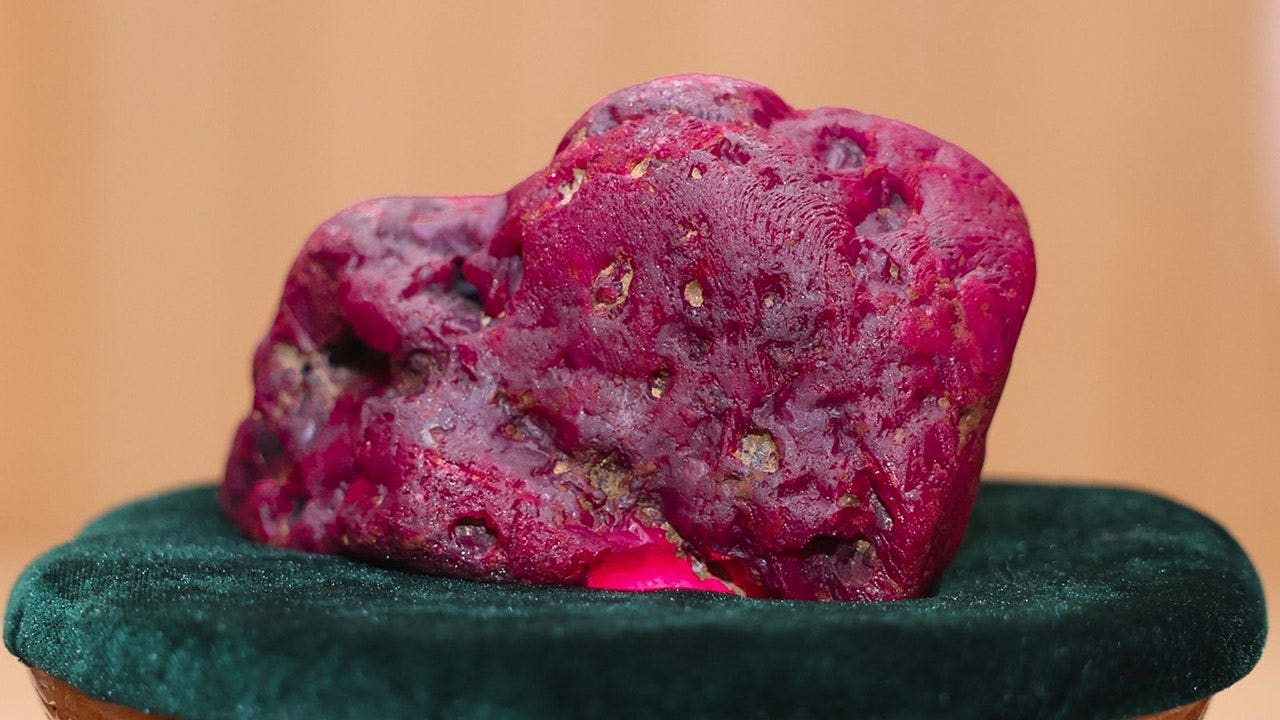

In a significant development from Burma, a spectacular ruby has emerged, being recognized as the second-largest gem of its kind ever discovered in the country. This remarkable find weighs approximately 11,000 carats, translating to about 4.8 pounds. It was excavated near Mogok, a region in Mandalay renowned for its gem industry, yet often marred by conflict.
According to reports from The Associated Press, drawing on state media, the ruby was uncovered shortly after the mid-April traditional New Year celebrations. Its discovery adds to the rich tapestry of precious stones that have historically emerged from this tumultuous area.
The striking ruby was prominently displayed at the president’s office in Naypyitaw on May 7, 2026. The Myanmar Military True News Information Team shared images, underscoring its national significance.
While this gem is roughly half the size of a 21,450-carat ruby found back in 1996, experts suggest it could surpass its predecessor in value. This is attributed to its superior quality, as it boasts a captivating purplish-red hue with hints of yellow, along with moderate transparency and a highly reflective surface.
Although it is roughly half the size of a 21,450-carat ruby discovered in 1996, experts say the new find could be more valuable because of its higher quality, the outlet reported.
It has a purplish-red color with slight yellow tones, moderate transparency and a highly reflective surface.
Burmese President Min Aung Hlaing and his cabinet have already inspected the stone in the country’s capital of Naypyidaw.
Burmese officials inspect a newly discovered ruby at the president’s office in Naypyidaw on May 7, 2026. (Myanmar Military True News Information Team/AP)
Burma produces up to 90% of the world’s rubies, mostly from Mogok and nearby Mong Hsu.
The gem trade — both legal and illegal — is a major source of income in the country.
However, rights groups, including Global Witness, have long urged jewelers to avoid buying Burmese gemstones, saying the trade helps fund the country’s military governments, according to The Associated Press.
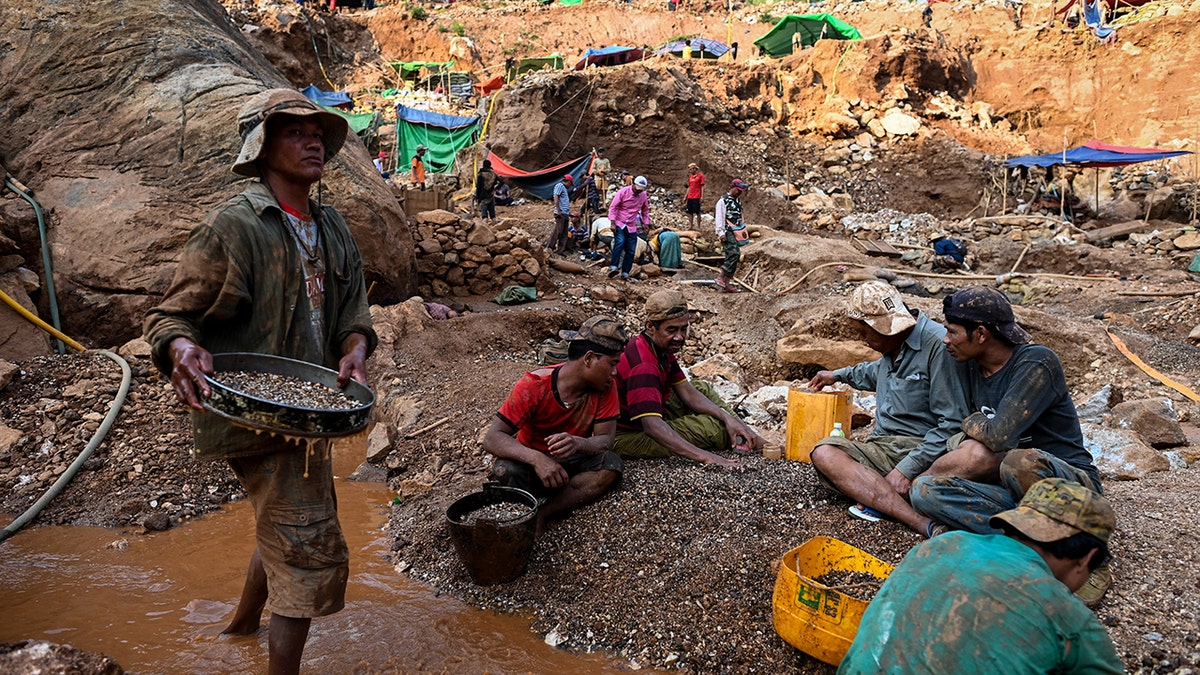
This photo taken on May 16, 2019, shows miners working in a ruby mine in Mogok, north of Mandalay. (Ye Aung Thu/AFP via Getty Images)
Gem mining also finances ethnic armed groups fighting for autonomy, contributing to Burma’s long-running conflicts.
The mining regions remain unstable.
Mogok was seized in July 2024 by the Ta’ang National Liberation Army (TNLA), an ethnic armed group. Control later returned to the military under a ceasefire deal brokered by China late last year.