
The government’s budget documents reveal official projections on how proposed reforms might influence rents, property prices, and housing availability. These reforms, which have stirred controversy due to being a broken election promise, are argued by the government to be crucial.
Critics of the plan have zeroed in on rising rental prices as a major issue, particularly as the government plans to limit negative gearing to newly built properties starting next July. This move will also see the existing 50 percent capital gains tax discount replaced with a less generous system linked to inflation.
As the budget announcement loomed, opponents of the Labor party’s anticipated restrictions on negative gearing and capital gains tax focused heavily on potential rent increases.
However, the budget’s analysis presents a more measured perspective, suggesting a minimal impact on renters—less than $2 per week for those paying the median rent.
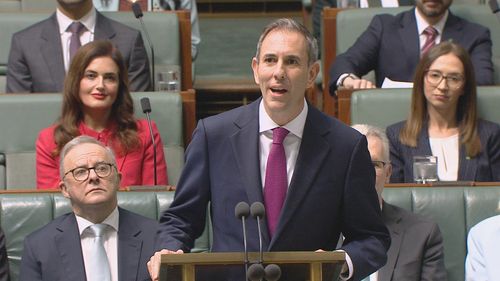
Jim Chalmers, the Treasurer, stated, “We’re implementing a fairer tax system to benefit workers, first-time homebuyers, and the younger generation.”
Chalmers added, “This initiative aims to correct an imbalance where assets are favored over labor and address the disconnect between house prices and income levels.”
“This will help rebalance a system which is more generous to assets than it is to labour, and help rebalance a system where house prices have decoupled from incomes.
“Since 1999 house prices have risen over 400 per cent more than twice as fast as average incomes. Our tax changes will help about 75,000 Australians achieve the dream of home.”
Nine finance editor Chris Kohler said it seemed clear making rental properties to own would drive up rental prices.
“That was the part of the budget that made my jaw drop,” he said.
“That in there, it says that we estimate that as a result of this $2 a week increase in rents.
“I don’t see how that’s possible.”
Leading property economics expert Dr Lyndall Bryant also raised concerns about the impact on renters, warning of possible unintended consequences in a complex system.
“Proposed changes to negative gearing and CGT are designed to disincentivise property investors, making room for owner occupiers,” she said.
“The only trouble is, 33 per cent of Australian households are renters, and every renter needs a landlord.
“Take rental stock out of the market, and the rental crisis will only get worse.”
Housing prices to grow less quickly
The whole point of the policy is to reduce demand for housing from investors, particularly those with lots of debt, driving down prices and giving younger people a chance to buy their own home.
The government’s numbers claim it will lead to 75,000 additional people owning their own homes over the next decade, reversing roughly 10 years of declines in that number.
“Treasury modelling suggests housing prices will temporarily grow by around 2 per cent less over a couple of years relative to no tax policy change,” the budget papers state.
“For comparison, on average housing prices have grown at 6 per cent per year since 2000.Â
“This means that a buyer purchasing a home at the current national median price would save around $19,000.”
Of course, this is economics, so any change will have flow-on effects in other areas. In this case, the numbers suggest that means 35,000 fewer homes built over the course of a decade.
That’s potentially a huge problem for a government that has spent years pushing the idea that a lack of housing supply is the main driver of skyrocketing prices.
Fortunately Chalmers has the $2 billion Local Infrastructure Fund in his back pocket to ward off criticism on that front.Â
It promises to build “essential infrastructure to support new housing”, such as connecting water, power, sewerage and roads.
Urbis partner and housing sector lead Mark Dawson welcomed funding targeted at unlocking feasible, more affordable homes but said it didn’t address the chronic compromise of housing.
“Housing feasibility is like a Rubik’s cube, not a single switch. The Budget is turning more than one face, and that matters,” he said.
“But if approvals, infrastructure, build cost and financing don’t move together, the bottleneck just shifts and the pipeline stays stuck.”
Broken promise criticised
No matter your opinion on the reforms, there’s no doubt they break Labor’s explicit election promise not to mess with either negative gearing or the capital gains tax
Most of Chalmers’ night was spent trying to justify the decision and reassure voters they could trust him.
Chalmers said the promises “reflected our position at the time” but problems with tax policy and the housing market had become “increasingly clear”.
“I think it’s appropriate that when a government comes to a different view, as governments do from time to time, that they explain why, and that’s what we’re doing,” he said.
The opposition, which opposes both tax changes, appears certain to absolutely hammer this topic over the coming weeks, with shadow treasurer Tim Wilson describing them as “built on a house of broken trust”.
“The government and the prime minister was clear about this 50 times over, red hot with rage, saying how dare anyone suggest that he was doing this before the last election,” he told 9News political editor Charles Crouch on budget night.
“They’ve now broken this promise, but let’s be very clear about the consequences. The government’s own budget papers show it will lead to 35,000 fewer homes being built and rents increasing.Â
“Now, I don’t know about you, Charles, but if the objective is to get young Australians into a home, building fewer houses and increasing rent and then adding a tax if you invest your house deposit to get ahead doesn’t seem like the way you get there.”
The great unknown is whether enough voters believe the changes are in their best interest – as they did with the broken promise on stage 3 tax cuts – and reward the government for change rather than punishing it for a broken promise.

What is negative gearing?
Negative gearing is when an investor has expenses associated with a property, like interest on mortgage repayments, that are greater than the profit it makes.
Investors are then able to deduct many of those expenses from their taxable income, meaning they pay less during tax time. 
Negative gearing became more popular when the Howard government introduced the 50 per cent capital gains tax discount in 1999.
Coupled together, the generous concessions made it more attractive for investors to hold a property in the hopes that it increases value in the long-term and leads to a greater profit when they sell.
NEVER MISS A STORY: Get your breaking news and exclusive stories first by following us across all platforms.