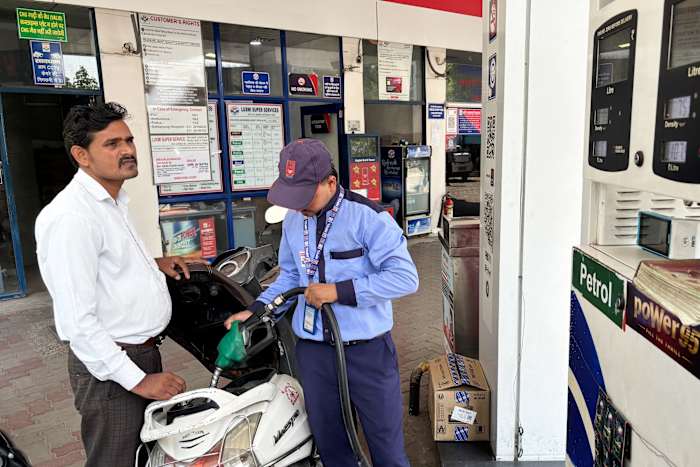

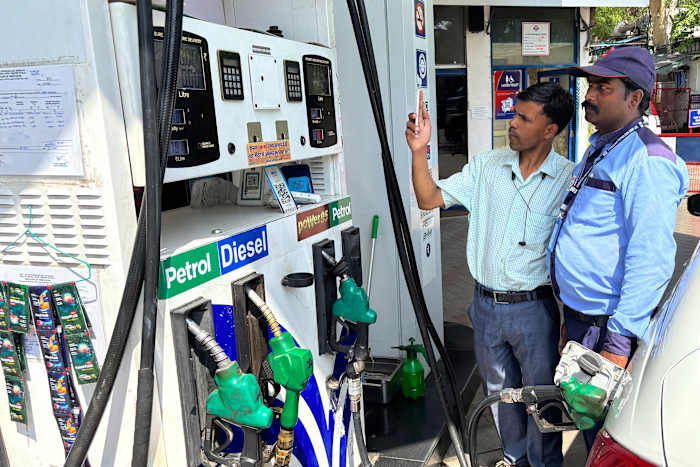
NEW DELHI – In a bid to counterbalance the impact of soaring international oil prices, India has increased fuel prices by 3 rupees ($0.03) per liter as of Friday.
In the capital, New Delhi, the cost of gasoline has risen to 97.77 rupees ($1.17) per liter, while diesel prices have reached 90.67 rupees ($1.09) per liter.
With approximately 90% of its oil sourced from abroad, India has been significantly affected by the escalating energy prices and supply chain issues exacerbated by the Iran conflict and the closure of the strategic Strait of Hormuz. Until now, India had refrained from transferring these rising crude costs to consumers, making it one of the last major economies to do so.
This price adjustment follows just days after Prime Minister Narendra Modi encouraged Indians to adopt voluntary austerity measures.
In a speech on Sunday, Modi urged citizens to work from home whenever feasible, curtail foreign travel, and reduce gold purchases. He characterized the conservation of fuel and foreign currency as acts of “patriotism,” promoting the use of public transport, carpooling, and reduced fertilizer use.
Critics in the opposition argue that Modi’s call came only after the conclusion of significant state elections, pointing out that fuel prices remained unchanged throughout the election period.
Earlier this week, India also raised import duties on gold and silver to 15% in an effort to curb demand for imports that drain foreign exchange reserves.
The Indian rupee has fallen to record lows in recent weeks as higher oil prices increased pressure on imports and foreign exchange reserves.
Meanwhile, India’s capital has become the first state to roll out austerity measures.
Authorities in New Delhi on Thursday announced fuel-saving measures, including mandatory work-from-home days for some government employees. Delhi Chief Minister Rekha Gupta said the 90-day campaign aims to reduce official fuel use and encourage people in the capital to rely more on public transportation instead of private vehicles.
Under the plan, employees whose work can be done remotely will work from home two days a week, while private companies are being encouraged to adopt similar measures voluntarily.