
In a significant legal development, a New York resident was found guilty on Wednesday for his role in managing a covert police station in Manhattan, allegedly linked to the Chinese government. This station was used to track dissidents, as confirmed by federal prosecutors.
The individual at the center of this case is Lu Jianwang, aged 64, who is also known as “Harry Lu.” As a U.S. citizen residing in the Bronx, Lu was convicted by a jury of two charges associated with running an overseas police facility in New York City on behalf of China’s Ministry of Public Security (MPS). Additionally, he faced charges of obstructing justice for destroying pertinent evidence.
Authorities detailed that Lu, along with his co-defendant, Chen Jinping, began working as unauthorized agents of the Chinese government in 2022. They set up what has been termed as the first overseas Chinese police station within the United States, an operation that raised significant alarm.
Chen Jinping had admitted guilt in 2024, acknowledging his involvement in conspiring to act as an agent for the People’s Republic of China in relation to this operation.
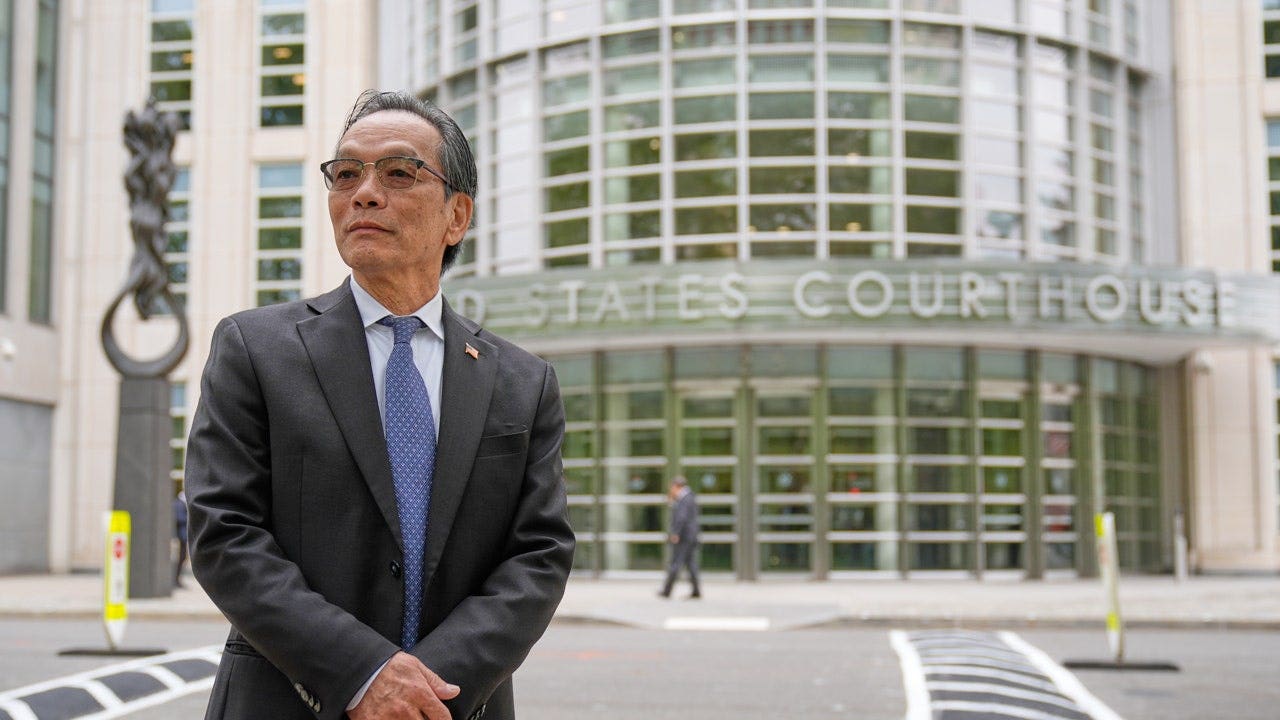
After his conviction, Lu Jianwang, accompanied by his attorney John Carman, was seen outside a U.S. courthouse in Brooklyn, New York. This moment on Wednesday, May 13, 2026, marked a pivotal point in the case, highlighting the serious implications of acting as an illegal foreign agent for China.
The investigation revealed that the clandestine station was located in an office building in Lower Manhattan. Investigators discovered a blue banner at the site, which read: “Fuzhou Police Overseas Service Station, New York, USA,” underscoring the direct link to Chinese authorities.
U.S. Attorney for the Eastern District of New York Joseph Nocella Jr. said the conviction disrupted a Chinese government operation on American soil.
“A police station operating in New York City at the direction of the Chinese government has been exposed, its sinister purpose disrupted, and its founder held accountable for blatantly disregarding the law and our country’s sovereignty,” he said in a statement.
Supporters of Lu Jianwang, also known as Harry Lu, stand outside a federal courthouse before the opening of his trial in New York, Wednesday, May 6, 2026. (AP Photo/Seth Wenig)
“Our Office remains resolute in protecting the rights of people seeking freedom from repression and speaking out to bring democracy, reform, and human rights to China,” he added.
James C. Barnacle Jr., assistant director in charge of the FBI’s New York field office, said the verdict should send a message to foreign agents operating in the U.S.
“May today’s verdict send a message to other foreign agents – the FBI maintains its unwavering resolve to reveal and disrupt the clandestine operations of adversarial nations,” he said in a statement.
Prosecutors said the Manhattan outpost was part of a broader Chinese government effort to monitor and intimidate dissidents abroad, including in the United States.
According to the DOJ, Lu gathered information for the Chinese government, including helping locate a pro-democracy activist who fled China for the United States.
The FBI searched the outpost in October 2022 and seized phones belonging to Lu and Chen. Investigators later discovered WeChat messages between the men and their Chinese government handler had been deleted.
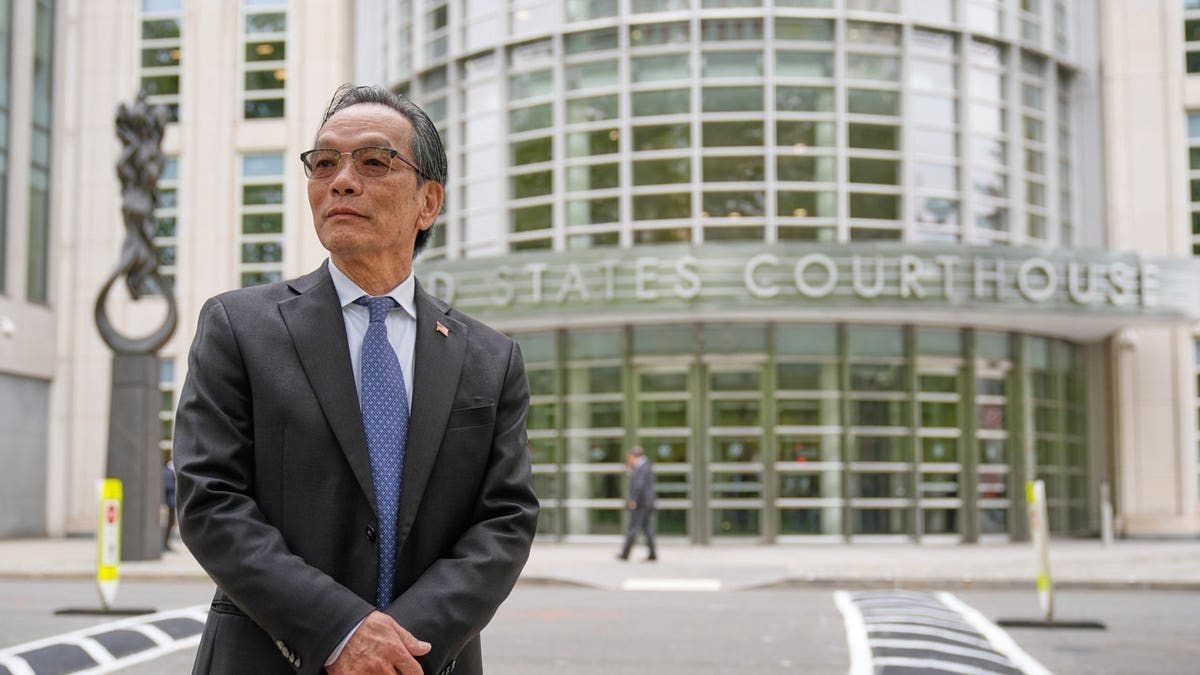
Lu Jianwang waits to enter a federal courthouse in New York, Wednesday, May 6, 2026. (AP Photo/Seth Wenig)
Prosecutors said Lu admitted to FBI agents that he established the Manhattan outpost, communicated with his handler through WeChat and deleted the messages.
Lu spoke briefly to supporters outside federal court following the verdict but declined to answer questions from reporters.
His attorney argued the outpost functioned as a community center where Chinese residents could renew driver’s licenses and gather socially.
“This is not espionage. This is not spying. This is not intelligence gathering,” attorney John Carman said outside the courthouse. “He wasn’t charged with any of that.”
<!–>
–>