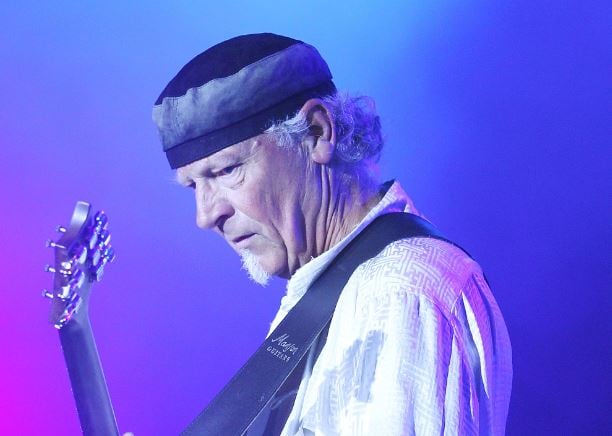

What is Martin Barre’s net worth?
Martin Barre, an esteemed musician and songwriter from England, has amassed a net worth of $50 million.
Renowned for his extensive tenure as the lead guitarist of Jethro Tull, Barre joined the band following their debut album “This Was” in 1968. He replaced the original guitarist, Mick Abrahams, and quickly became an integral part of the group’s iconic sound. While Ian Anderson led Jethro Tull as the frontman, singer, flautist, and chief songwriter, Barre’s electrifying guitar work was pivotal in defining the band’s musical direction. His contributions helped bridge the band’s blues beginnings with elements of progressive rock, folk rock, hard rock, and art-rock. Notable albums like “Stand Up,” “Aqualung,” “Thick as a Brick,” “Minstrel in the Gallery,” “Songs from the Wood,” “Heavy Horses,” and “Crest of a Knave” feature his distinctive playing style, earning him recognition as one of the era’s most respected rock guitarists. His solo in “Aqualung” is often hailed as one of classic rock’s finest guitar solos. After Jethro Tull’s original lineup concluded its journey, Barre pursued a solo career, continuing to perform and produce music that honored the band’s legacy while showcasing his individual artistry.
Early Life
Born Martin Lancelot Barre on November 17, 1946, in Kings Heath, Birmingham, England, he was raised during the vibrant emergence of postwar British pop music. Initially exploring various instruments, he ultimately embraced the guitar. Unlike many rock guitarists who focused solely on blues or technical prowess, Barre’s style was diverse and melodic, seamlessly blending hard rock riffs, folk-inspired motifs, jazz nuances, and complex progressive rock elements.
Before joining Jethro Tull, Barre was active in the 1960s music scene, playing in several bands. One of these, The Motivation, served as a backing ensemble for soul and R&B artists. He also performed with The Penny Peeps and Gethsemane, honing his skills on guitar, saxophone, and flute. This broad musical background equipped him with the adaptability needed as British rock evolved beyond traditional blues.
Joining Jethro Tull
Jethro Tull’s original lineup included Ian Anderson, Mick Abrahams, Glenn Cornick, and Clive Bunker. Their debut album, “This Was,” released in 1968, heavily leaned on British blues rock. However, creative differences soon led to Abrahams’ departure, as Anderson sought to explore a more eclectic and varied sound.
Barre auditioned to fill the vacancy left by Abrahams. Although his initial audition was reportedly imperfect, he was offered a second chance and joined the band by the end of 1968. His addition marked a turning point for Jethro Tull. With Barre’s contribution on guitar, the band produced “Stand Up” in 1969. This album marked a departure from the straightforward blues of “This Was,” introducing a richer sound that incorporated Anderson’s flute, Barre’s guitar, and a blend of rock with folk, jazz, and classical influences.
Classic Jethro Tull Years
Barre became one of Jethro Tull’s most important long-term members, playing on every studio album from “Stand Up” through “The Jethro Tull Christmas Album.” His guitar was essential to the balance of the band. Anderson’s flute, acoustic guitar, and theatrical vocals gave Jethro Tull its eccentric personality, while Barre’s electric guitar gave the music weight, tension, and rock authority.
The band’s commercial peak began with albums such as “Benefit” and “Aqualung.” Released in 1971, “Aqualung” became Jethro Tull’s most famous album and included songs such as “Aqualung,” “Cross-Eyed Mary,” “My God,” and “Locomotive Breath.” Barre’s solo on the title track became his signature moment and one of the most recognizable guitar solos of the era.
In 1972, Jethro Tull released “Thick as a Brick,” an ambitious progressive rock album structured as one continuous piece of music. Barre’s guitar work helped anchor the album’s shifting moods and complex arrangements. He remained central through the band’s 1970s run, including “A Passion Play,” “War Child,” “Minstrel in the Gallery,” “Songs from the Wood,” “Heavy Horses,” and “Stormwatch.”
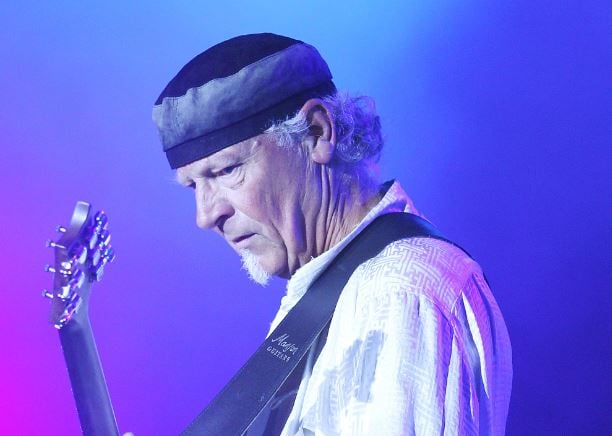
Getty
Playing Style
Barre’s playing stood apart from the more blues-dominated guitar heroes of his generation. He could play heavy riffs and searing leads, but his strongest quality was often the way he served the song. His parts frequently acted as counter-melodies to Anderson’s flute and vocals, adding drama without overwhelming the arrangements.
His style could be sharp, lyrical, aggressive, or delicate depending on the song. On Jethro Tull’s folk-influenced material, he often played with restraint and texture. On harder-rocking songs, he gave the band a muscular edge. That adaptability made him a crucial part of Jethro Tull’s ability to move between genres without losing its identity.
Later Jethro Tull Career
Jethro Tull continued through numerous lineup changes, but Barre remained one of the group’s constants. He played through the band’s 1980s shift into electronic textures and its later return to more guitar-oriented rock. The 1987 album “Crest of a Knave” won the Grammy Award for Best Hard Rock/Metal Performance Vocal or Instrumental, one of the more controversial Grammy results in rock history because Jethro Tull beat Metallica in the category.
Barre stayed with Jethro Tull until the band’s original long-running era ended in the early 2010s. His partnership with Anderson had lasted roughly four decades, making him one of the longest-serving members in the history of a major classic rock band.
Solo Career
Barre began releasing solo music while still associated with Jethro Tull. His solo albums include “A Trick of Memory,” “The Meeting,” “Stage Left,” “Away with Words,” “Back to Steel,” and “Roads Less Travelled.” His solo work has often emphasized instrumental guitar, blues, folk textures, and reinterpretations of Jethro Tull material.
After his time with Jethro Tull ended, Barre formed the Martin Barre Band and continued touring internationally. His concerts have mixed solo material with reworked Jethro Tull songs, giving longtime fans a chance to hear the catalog from the perspective of the guitarist who helped shape it.
Legacy
Martin Barre occupies a distinctive place in rock history. He was not Jethro Tull’s frontman, but his guitar was central to the band’s sound for more than 40 years. His work helped transform Jethro Tull from a blues-rock group into one of progressive rock’s most unusual and enduring acts.
His legacy rests not only on the famous solo in “Aqualung,” but on decades of inventive, disciplined, and highly musical playing. As the guitarist behind many of Jethro Tull’s greatest recordings, Barre remains one of classic rock’s most respected supporting architects.
All net worths are calculated using data drawn from public sources. When provided, we also incorporate private tips and feedback received from the celebrities or their representatives. While we work diligently to ensure that our numbers are as accurate as possible, unless otherwise indicated they are only estimates. We welcome all corrections and feedback using the button below.
(function() {
var _fbq = window._fbq || (window._fbq = []);
if (!_fbq.loaded) {
var fbds = document.createElement(‘script’);
fbds.async = true;
fbds.src=”
var s = document.getElementsByTagName(‘script’)[0];
s.parentNode.insertBefore(fbds, s);
_fbq.loaded = true;
}
_fbq.push([‘addPixelId’, ‘1471602713096627’]);
})();
window._fbq = window._fbq || [];
window._fbq.push([‘track’, ‘PixelInitialized’, {}]);