IN BRIEF
- The UAE’s defence ministry said the drone that targeted the facility was one of three.
- Trump is expected to meet top national security advisers to discuss further attacks on Iran.
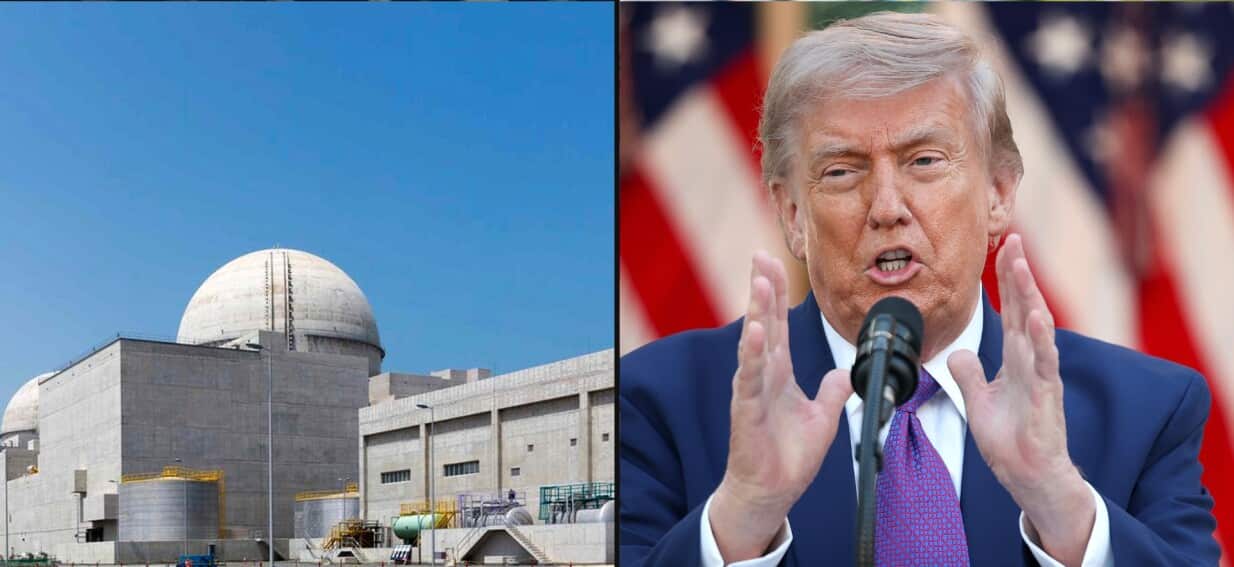
Overnight, officials in the United Arab Emirates reported a drone strike had ignited a fire at a nuclear power plant. As the incident unfolded, U.S. President Donald Trump called for Iran to “act fast,” highlighting the stalled efforts to resolve the ongoing U.S.-Israeli conflict with Iran.
Authorities in the UAE are actively investigating the origin of the drone strike and have asserted their right to respond to what they described as “terrorist attacks.” Meanwhile, the UAE’s defense ministry announced that two additional drones had been effectively neutralized. These drones reportedly originated from the “western border,” although further details were not provided.
The drone that penetrated defenses managed to strike an electrical generator located outside the inner perimeter of the Barakah Nuclear Power Plant. According to the Abu Dhabi Media Office, this incident did not compromise radiological safety levels, and fortunately, no injuries were reported.
The International Atomic Energy Agency (IAEA) confirmed that emergency diesel generators were supplying power to the plant’s “unit 3.” The agency emphasized the importance of “maximum military restraint” around nuclear facilities and assured the public it was closely monitoring developments.
Since the conflict erupted with U.S. and Israeli military actions against Iran on February 28th, Iran has frequently targeted Gulf nations, including the UAE, which are home to U.S. military bases.
During the war that began with US and Israeli strikes against Iran on 28 February, Iran has repeatedly targeted the UAE and other Gulf states that host US military bases.
Iran stepped up such attacks on the UAE earlier this month after Trump announced a naval mission to try to open the Strait of Hormuz, which Trump retreated from after 48 hours.
US-Iran talks in diplomatic deadlock
More than five weeks after a tenuous ceasefire in the conflict took effect, US and Iranian demands remain far apart despite diplomatic efforts to end the war and reopen the strait, the world’s most important shipping route for oil and gas.
Washington has called for Tehran to dismantle its nuclear program and lift its hold on the strait. Iran has demanded compensation for war damage, an end to a US blockade of Iranian ports and a halt to fighting on all fronts, including in Lebanon, where Israel is carrying out a bombing campaign and ground invasion.
Trump, whose harsh rhetoric has failed to break the stalemate, said in a post on Truth Social: “For Iran, the Clock is Ticking, and they better get moving, FAST, or there won’t be anything left of them. TIME IS OF THE ESSENCE!”
Trump is expected to meet top national security advisers on Tuesday (local time) to discuss options for military action regarding Iran, Axios reported.
Trump held talks with Chinese President Xi Jinping this week without securing an indication from China that it would help resolve the conflict and has previously threatened to resume attacks if Iran does not agree to a deal.
A senior spokesperson for the Iranian armed forces, Abolfazl Shekarchi, said on Sunday that if Trump’s threats were carried out, the US would “face new, aggressive, and surprise scenarios, and sink into a self-made quagmire”.
Iranian foreign ministry spokesperson Esmaeil Baqaei said the US and Israel had tried to shift the blame for destabilising energy markets following their “unprovoked military aggression against Iran”.
For the latest from SBS News, download our app and subscribe to our newsletter.