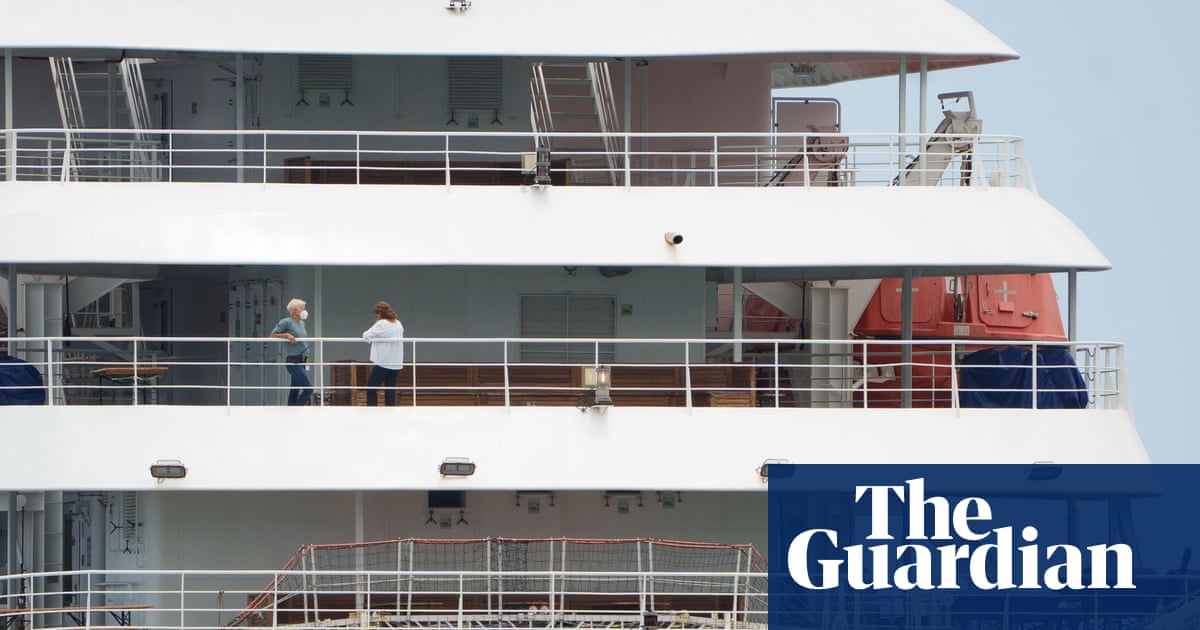

The journey of the MV Hondius across the Atlantic was initially filled with promise and adventure, but it quickly turned into a harrowing ordeal. Within weeks, the ship faced a crisis as three passengers succumbed to hantavirus, and several others began to exhibit symptoms.
Elsewhere, another cruise liner is dealing with a norovirus outbreak, while other pathogens like flu, E. coli, and varicella, the virus responsible for chickenpox, have also been problematic in similar environments. The 2020 incident involving the Diamond Princess still lingers in memory, where the vessel became a COVID-19 hotspot, leading to a two-week quarantine off Japan’s coast and infecting over 700 of the 3,711 individuals on board.
It’s not entirely unexpected that cruise ships can serve as breeding grounds for diseases. These massive vessels host numerous interactions among passengers in close quarters. Experts point out that travelers come from diverse nations, bringing varying levels of immunity and exposure to different pathogens.
Adding to the complexity, cruise ships are constantly on the move. Dr. Charlotte Hammer, an infectious diseases expert at the University of Cambridge, explains, “This mobility means passengers may come into contact with pathogens unusual to their daily lives.”
Additionally, a significant number of cruise-goers are older adults, a group more vulnerable to certain infections, setting the stage for possible health crises.
David Heymann, a professor specializing in infectious disease epidemiology at the London School of Hygiene & Tropical Medicine, notes, “Outbreaks on ships depend on who boards, whether anyone is already infected, and what pathogen they might be carrying.”
As Heymann points out, infections can be transmitted in different ways. One is through respiratory transmission between people, either via aerosols – tiny particles that linger in the air and can be inhaled – or via droplets that can either fall on people directly or contaminate surfaces. Covid and flu are among the diseases spread this way.
While many ships have made efforts to improve their ventilation to boost air quality, Hammer notes there are limits to what can be done. “You’re not going to have high ceilings on a boat. You are not going to have the airflow of two open windows, just because most cabins do not have windows,” she says. “So there is, in terms of the sheer engineering of a ship, only so much you can do.”
Another route by which diseases can be spread is through contaminated food, as is often the case for E coli and norovirus outbreaks. Hammer says a key issue on cruise ships is that while their kitchens have high levels of hygiene, they also provide a single point of failure. “Again, that is sort of the core engineering. You can’t have X number of backup kitchens on a ship because you only have so much space.”
Dr Vikram Niranjan, an assistant professor in public health at the University of Limerick, says buffets are a potential point of spread, not least as everyone shares the same serving utensils. And there are other surfaces that are regularly touched. “Ships aren’t dirty, they are just efficient mixing chambers,” he says.
There is also the possibility of outbreaks that spread via water systems. Cruise ships have previously had outbreaks of legionnaires’ disease, a lung infection caused when people inhale droplets of water containing legionella bacteria. “That’s very difficult to deal with,” Heymann says. “First of all, you have to show that the organism is in the water, and the ship may not have the means to do that.”
Once an outbreak has begun, cruise ships face challenges, not least in diagnosis. Hantavirus, for example, is rare, and only one strain is known to pass between people. As a result, the medical team onboard – which sometimes includes just one doctor – may not immediately realise what they are facing. “You would begin to suspect if a lot of people had it. But if you saw just one hantavirus infection, it looks like any other viral infection,” Heymann says.
As Hammer notes, ships do not have full laboratories or a whole suite of hospital equipment. “You have limitations in terms of testing, particularly for something that’s a bit rarer,” she says. “You have limitations in terms of medical space, medical professionals.”
Niranjan says while cruise ships often have a space for isolation and ventilators, they are not prepared for mass outbreaks. He says one option could be to have collapsible isolation cabins that could be used in an emergency.
Heymann says another change that could be made is for the larger cruise ships to ensure their doctors are better trained for such scenarios. “Hopefully, these doctors will begin to get more skills in epidemiology and in dealing with outbreaks so that when an outbreak does occur on a ship, they can minimise the transmission.”
Passengers can take precautions. The US Centers for Disease Control and Prevention issued guidance emphasising not boarding if unwell, regular handwashing when onboard, getting vaccinated against routine diseases, having destination-specific vaccines or medications, and notifying the ship’s medical centre if you are sick. It also mentions the importance of having travel insurance. Niranjan adds it could be worth packing face masks.
Hammer says many of the factors that put cruise ships at risk of outbreaks are not necessarily easy to change. “Or rather, if you change them, the cruise ship is no longer a cruise ship,” she says. “You can make it not move any more – but that sort of defeats the point.”