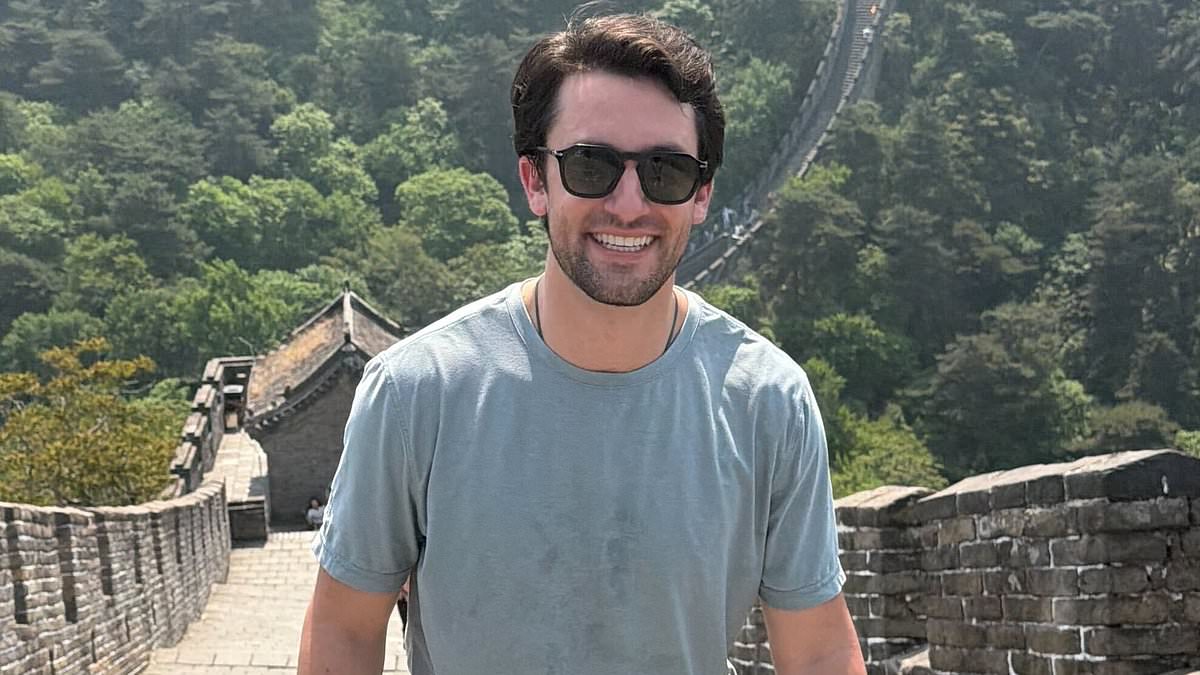

As I landed in China for the much-anticipated summit between President Donald Trump and Xi Jinping, it was clear that scrutiny wasn’t reserved solely for the world leaders. The sense of being watched was palpable.
The U.S. State Department cautions travelers to China about the possibility of surveillance on various fronts—whether in hotel rooms, offices, cars, or taxis. Even your phone calls, internet activities, and digital transactions could be monitored.
Colleagues from the White House, fellow journalists, and even family members echoed the same counsel: it would be wise to leave digital devices behind, avoid solitary ventures, and refrain from photographing or interviewing those considered the ‘wrong people.’ This includes soldiers, police, or any shadowy figures tied to the security apparatus.
The real challenge lies in recognizing who these ‘wrong people’ might be, as their identities are often shrouded in mystery.
A friend of mine from the military offered a word of caution, suggesting I might be tailed or even approached during my stay in Beijing.
“Don’t be surprised if a stranger approaches and calls you by name,” he advised. “They might try to unsettle you by casually mentioning details about your family.”
I left my personal phone at home and packed a burner, a spare laptop, two portable WiFi hotspots and privacy apps to mask my internet activity.
Though, regardless of any safeguards I put in place, I knew that the moment my devices connected to a Chinese phone network or WiFi, everything on them would land in the hands of the government.
On a slow day when a fellow journalist and I took a trip to the Great Wall of China, we immediately noticed the in-car camera recording us
A camera was pointed at a fellow journalist and me while we were driven by Yuyu, a government employee. The recording devices, which also log audio, were in every ride that I took using the Chinese version of Uber, called Didi
Big Brother is always watching in China, and wherever I went, I saw cameras which monitor the populace and any visitors from abroad
‘There is no expectation of privacy on mobile or other networks in China,’ a State Department travel notice cautions.
‘China’s internet and mobile service providers must provide Chinese intelligence and security services with on-demand access to data, networks, and related infrastructure.’
The CCP also allegedly uses software that can hijack phone cameras and turn personal devices into its digital spies.
As I typed these words from my Beijing hotel room, I couldn’t shake the fear that someone was reading my keystrokes.
As an American journalist reporting from inside one of the world’s most intrusive surveillance states, I felt an ever-present anxiety, bordering on paranoia.
Indeed, China is home to half of Earth’s surveillance cameras. That fact is driven home when walking the streets.
Cameras are everywhere, in the airport, tucked inside cabs, installed throughout hotels, up and down the streets, hanging over restaurants.
Upon arriving at the Beijing airport on Wednesday for Trump’s Air Force One arrival, fellow American reporters and I noticed that we were being filmed by Chinese journalists.
Donald Trump gestures towards Chinese President Xi Jinping while leaving after a visit to the Zhongnanhai Garden in Beijing, Friday
President Trump departs China after his summit with Xi Jinping as he returned to the White House on Friday
We were clearly not the subject of the day, yet we had become the subject of their shots.
No one asked for our permission, and it left us all with an eerie, unsettling feeling.
Would our small talk and unwitting dialogue be sent to the nightly news or to some clandestine service? Why were we so interesting to them?
China Daily, an English-language outlet run by the Central Propaganda Department, later posted videos of fellow Western journalists and me at the event.
On the second day, at Trump’s arrival ceremony at the Great Hall of the People, Chinese media again began filming me without my consent.
Then came the strange sounds on my phone.
Trump departed Beijing after White House officials and reporters aboard Air Force One dumped their burner devices in a bin before boarding

Donald Trump poses for a picture with Chinese President Xi Jinping during a visit to the Zhongnanhai Garden in Beijing, China, May 15
Halfway through a call to my dad about the historic experience, the line filled with interference, his voice became softer and the service turned spotty.
Later, I called my girlfriend on WhatsApp, hoping the encryption might guarantee privacy. The connection was terrible. I couldn’t hear her, and she could barely hear me.
I switched to a regular call instead, but midway through the call it was distorted by strange muffled sounds, like a hand pressed hard over the microphone.
Am I being overly paranoid? Entirely possible. Could there have been someone listening in? That’s not out of the question either.
Before my flight home, after uploading all my fingerprints and taking a facial scan, the customs officer waved me through.
I breathed a sigh of relief as I boarded my plane bound for the US.
I was instructed by Daily Mail colleagues to leave my burner devices powered off upon arriving back stateside. They are to be cleaned and wiped by our company’s IT department and are not to be used again.
A precaution likely for the best, as the White House urged its staff and reporters to dump their burner devices in a bin before traveling on Air Force One back to the states.
Overall, I enjoyed my time in Beijing, and many of the locals that I interacted with were hospitable and friendly. But when visiting an authoritarian surveillance state, you can’t help but wonder who is watching.


