
NVIDIA’s recent stock market performance suggests the tech giant is on the brink of another historic milestone. Over the past week, the company’s shares have surged by approximately 20%, adding hundreds of billions of dollars to its market valuation and bringing it tantalizingly close to a $6 trillion market cap. Whether this occurs tomorrow, next week, or later, there’s growing confidence that NVIDIA achieving this valuation is not a question of if, but when.
Reaching this landmark would further solidify NVIDIA’s central role in the booming artificial intelligence sector. It would also significantly increase the wealth of CEO Jensen Huang. With a 3.5% stake in the company, Huang’s share would be valued at roughly $210 billion if NVIDIA hits the $6 trillion mark, placing him comfortably among the world’s wealthiest individuals.
Though Huang is widely recognized as the face of NVIDIA’s success, he wasn’t alone in founding the company. In 1993, two other engineers joined him at a Denny’s in San Jose, where they laid the groundwork for what would become one of the most valuable companies in history.
These two co-founders were also brilliant engineers and held stakes in the company similar to Huang’s at the time of NVIDIA’s initial public offering in 1999.
With NVIDIA closing in on a $6 trillion valuation, one might assume all three co-founders are now among the wealthiest individuals globally.
However, the reality is a bit more complex.
One of those co-founders, Chris Malachowsky, still works at the company, currently serving as an “NVIDIA Fellow,” a senior technical role he has held for decades. He has undoubtedly amassed substantial wealth from his long tenure and stock holdings, though his exact net worth has never been publicly disclosed, and he does not appear on any major billionaire rankings. I did snoop some real estate records and found that Chris still lives in the same Silicon Valley house he bought in 1993 for $735,000. And while that sounds modest, today the property is worth around $8 million. Oh, and a couple of years ago, he gave around $40 million to his alma mater, the University of Florida, to build what became the 260,000-square-foot Malachowsky Hall for Data Science & Information.
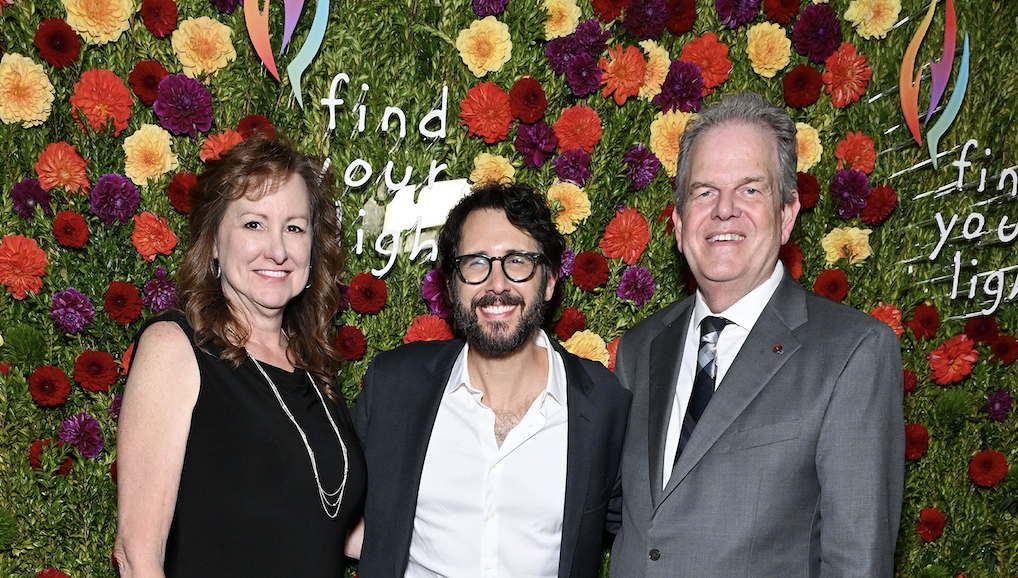
The third co-founder, Curtis Priem (pictured far right in the photo below, along with Josh Groban, center, and Cindi Priem, left), made a radically different choice.
Shortly after NVIDIA went public, Curtis decided he did not want to accumulate substantial wealth.
So he gave it all away.
In 1999.
When NVIDIA was worth around $1 billion.
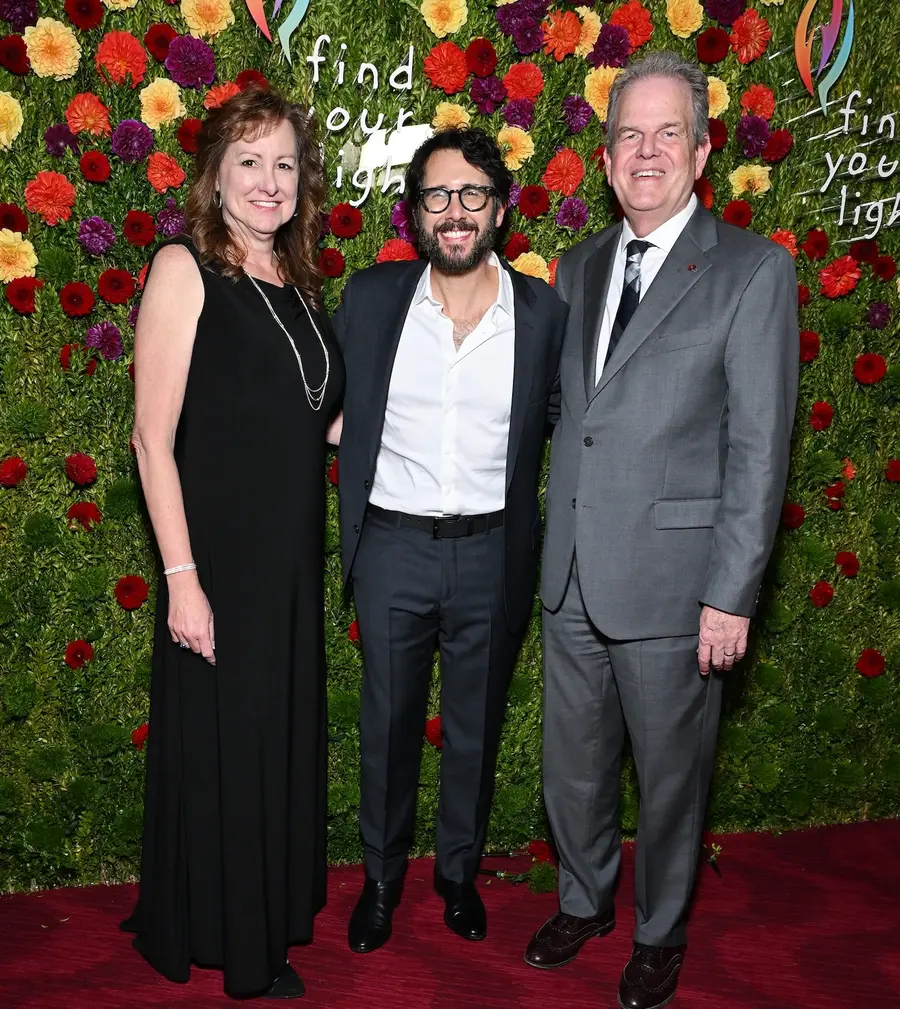
Cindi Priem, Josh Groban, and Curtis Priem (Photo by Slaven Vlasic/Getty Images for Find Your Light Foundation)
A Brief History of NVIDIA
NVIDIA’s story begins in 1993, when three engineers — Jensen Huang, Chris Malachowsky, and Curtis Priem — met at a Denny’s in San Jose to discuss an idea that seemed almost niche at the time: creating specialized chips to handle computer graphics. All three had met years earlier through their work in Silicon Valley’s workstation and chip industries. Huang was a microprocessor designer at LSI Logic, which supplied components and design tools to major computing firms. Malachowsky and Priem both worked at Sun Microsystems, where they helped design high-performance workstation graphics systems. Their professional paths crossed frequently, and they soon discovered a shared vision — that the future of computing would demand far more powerful visual processing than CPUs could deliver.
They decided to build a company around that idea. NVIDIA — a name inspired by “invidia,” the Latin word for envy — was officially founded on April 5, 1993. The company’s early years were rocky. Its first product, the NV1, failed to gain traction because it used an unconventional architecture that didn’t align with Microsoft’s new DirectX standard. But by the late 1990s, NVIDIA had learned from its mistakes. It rebounded with the RIVA 128, a 3D graphics card that finally delivered the performance PC gamers were craving.
IPO
That success paved the way for NVIDIA’s 1999 IPO. NVIDIA went public on January 22, 1999. On the day of the IPO, the three co-founders owned a combined 37.8% of the company’s shares, broken out as:
- 15%: Jensen Huang
- 12.8% Curtis Priem
- 10% Chris Malachowsky
At the end of its first day as a public company, NVIDIA’s market cap stood at $550 million. So the three co-founders instantly had paper net worths of:
- $82.5 million: Jensen Huang
- $70.4 million: Curtis Priem
- $55 million: Chris Malachowsky
“Excessive Amount of Money”
Shortly after the IPO, Curtis made what would eventually prove to be a colossal mistake. He had good intentions, but his timing and short-sightedness were horrendous (in hindsight, obviously). Pretty much right after the January IPO, Curtis transferred the majority of his 3/4ths of his NVIDIA shares into a newly formed charity called the Priem Family Foundation. He apparently did this because he didn’t feel comfortable owning such an “excessive amount of money.”
Bad Marriage
In July 1999, a few months after the IPO, Curtis got married to a woman named Veronica. They eventually welcomed two sons, one born in 2000 and another born in 2007.
As it turned out, getting married would eventually prove to be a colossal mistake (children aside, obviously). Legal filings in their divorce (she filed in 2010) would later show that during their marriage, Veronica was the subject of 19 police reports related to alleged domestic violence against Curtis. She was arrested five times, convicted of crimes three times, served three protective orders, and one restraining order. At one of her convictions, in May 2008, for misdemeanor spousal battery, she pleaded nolo contendere — essentially, a no-contest plea that carries the same legal effect as a guilty plea without an admission of guilt. That conviction became central to their divorce proceedings.
Initially, Curtis was ordered to pay $10,000 per month in temporary spousal support and $20,000 in legal fees, on top of $14,000 per month in child support. He appealed, arguing that California’s domestic-violence laws prohibit abusive spouses from receiving alimony from their victims — and the court ultimately ruled in his favor.
Two years later, Curtis helped get a California amendment, SB 28, passed — a law that clarified how no-contest pleas in domestic violence cases should be treated in divorce proceedings. The bill, inspired directly by his own legal battle, ensured that a nolo contendere plea would count as documented evidence of abuse that judges must consider when deciding whether an abusive spouse is eligible for spousal support.
Giving Up A Fortune
As we stated previously, when NVIDIA went public in 1999, Curtis Priem owned 12.8% of the company.
At the time, NVIDIA’s market cap was roughly $550 million, making his stake worth about $70 million on paper. The company’s valuation hit $1 billion about a year later. By 2004, NVIDIA’s market cap was routinely in the $2 to $3 billion range, and by 2006, it surged past $10 billion for the first time. In mid-2007, the company’s value reached roughly $15 billion.
Unfortunately, by 2006, Curtis had sold off all of his remaining NVIDIA shares.
If Curtis Priem still owned his original 12.8% stake in NVIDIA and the company crosses a $6 trillion market cap, he would be worth:
$768 billion
That would make him, by far, the richest person on the planet.
If Curtis had sold half his shares and kept a 6.4% stake, he would be worth $384 billion.
If Curtis had sold 75% of his shares and kept a 3.2% stake, he would be worth $192 billion.
Even if Curtis had sold 99.98% of his original NVIDIA shares, meaning he retained just 0.02% of the company, that tiny sliver alone would be worth $1.2 billion at a $6 trillion valuation.
Do not feel too bad for him, though. A 2023 Forbes profile pegged Priem’s net worth at around $30 million. He reportedly lives in a $6 million home in the Bay Area and owns a Gulfstream G450 jet, worth between $10 million and $20 million, depending on condition.
Still, in terms of hypothetical missed fortunes, Curtis Priem may have the most painful “what if?” in Silicon Valley history.
So What Happened To The Money?
Remember the Priem Family Foundation that Curtis formed in 1999 with roughly two-thirds of his NVIDIA shares? That original donation represented around 8.5% of the company.
At a $6 trillion valuation, an 8.5% stake in NVIDIA would be worth $510 billion.
Obviously, the foundation did not hold all of those shares forever. But over the last 25 years, the Priem Family Foundation has quietly donated hundreds of millions of dollars to charity. The foundation, which has no employees, no offices, and virtually no overhead, has given to nature charities and organizations such as The Nature Conservancy and the Monterey Bay Aquarium.
The foundation has been especially generous to Curtis’ alma mater, Rensselaer Polytechnic Institute. Since 2001, Priem has donated more than $350 million to RPI. That is roughly 40% of all donations the school has received in that time.
One of the most visible gifts was a $40 million contribution to build the Curtis R. Priem Experimental Media and Performing Arts Center, a 1,165-seat venue that opened in 2008 and was designed to merge technology and the arts. More recently, he pledged $95 million to bring an IBM Quantum System One computer to the RPI campus, making it the first university in the world to house such a machine.
According to its most recent filing, the Priem Family Foundation controls around $160 million in assets and intends to dissolve by 2031.
Here is a video of the Curtis R. Priem Experimental Media and Performing Arts Center:
As NVIDIA powers a new generation of artificial intelligence billionaires, one of its original architects remains a reminder that not every engineer in Silicon Valley chased the money. Some, like Curtis Priem, simply let it go.
And if NVIDIA crosses $6 trillion, the fortune he let go of will be worth roughly three-quarters of a trillion dollars.
(function() {
var _fbq = window._fbq || (window._fbq = []);
if (!_fbq.loaded) {
var fbds = document.createElement(‘script’);
fbds.async = true;
fbds.src=”
var s = document.getElementsByTagName(‘script’)[0];
s.parentNode.insertBefore(fbds, s);
_fbq.loaded = true;
}
_fbq.push([‘addPixelId’, ‘1471602713096627’]);
})();
window._fbq = window._fbq || [];
window._fbq.push([‘track’, ‘PixelInitialized’, {}]);


