
America’s burgeoning artificial intelligence industry is encountering its first significant pushback, and it’s emerging from an unexpected quarter.
The tranquil coastal state of Maine has taken a decisive step to curtail the swift expansion of data centers that fuel AI technology. It has enacted a pioneering ban that could potentially halt considerable developments in the sector.
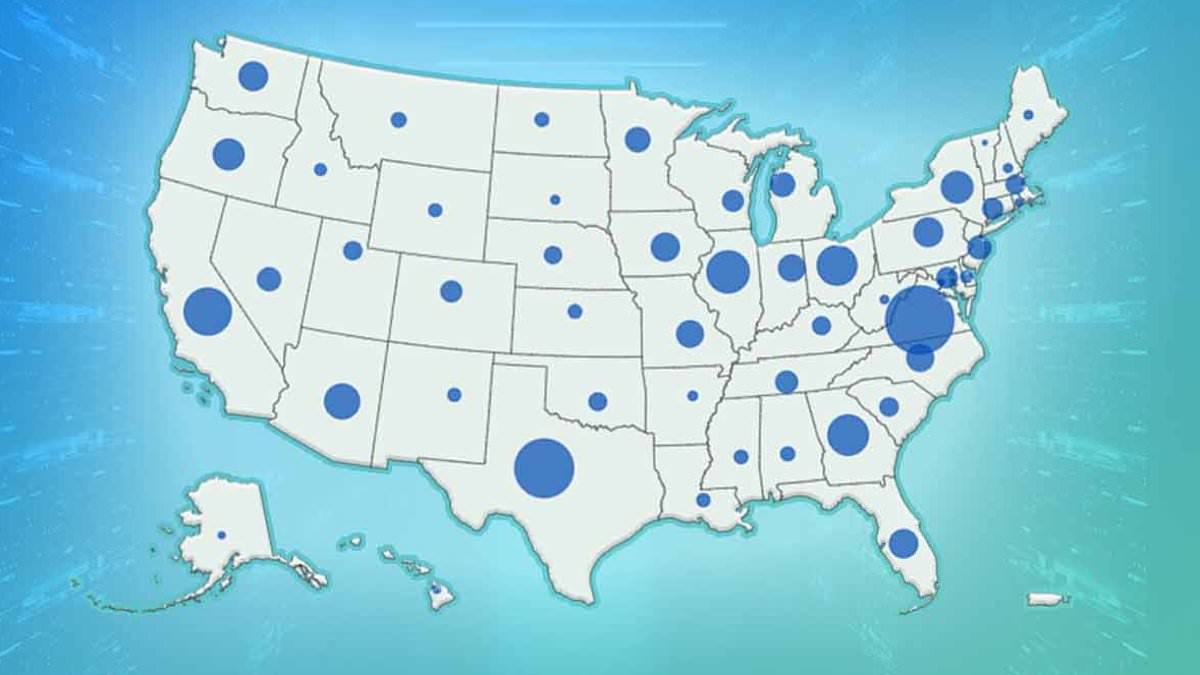
Across the nation, over 5,000 data centers have been established, sparking grassroots activism due to worries about health implications and rising electricity costs.
Maine’s legislators have passed a bill instituting an 18-month pause on the construction of large-scale data centers. This bold move could jeopardize billions of dollars in investment and the creation of much-needed jobs.
This decision highlights a growing nationwide opposition to the backbone of AI technology, as concerns escalate over increased electricity bills, environmental harm, and the vast scale of these facilities springing up across the United States.
Additionally, there are health concerns, with scientists sounding the alarm about the potential for data centers to emit harmful pollutants that could lead to asthma, cancer, and even fatal outcomes.
These data centers – used by tech giants like Google and Microsoft to power everything from chatbots to cloud computing – can consume vast amounts of electricity, in some cases rivaling the energy use of entire towns.
Under the proposed law, any new data center using more than 20 megawatts of power would be blocked until at least November 2027, giving officials time to study the impact and draw up new rules.
Though the bill has passed both chambers, it’s up to Governor Janet Mills to enact it into law – and she wants a carve out allowing a $550 million data center project to go through this year
The bill in Maine has passed both the House and Senate, been approved by the Legislature’s appropriations committee and is now headed to Governor Janet Mills’ desk.
Mills has not said whether she will allow it to become law or veto it, as she continues to push for the proposed $550 million project at the former Androscoggin paper mill in Jay to be exempted. Such a project would inject billons into the local economy with jobs and added spending in local hotels, shops and restaurants from construction workers.
The mill, which closed its doors in March 2023, was once part of the state’s historic lumber industry – now hit hard by President Donald Trump’s tariffs, as much of its machinery is imported from Canada and Scandinavia.
Employment in Maine’s forest industry is down 7 percent, according to a report by the Maine Forest Products Council, and Mills has been vocal about the use the data center project would have in boosting jobs.
‘The people of Jay need those jobs, with appropriate guardrails on preserving water resources, electricity resources, local generation and all those things,’ Mills told reporters during an event in Bangor last week.
This sentiment was echoed by Tony McDonald, who is developing the data center in Jay, telling the Wall Street Journal that the project was set to begin construction in July before they got ‘caught in this dragnet’.
Fears around these data centers in Maine have accelerated as the state holds some of the country’s highest residential electricity prices. Elected officials are concerned that a surge in data-center power demand might further inflate costs.
Depending on Mill’s decision, a coordinating council of government officials, experts and other stakeholders would develop policy recommendations and guidelines aimed at limiting the impact of future data centers in the state.
The sleepy state of Maine has become the first in the nation to pass a bill that would temporarily ban the construction of AI data centers as anti-AI sentiments grow across the US
Mills is pushing for an exemption for the proposed project at the former Androscoggin paper mill in Jay, which closed in March 2023
Across the country, the rapid expansion of AI infrastructure is pushing up electricity costs for consumers, while also generating substantial tax revenues for local governments that continue to court developers (PICTURED: Stargate AI data center in Abilene, Texas)
Scientists are ringing the alarm on the potential for data centers to pump out dangerous pollutants that can cause asthma, cancer and even death
Mark Zuckerberg compared his latest data center to the size of Manhattan in a recent Threads post

In cities that have already been experiencing water issues, like this water break in Texas, centers are exacerbating local droughts
The bill, which carries a $95,000 price tag to fund the panel, was approved by the Legislature’s appropriations committee on Monday.
While Mills said she appreciates the intent of the measure, she has also noted that the Jay project would bring much-needed jobs, tax revenue and broader economic development to the region.
Though Maine is the first to potentially enact these measures state-wide, legislators in New York, South Carolina and Oklahome have already introduced measures to temporarily ban or restrict data centers.
Ohio, which is one of the top states for data-center development, has a group of rural activists currently collecting signatures to put a statewide ban of large data centers on a November ballot.
On a smaller-scale, municipalities and counties in Michigan and Indiana have already imposed their own temporary pauses, while Denver and Detroit are among the major cities that are considering such bans.
Maine has not attracted Alphabet’s Google, Microsoft or other hyperscale AI data center developers, partially due to opposition. Recent proposals in Wiscasset and Lewiston were paused or rejected locally amid resident opposition.
Some projects have focused on abandoned industrial sites, including closed mills, while one company has even floated a $415 million underwater data center off the Maine coast.
Governor Mills didn’t immediately respond to the Daily Mail’s request for comment.