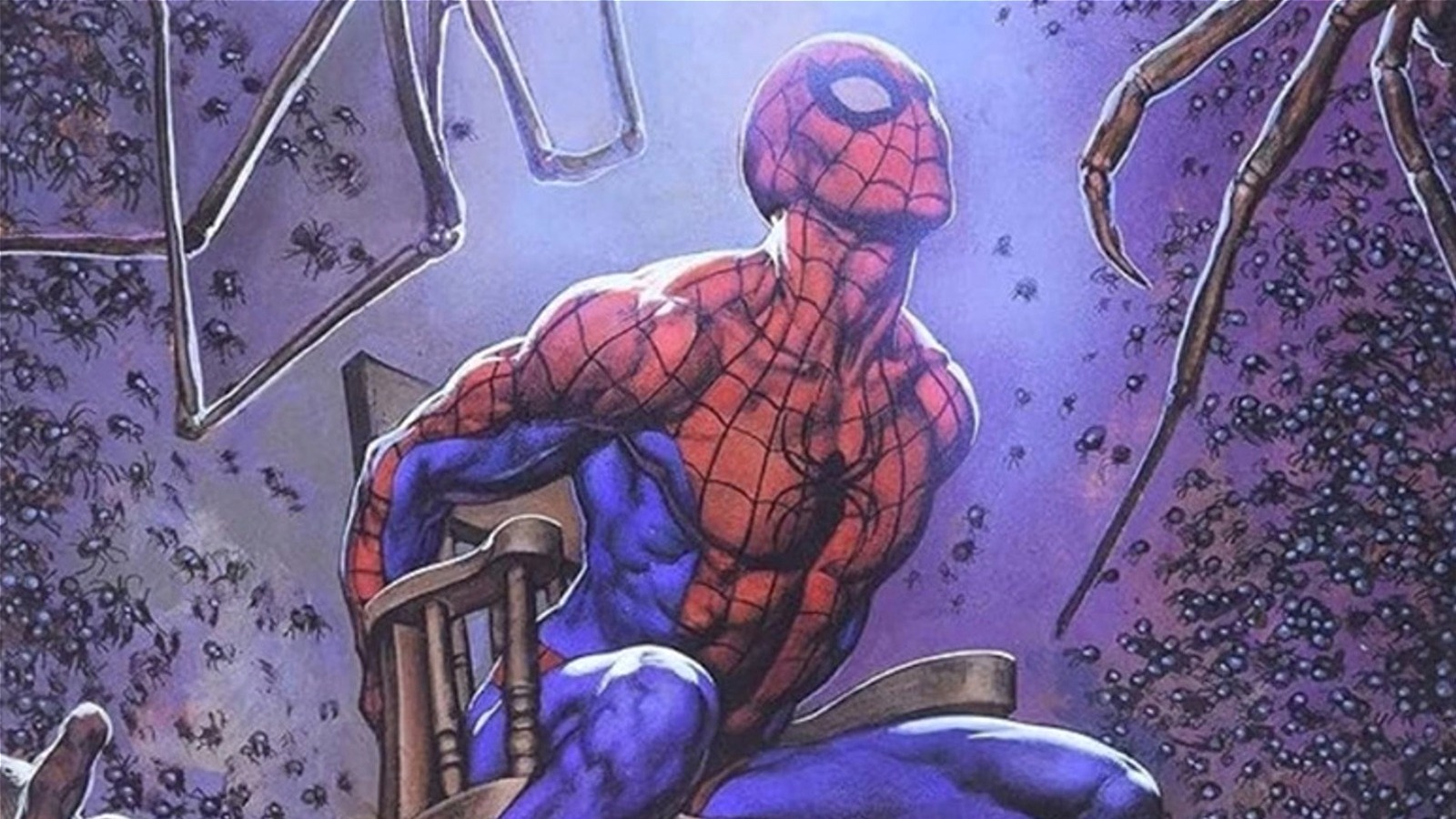

When Marvel Studios unveiled the first trailer for “Spider-Man: Brand New Day” in 2026, fans were buzzing with excitement. The film promised a more intimate, grounded narrative, yet it was hard to overlook the intriguing hints of Peter Parker, portrayed by Tom Holland, acquiring new abilities and emerging from a massive cocoon. The trailer sparked fervent speculation that the Marvel Cinematic Universe might be drawing inspiration from the 1981 storyline “Marvel Fanfare” #1-3, where Peter is forcibly transformed into Man-Spider, or the dramatic 2005-06 crossover “The Other,” where Spider-Man undergoes a death and rebirth through a cocoon.
Both storylines showcase dramatic physical changes, but neither compares to the unsettling body horror found in Spider-Man’s most disturbing tale: “The Coming of the Thousand” from 2001’s “Spider-Man’s Tangled Web” #1-3. Crafted by writer Garth Ennis and artist John McCrea, the story introduces Carl King, a high school tormentor who witnesses Peter Parker’s fateful spider bite. Driven by envy of Spider-Man’s powers, Carl sneaks into the lab and consumes the deceased radioactive spider.
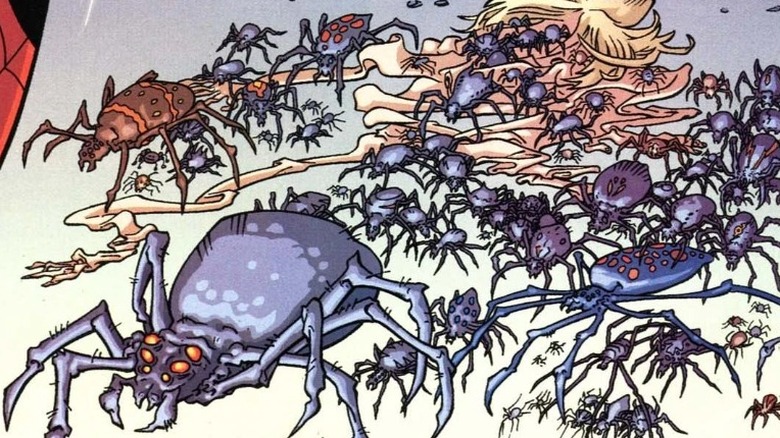
Rather than gaining superpowers, Carl’s body horrifyingly disintegrates into a swarm of a thousand spiders, all linked by a single consciousness. Dubbed “the Thousand,” Carl embarks on a killing spree, with his spiders masquerading in the skin of his victims, until he feels powerful enough to confront Spider-Man and attempt to usurp his body. “The Coming of the Thousand” stands as one of the most visceral and disturbing Spider-Man narratives, one that would challenge the MCU’s cinematic boundaries.
While Spider-Man’s adventures often tread into tragic territory, “The Coming of the Thousand” is particularly grim, thanks to the formidable creative duo behind it. Garth Ennis, an award-winning writer and co-creator of “The Boys,” a graphic novel series that inspired the popular Amazon Prime show, is known for his bold, often shocking portrayals of violence. His frequent collaborator, John McCrea, illustrated the controversial “The Boys: Herogasm” alongside Keith Burns in 2009. Together, they crafted a Spider-Man story that defies conventional norms.
In Carl King, Ennis and McCrea created one of the most malevolent villains in Spider-Man’s gallery of foes. Once Peter Parker’s own bully, King’s cruelty knows no bounds. He boasts about his heinous acts to Spider-Man, which include murdering his own parents, Peter’s colleague Jess Patton, and even children. McCrea’s illustrations are hauntingly vivid; the image of King’s teeth falling out as he morphs, or the sight of spiders spilling from a dissected skin, linger long after the pages are turned — all because King dared to consume the same spider that empowered Peter.
The Thousand is more appropriate for The Boys than the MCU
John McCrea/Marvel Comics
Ultimately, Spider-Man prevails over the Thousand, but not before the villain has claimed numerous lives, implanting his spider swarm within them in a chilling display. The storyline concludes with an ironic twist, leaving readers relieved that Carl King hasn’t resurfaced. With so many iconic villains already populating the MCU, it’s unlikely Marvel will bring “The Coming of the Thousand” to the big screen, sparing Tom Holland and audiences from its nightmarish elements.
With Carl King, Ennis and McCrea created one of the most sadistic supervillains in Spider-Man’s rogues gallery. Once Peter Parker’s own bully, King was cruel to the end. He brags about his kills to Spider-Man, which include his own parents, Peter’s co-worker Jess Patton, and even kids. McCrea’s artwork is not for the squeamish; it’s hard to forget the image of King’s teeth falling out of his mouth as he transforms, or hundreds of spiders scurrying out of a victim’s discarded skin — all because King had the nerve (and the stomach) to eat the same arachnid that once gave Peter his own gifts.
Spider-Man eventually triumphs over the Thousand, though the villain gets a chance to consume several victims and fill them with his hive-mind legion of creepy crawlies, all sketched in loving detail to activate a reader’s latent arachnophobia. The storyline reaches an ironic end, leaving us thankful there hasn’t been more of Carl King since. With so many classic Spidey villains already bouncing around the MCU, it’s hard to imagine that Marvel would adapt “The Coming of the Thousand” and subject Tom Holland (much less us) to its horrors.