in brief
- Anthony Albanese has criticised Donald Trump’s unpredictability in the Middle East.
- He said that the US leader’s actions are hurting the world and Australia.
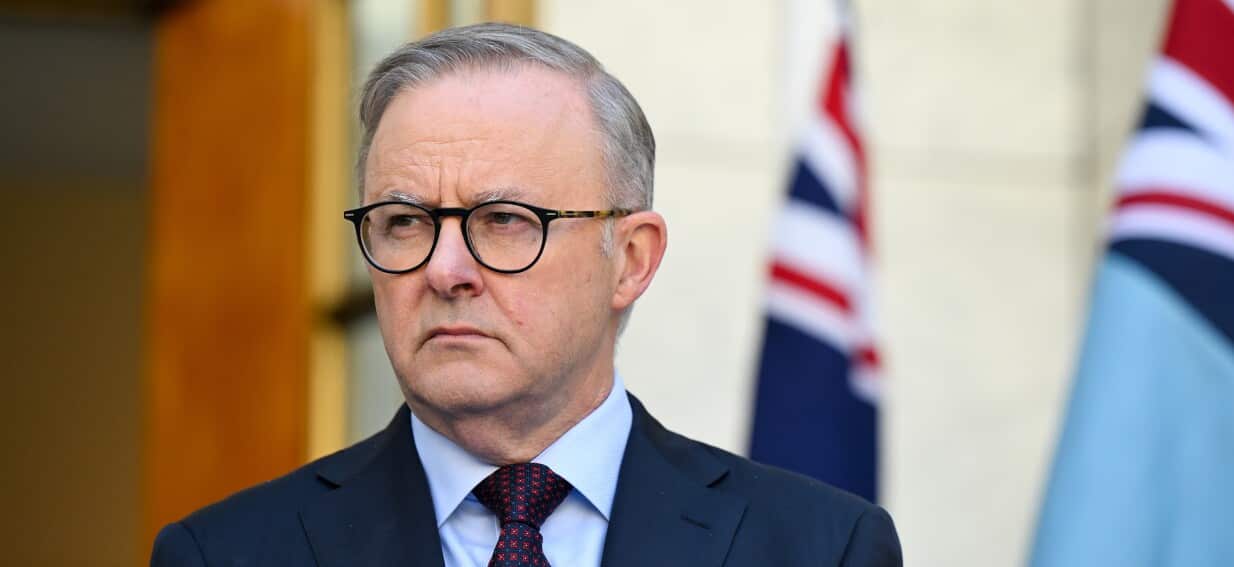
Prime Minister Anthony Albanese has criticized former U.S. President Donald Trump’s erratic governance style, highlighting its global challenges, particularly in the realm of foreign policy.
Trump has faced backlash over his inconsistent deadlines for peace negotiations with Iran, which have exacerbated economic disruptions and prolonged conflict in the Middle East.
In a discussion with ABC Radio Perth on Wednesday morning, Albanese characterized the ongoing conflict as “uncertain” and “volatile,” noting that he lacked any intelligence regarding when it might conclude.
However, Albanese was clear on his stance that Trump’s unpredictable decisions regarding the conflict have detrimental effects on global economies, including Australia’s own economic stability.
“Just days ago, President Trump was asserting he would take military action, then he retracted, and now he’s contemplating it once more,” Albanese pointed out.
“This unpredictability creates significant challenges worldwide, impacting inflation rates globally, including in the United States. Despite these challenges, Australia is navigating this crisis more effectively than many other nations,” he added.
It’s not the first time Albanese has been critical of the US leader.
Hours before agreeing to a conditional two-week ceasefire last month, Trump posted on Truth Social that “a whole civilisation will die tonight, never to be brought back again”.
In a television interview with Sky News Australia at the time, Albanese said language threatening civilian infrastructure and destruction was not appropriate. He warned that such statements cause international concern.
“We’ve said very clearly that the conduct of any conflict must be within international law and that provides for making sure that civilians — who aren’t parties to the conflict — are given every protection possible,” he said.
Global conflict impacting Australia
Treasurer Jim Chalmers has spoken of the impacts of the war in the Middle East and prolonged US-Iran negotiations as cause for concern.
Ahead of the May budget, Chalmers said last month it was “hostage” to decisions made in Washington.
One of the main global disruptions has been fuel supply, due to frequent closures of the Strait of Hormuz in the Arab Gulf, where 20 per cent of global oil ordinarily transits.
When asked about fuel supplies on Wednesday, Albanese said Australia had more petrol, jet fuel and diesel than on 28 February, when the United States and Israel attacked Iran.
It’s not the first time he’s used that line; it was first deployed in a fuel report in April.
“That is due to the hard work that we’ve put in place, but also the hard work of Australians who are doing the right thing, hoarding and taking more than people need has stopped,” he said.
This year’s federal budget, handed down last week, included a multi-billion-dollar fuel resilience package, including a $7.5 billion fuel and fertiliser security facility and a $3.2 billion Australian fuel security reserve.
The package is designed to facilitate at least 50 days of onshore fuel supply and storage of diesel and aviation fuel.
Australia has also been ramping up its efforts to secure fuel supplies, with an additional three spot-market diesel cargoes secured in May.
For the latest from SBS News, download our app and subscribe to our newsletter.