IN BRIEF
- Trump said he’s not in a “hurry” for a deal, but would “like to see few people killed, as opposed to a lot”.
- Trump has repeatedly threatened Iran with renewed attacks, while Iran has hit back with its own warnings.
Iran announced on Thursday, AEST, that it is currently reviewing the latest proposal from the United States, which it received via mediator Pakistan, in ongoing efforts to resolve the Middle Eastern conflict. This development follows a period where both nations have exchanged threats of resuming hostilities.
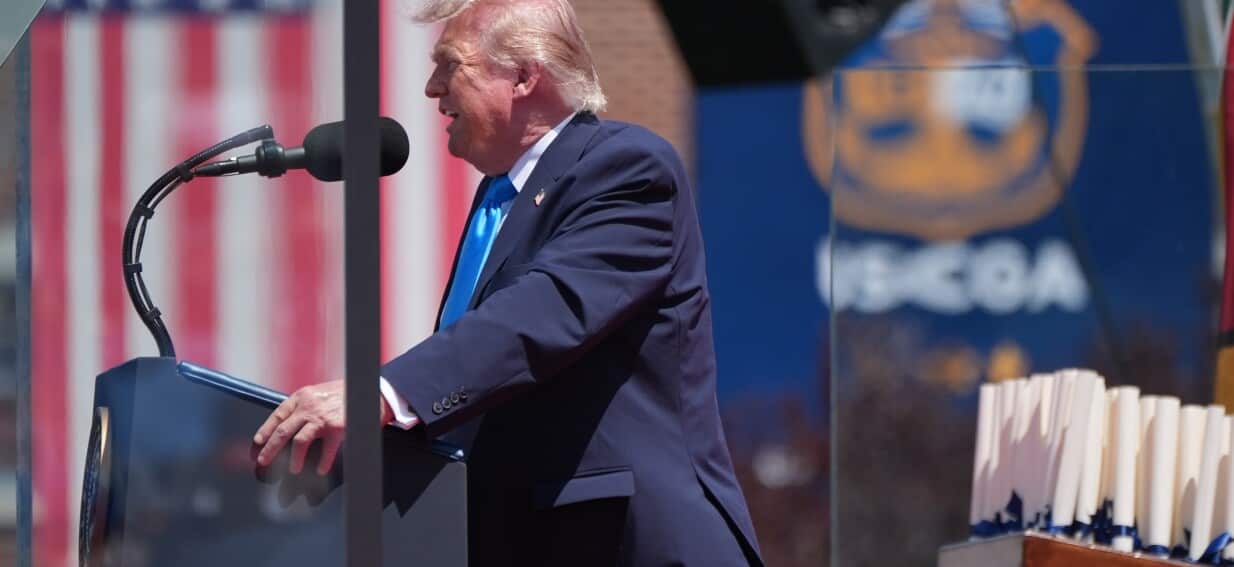
In related news, U.S. President Donald Trump informed reporters that negotiations with Iran have reached the “final stages.”
Trump stated, “We’ll either reach an agreement, or we may have to take actions that are somewhat unpleasant. However, I hope it doesn’t come to that.”
He further noted, “I’m not in a rush. Ideally, I prefer fewer casualties rather than many.”
Esmaeil Baqaei, spokesman for Iran’s foreign ministry, confirmed that Iran has “received the American perspective and is currently assessing it.”
He emphasized Iran’s key requirements, which include the unfreezing of Iranian assets held overseas and lifting the U.S. blockade on Iranian ports.
Iran’s chief negotiator Mohammad Bagher Ghalibaf had said earlier that the US wanted to restart the war, after Trump said he would attack again unless Iran agreed to a peace deal.
Ghalibaf, who warned of a “forceful response”, was speaking after Iran’s Revolutionary Guards said any renewed war would spread far beyond the Middle East.
“The enemy’s movements, both overt and clandestine, show that despite economic and political pressure, it has not abandoned its military objectives and is seeking to start a new war,” Ghalibaf said.
War of words amid ceasefire
A ceasefire on 8 April brought a halt to the US-Israeli war with Iran, which has roiled the global economy, but with both countries seemingly reluctant to resume the fighting, a war of words has taken its place.
Trump has repeatedly threatened Iran with renewed military action, while Iranian officials have hit back with their own warnings.
The Revolutionary Guards said on Wednesday: “If the aggression against Iran is repeated, the promised regional war will this time spread far beyond the region, and our devastating blows will crush you.”
Nevertheless, despite sporadic bursts of violence, the two countries have continued to take part in diplomatic exchanges, mediated by Pakistan, aimed at bringing a formal end to the war.
Citing diplomatic sources, Iran’s official IRNA news agency announced a visit to Tehran by Pakistan’s interior minister, his second in less than a week.
Global oil prices fell more than 5 per cent on Wednesday amid hopes of a deal.
Saudi foreign minister Prince Faisal bin Farhan praised Trump on Wednesday for his decision to “give diplomacy a chance” and urged Iran to seize “the opportunity to avoid the dangerous implications of escalation”.
Israel’s army chief, Lieutenant Colonel Eyal Zamir, said the military was at its highest alert level “and prepared for any development”.
Trump under pressure in the US
Trump is under pressure, with rising energy costs beginning to bite at home.
While the ceasefire brought a halt to the fighting, it has not reopened the vital Strait of Hormuz, through which a fifth of the world’s oil and liquefied natural gas usually passes.
Iran’s Revolutionary Guards Navy said on Wednesday it allowed 26 vessels, including oil tankers, to transit the Strait of Hormuz over the previous 24 hours, after “coordination and security provided by the IRGC navy”.
The US has imposed its own blockade on Iranian ports, and US Central Command (CENTCOM) said Marines had boarded an Iranian-flagged oil tanker on Wednesday in the Gulf of Oman that was suspected of attempting to violate the blockade.
“American forces released the vessel after searching and directing the ship’s crew to alter course,” CENTCOM said on X.
It said US forces have now redirected 91 commercial ships to ensure compliance with the blockade.
The future of the Strait is a key sticking point in negotiations, but without a deal, fears are growing for the global economy as pre-war oil stockpiles are depleted.
The strait is also a conduit for around a third of global fertiliser, the loss of which is pushing up food prices and could cause shortages.
On Wednesday, the United Nations’ Food and Agriculture Organization warned of “a severe global food price crisis” and a “systemic agrifood shock” from the closure of the strait.
For the latest from SBS News, download our app and subscribe to our newsletter.