

ORLANDO, Fla. – The National Oceanic and Atmospheric Administration (NOAA) has unveiled its forecast for the upcoming 2026 hurricane season, offering insights into what meteorologists and residents might expect in the Atlantic basin.
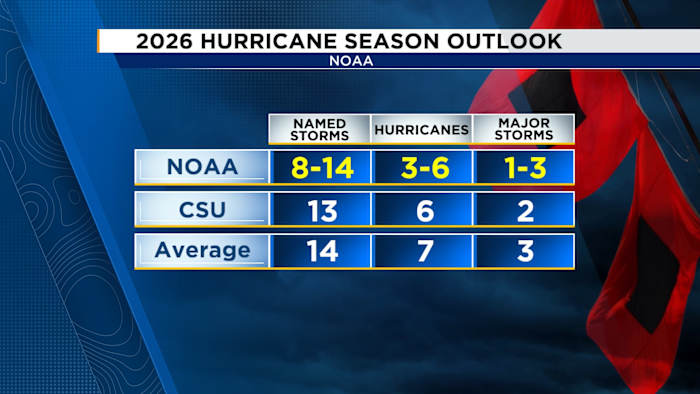
According to NOAA’s predictions, the season could see between eight and fourteen named storms. Out of these, three to six might develop into hurricanes, and one to three of those could escalate into major hurricanes, defined as Category 3 or higher, with winds reaching at least 111 mph.
In comparison, an average hurricane season typically features around 14 named storms, seven of which become hurricanes, and three reach the status of major hurricanes. This year’s forecast suggests a potentially less intense season, largely influenced by natural climatic factors.
Central to this year’s forecast is the expected influence of a robust El Niño phenomenon. Historically, El Niño conditions tend to suppress hurricane activity in the Atlantic, as stronger upper-level wind shear disrupts the formation and intensification of tropical systems.
Experts are anticipating one of the most powerful El Niño events on record to develop later in the summer, which could significantly impact the overall dynamics of the hurricane season.
When it comes to El Niño itself, one of the strongest on record is possible later in the summer.
It’s important to note that even in a “slow” hurricane season, it only takes one storm to make it a bad year, and it is always important to be prepared.
Hurricane season runs from June 1 to Nov. 30.