IN BRIEF
- Bianca Adler follows Alyssa Azar and Gabby Kanizay as young Australian women breaking Everest records.
- More than 270 climbers summited Everest from Nepal in one day, sparking fresh overcrowding concerns.
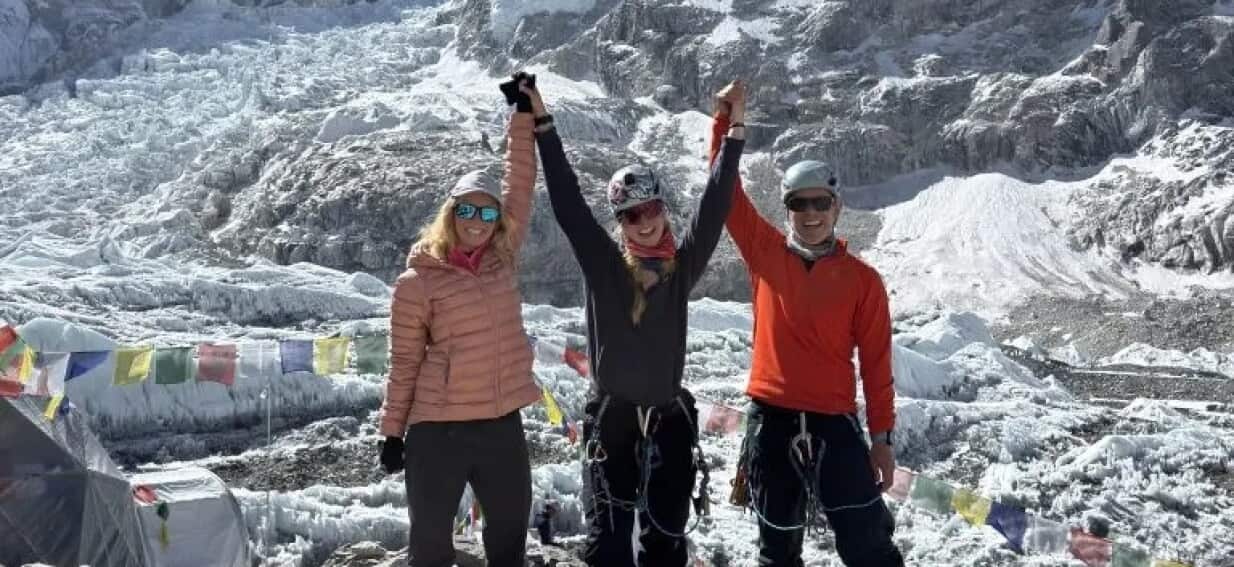
An 18-year-old climber from Melbourne has made history by becoming the youngest Australian to conquer Mount Everest, successfully reaching the summit on her second attempt.
Bianca Adler achieved the formidable feat of scaling the 8,849-meter peak with the assistance of two Nepali guides. In doing so, she has surpassed previous record holders Alyssa Azar and Gabby Kanizay, setting a new benchmark for Australian climbers.
Her achievement comes amid a surge in the number of climbers reaching Everest’s summit from the Nepalese side, with a record-breaking 274 ascents in a single day. This increase has sparked ongoing discussions about overcrowding, the congestion in the notorious ‘death zone,’ and the associated risks to climber safety.
After returning to Kathmandu, Adler shared her experiences with SBS Nepali, expressing both the immense physical challenge of the climb and the relief of beginning her descent.
“Reaching the top is an incredible feeling, but it’s also a relief to stop climbing upwards because it is extremely tiring,” Adler remarked.
“At those altitudes, the lack of oxygen makes it truly exhausting,” she added, highlighting the demanding conditions climbers face at such high elevations.
Adler said the descent was among the toughest parts of the expedition, after completing a gruelling 23-hour push from Camp Four to the summit and back to Camp Two.
“We arrived at base camp in the morning, ate a little bit and then had to pack up all our gear that we had spread out over the past few months,” she said.
Despite the physical strain, Adler said her previous mountaineering experience helped her body adapt to the extreme conditions.
“I actually feel pretty good,” she said.
“With experience on other mountains, my body has sort of learned how to adapt a little bit better to those higher altitudes and how to function better on less food and water.”
‘Most accidents happen on the way down’
Adler spent about 20 minutes at the summit, reaching the top around 2:20am local time.
“It’s a really amazing moment knowing you have reached the top of the world,” she said.
“But we also have to go down and we are only halfway at the top and most of the accidents happen on the way down, so you also have to stay focused.”
She said overcrowding near the summit meant climbers had to briefly wait their turn at the peak.
“We were the second group at the summit that day so you need to let everyone have their moment at the top of the world,” she said.
“We also have to be super mindful not to take our big gloves off for too long because that is how you get frostbite.”
Inspired by other Australian climbers
Adler praised fellow Australian climbers Alyssa Azar and Gabby Kanizay, and said they had inspired her own mountaineering ambitions.
“Ever since a few years ago when I was training for other mountains, I had just looked up to those women,” she said.
Her summit came during one of the busiest Everest climbing periods on record.
On Wednesday, 274 climbers reached the summit from the Nepali side, according to local officials, renewing concerns about congestion in Everest’s so-called “death zone”. The ‘death zone’ refers to the high-altitude area above 8,000 metres where oxygen levels are critically low.
This beat the last record of 223 set in 2019. When combined with ascents from both the Nepali and Chinese sides, the highest number of people who summitted in one day is 354.
Chinese authorities did not issue any permits to climb Everest from their side this year.
Nepal issues hundreds of Everest permits each year, generating millions of dollars in tourism revenue. Several deaths have already been reported this climbing season.
This article was produced in collaboration with SBS Nepali.
For the latest from SBS News, download our app and subscribe to our newsletter.