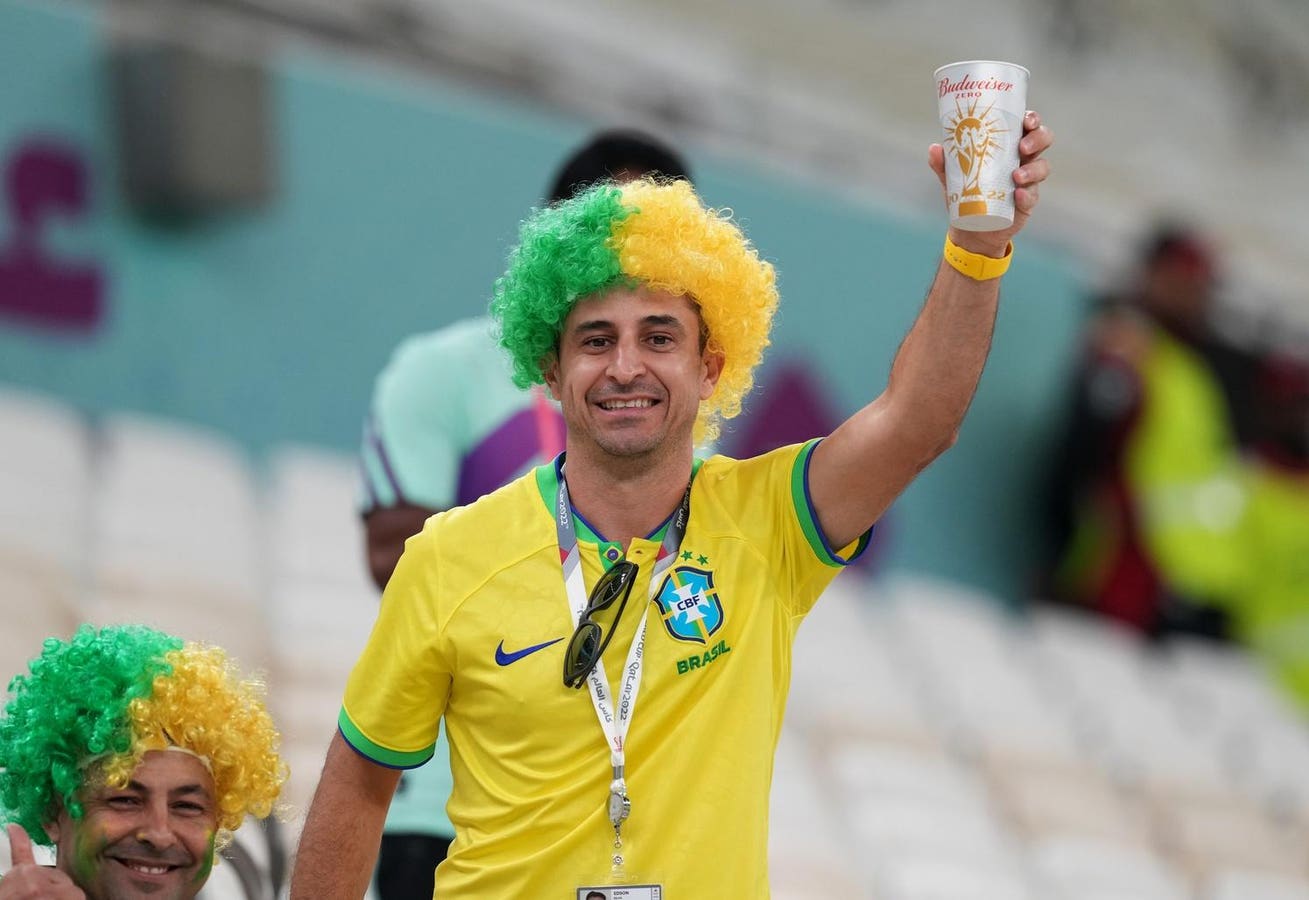


As anticipation builds for the 2026 FIFA World Cup, major beer companies and beverage brands are investing billions, eyeing what experts believe could be a landmark marketing opportunity for the alcohol sector. However, amid the sponsorships and excitement, this event might also challenge the notion of whether drinking culture is shifting towards less alcohol consumption.
Brewing and spirits firms are making substantial commitments across the United States, Canada, and Mexico in preparation for FIFA’s expanded 48-team tournament. They are hopeful that this global event will spark renewed growth following a period of declining alcohol consumption, especially among the younger generation.
Interestingly, many of these companies are increasingly focusing not just on traditional alcoholic beverages, but on innovative products that offer the social aspects of drinking without the associated intoxication.
This tournament is set against a backdrop of significant changes in worldwide drinking patterns. A recent Gallup survey revealed that the percentage of Americans consuming alcohol has dropped to 54%, marking a near 90-year low, with many now viewing even moderate drinking as potentially harmful.
This shift is largely driven by younger generations who are gravitating towards moderation, embracing alcohol-free alternatives, and mixing between alcoholic and non-alcoholic options.
Consequently, non-alcoholic drinks have emerged as one of the industry’s fastest-growing segments.
At the same time, non-alcoholic beverages have become one of the fastest-growing categories in the industry.
Anheuser-Busch InBev, one of FIFA’s major sponsors, recently reported a 27% increase in revenue from its non-alcoholic beer portfolio, driven by brands including Corona Cero, Michelob Ultra Zero, and Budweiser Zero.
Zero-proof beer brands are increasingly directing advertising dollars toward major sports events. Here is American surfer Griffin Colapinto competing in the quarterfinals at the Corona Cero New Zealand Pro in Raglan, New Zealand, on May 24, 2026. Photo by Oscar Hetherington/World Surf League.
World Surf League via Getty Images
The 2026 World Cup may become the alcohol industry’s biggest test yet of whether moderation can be marketed at a global scale.
“The World Cup not only boosts beer volumes but transforms how and what people drink,” Barclays analysts wrote in a recent study that forecasted growth in premium and zero-alcohol categories during the tournament.
The commercial stakes are enormous. The World Advertising Research Centre estimates the tournament could drive a $10.5 billion surge in global advertising spending, with beverage companies among its most aggressive marketers. But unlike previous World Cups, many brands have begun centering campaigns around nonalcoholic beverages rather than treating them as niche alternatives.
Ahead of the World Cup, Molson Coors launched Coors 0.0%, its first fully non-alcoholic beer under the flagship Coors brand, alongside a soccer-themed Coors Light campaign built around legendary commentator Andrés Cantor’s iconic elongated “GOOOL” call.
Meanwhile, Michelob ULTRA Zero has launched a FIFA World Cup 2026 campaign featuring global football stars, including Lionel Messi, Ronaldo Nazário, Guillermo Ochoa, and Canadian star Jonathan David.
Heineken, which has long promoted Heineken 0.0 through Formula 1 and UEFA soccer partnerships, is increasing sports-related marketing around moderation and alcohol-free drinking.
Bottles of ‘Heineken 0.0’ are seen at the Heineken 0.0 grandstand, celebrating the launch of the zero alcohol beer ‘Heineken 0.0’ during the Spanish Formula One Grand Prix at Circuit de Catalunya in Montmelo, Spain. Photo by Alex Caparros for Heineken.
Getty Images for Heineken
Smaller challenger brands are also using the tournament to position themselves within the rapidly evolving trend.
UK-based non-alcoholic brewery Mash Gang, owned by DioniLife, sees the World Cup as a major opportunity to normalize alcohol-free beer within mainstream sports culture.
“The FIFA World Cup isn’t just another date in the retail calendar; it’s a global cultural moment that brings people together and captures attention like nothing else,” said DioniLife CEO Damian McKinney in an industry interview. “Alcohol-free beer naturally thrives in game-watching settings because it allows everyone to feel part of the action.”
McKinney says sports fans still want the social rituals and shared atmosphere traditionally associated with beer, even as more consumers moderate their alcohol intake.
“I’m a beer drinker. I enjoy having a beer during sports moments and social occasions,” he said. “So I still want something that hydrates, but I also want something that’s sessionable.”
McKinney believes the tournament’s summer timing, lengthy match schedules, and daytime viewing across multiple time zones could further increase demand for alcohol-free beverages that allow fans to socialize for extended periods without increasing alcohol intake.
Mash Gang is specifically targeting consumers who alternate between alcoholic and non-alcoholic beverages depending on the setting, timing, and occasion.
With many World Cup matches expected to air during daytime or early morning hours across Europe and other regions, Mash Gang sees zero-proof beer as a way for fans to keep their sports-viewing rituals without derailing work schedules, fitness routines, or health goals.
That positioning has also helped fuel the company’s growth. The company’s flagship hazy IPA, Chug, recently won gold at the 2026 World Beer Cup, often described as the ‘Olympics of Beer,’ strengthening Mash Gang’s reputation for taste and quality at a time when many consumers still associate non-alcoholic beer with inferior flavor.
Mash Gang’s Chug recently won gold at the 2026 World Beer Cup.
Mash Gang
The company is now carrying that strategy to the World Cup itself. Rather than pursuing expensive sponsorship deals, Mash Gang plans to focus on grassroots-style activations around the tournament.
“We’re looking at outdoor activations around sports bars and fan areas near World Cup games in the U.S.,” McKinney said. “We’ve developed a plan involving buskers and beer, where buskers will perform the traditional songs and chants supporters would normally sing during a soccer match.”
Rather than framing non-alcoholic beer around abstinence or restriction, the activations are designed to recreate the communal atmosphere traditionally associated with beer and live sports.
“We’re trying to find interesting ways to share the beer with people,” he said.
MacKinney says that the category is evolving beyond sobriety-focused messaging toward something more centered on inclusion, participation, and premium drinking experiences—a shift that is increasingly shaping World Cup beverage marketing itself.
Research commissioned by Heineken found that 81% of people surveyed actively choose to moderate alcohol consumption, while 79% said non-alcoholic beverages allow them to “be part of the fun without drinking alcohol.”
That trend gained significant momentum during the 2022 FIFA World Cup in Qatar, when organizers abruptly restricted alcohol sales inside stadiums just days before the tournament began. The decision forced sponsors, including Anheuser-Busch InBev, to rapidly pivot toward zero-proof products such as Bud Zero.
What initially appeared to be a major commercial setback ultimately became an unexpected test case for the category. Many fans embraced the alternatives, helping demonstrate that non-alcoholic beer could still play a role in the World Cup’s social rituals and match-day atmosphere.
But unlike Qatar 2022—where beverage companies were reacting to sudden restrictions—the next World Cup will unfold across the U.S., Canada and Mexico, giving brands access to three enormous consumer markets and a far larger commercial opportunity for both alcoholic and zero-proof beverages.
A USA supporter holds a cup of Budweiser Zero alcohol-free beer prior to the Qatar 2022 World Cup Group B football match between USA and Wales at the Ahmad Bin Ali Stadium in Al-Rayyan, west of Doha on November 21, 2022. Photo by Patrick T. FALLON
AFP via Getty Images
In Mexico, Grupo Modelo is aggressively promoting Corona Cero across host cities ahead of the 2026 FIFA World Cup. The company has increasingly positioned non-alcoholic beverages as central to major sporting-event marketing following the success of alcohol-free activations during the Qatar tournament.
“When there’s soccer, there’s beer, and it doesn’t necessarily have to have alcohol,” said the company’s sponsorship director.
The rise of zero-proof beverages is also intersecting with broader wellness trends reshaping drinking habits globally.
GLP-1 weight-loss medications, growing health consciousness, and the ‘sober curious’ movement are all influencing how consumers approach alcohol. Rather than abandoning social rituals altogether, many appear increasingly drawn to moderation and flexibility.
McKinney believes the future of the category is not about abstinence but belonging.
“I think by 2030, non-alcoholic products could represent 20% of the drinking experience,” he says.
That shift is becoming increasingly visible inside sports marketing itself, where brands are positioning alcohol-free beverages less as substitutes and more as part of broader, more inclusive social experiences.
Corona Cero became the first global beer sponsor of the Olympic Games, while Guinness 0.0 has expanded its presence through major rugby and football sponsorships. Meanwhile, as beverage companies ramp up alcohol-free offerings ahead of the World Cup summer, FIFA sponsor Diageo recently expanded Ritual Zero Proof into ready-to-drink canned cocktails.
The category’s success increasingly depends on more than sobriety messaging alone and instead on whether brands can create authentic experiences around moderation, inclusion, and social connection.
The World Cup winners among beer marketers will be the brands that “understand that beer’s future with younger consumers isn’t about drinking more, it’s about belonging more,” Mintel analyst Gabe Sanchez recently told Business Insider.
That may ultimately become the defining lesson of the 2026 World Cup for the beverage industry.
The biggest growth opportunity may no longer come from encouraging consumers to drink more alcohol. Instead, it may come from ensuring more people feel included in the experience—whether they drink alcohol or not.