
In a stark warning, Rishi Sunak has highlighted that two out of every five adults in Britain struggle to understand their personal finances, placing the UK behind countries such as Germany, Australia, Canada, and the United States.
In an interview with the Daily Mail, the former Prime Minister expressed concern over the prevailing mindset in Britain that suggests “some people just aren’t maths people.” Sunak believes this attitude is hampering individuals’ abilities to effectively manage debt and save for retirement.
In response, Sunak and his wife, Akshata Murty, established a numeracy charity in March with the aim of integrating financial literacy into the educational curriculum.
Recent findings from the Richmond Project, named after Sunak’s constituency in North Yorkshire, reveal that 40 percent of Britons lack the necessary skills to handle their finances, with women being disproportionately affected.
The research, which surveyed over 10,000 adults, assessed their comprehension of crucial financial concepts such as compound interest, inflation, and risk diversification.
Despite these being standard measures for assessing financial literacy worldwide, only 28 percent of participants in the UK demonstrated an understanding of all three concepts.
It means that millions taking out mortgages, loans and credit cards are unable to understand how the interest works.
The UK trails behind Germany (53 per cent), Switzerland (50 per cent), the Netherlands (45 per cent), Australia and Canada (43 per cent) and the US (30 per cent).

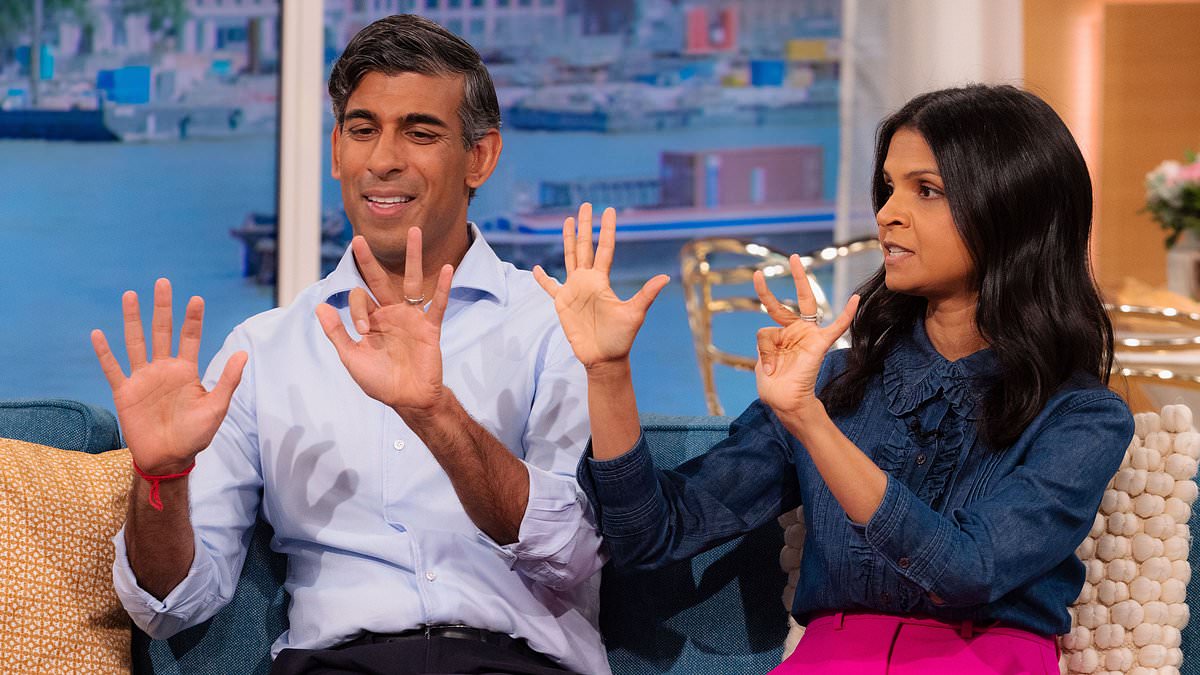
Rishi Sunak and his wife Akshata Murty founded the Richmond Project to help promote financial literacy
Men were shown to be more confident across every age group, with the gap widening sharply around middle age, when financial decisions can be most crucial, with mortgages, pensions, childcare costs and career breaks.
Ms Murty has previously spoken about ‘maths anxiety’ – the fear around numbers that mothers often suffer from and pass down to their daughters.
Mr Sunak said: ‘Even for us – a couple who are on the more confident end – we had to think about it with the kids.
‘We incorporated maths into our day-to-day lives as they were growing up, through things as simple as counting the stairs as we walked up and down them, to naming shapes with a pizza – triangular slice, square box, circular pizza – it all helps.’
Ms Murty has also released children’s books to help ‘get kids excited about numbers through stories’, which have been sent to more than 300 schools.
Starting early, the charity says, can help build long-term financial resilience, but Britain needs a ‘cultural shift’ to get there.
‘Financial literacy underpins so many things – what job you apply for, what opportunities you pursue and building security for you and your family,’ Mr Sunak said.
‘If you can help people improve their confidence with numbers, you’re giving them the best possible chance to live a more fulfilling life.’
Financial education will become compulsory for all pupils in England from September 2028, following a Government review.
The Richmond Project is helping to develop the new curriculum alongside the Department for Education, which will involve lessons on budgeting, compound interest, money management and mortgages.
It is also supporting initiatives to help parents with their own financial literacy.