

LONDON – The battle for dominance in cyberspace is intensifying, with Britain and its allies potentially falling behind adversarial nations like Russia. A prominent U.K. intelligence leader is urging individuals, businesses, and governments to prioritize cybersecurity more aggressively.
Anne Keast-Butler, who heads the GCHQ, is set to highlight the persistent threats posed by Moscow, which she claims is persistently attacking essential infrastructure, democratic systems, supply networks, and public trust across Britain and Europe. Speaking at a historic WWII codebreaking site near London, she will accuse Russia of technology theft and orchestrating sabotage and assassination plots.
Keast-Butler is expected to emphasize that the rapid evolution of artificial intelligence is changing the landscape, creating a “narrowing window” for the U.K. and its partners to outpace nations such as China, which she describes as a science and technology “powerhouse.”
She will advocate for a comprehensive cybersecurity approach that spans from corporate boardrooms to private homes, stressing the need for a tenfold increase in urgency, as per pre-released GCHQ statements.
This address is part of a series of alerts from Western intelligence communities, signaling an increase in Russian hostile activities within a “gray zone” that skirts the threshold of open conflict.
Recently, officials in nations like Sweden, Poland, Denmark, and Norway have reported cyberattacks on their critical infrastructure, such as energy facilities and water systems, allegedly carried out by Russian-affiliated hackers.
The head of the U.K.’s National Cyber Security Centre, Richard Horne, warned last month that hostile states including Russia, China and Iran are behind the most serious cyberattacks the country faces. He said such attacks could increase dramatically if Britain becomes involved in an international conflict.
Keast-Butler plans to stress the importance of international partnerships as U.S. President Donald Trump’s “America First” foreign policy and disregard for longtime allies strains the relationship between London and Washington.
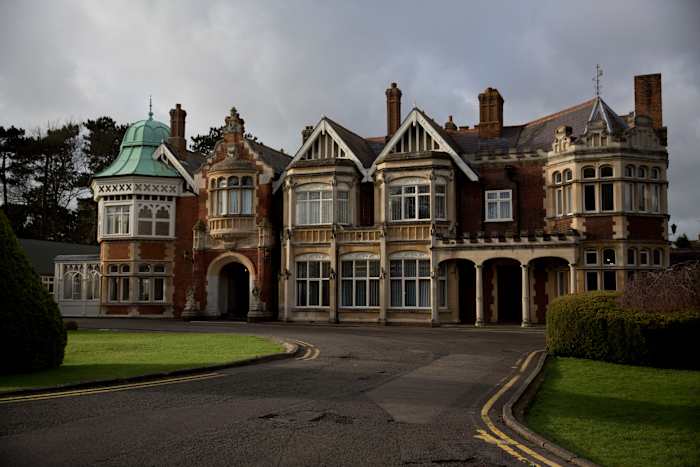
Pointedly, she is delivering the annual GCHQ director’s lecture speech at Bletchley Park, a manor house 45 miles (72 kilometers) northwest of London where hundreds of mathematicians, cryptographers, crossword puzzlers, chess masters and other experts worked to crack Nazi Germany’s supposedly unbreakable secret codes.
Their work both shortened the war and hastened the birth of modern computing.