
A family grappling with the repercussions of pollution from harmful “forever chemicals,” specifically PFAS, is urging the federal government to extend its actions beyond the momentous $2 billion lawsuit against the chemical producer.
Yesterday, the Commonwealth initiated legal actions against 3M, a US-based chemical corporation responsible for manufacturing firefighting foams that contain these persistent chemicals.
Attorney-General Michelle Rowland accused 3M of concealing critical information and misrepresenting the chemical’s impact, describing this lawsuit as the most significant ever launched by the federal government.
Residents in Bullsbrook, a northern suburb of Perth, where water contamination has been an issue for years, express concerns that the health consequences will linger for many generations.
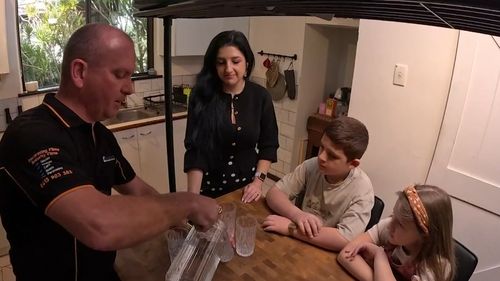
Colin Butland, a prominent advocate in the community’s struggle, welcomes the recent legal move but insists on further measures to ensure that any lawsuit benefits are directed back to the communities affected.
For Butland, the simple act of filling a glass with clean water at home serves as a constant reminder of his ongoing quest for justice.
“It’s been a lot of pressure on us, this has been a decade of our lives,” he told 9News.
In 2013 the Butlands moved into their Bullsbrook home and three years later the family were told their drinking water was contaminated with PFAS, a chemical that’s been linked to cancer and liver damage.
Hundreds of other residents are also affected.
The toxic chemical, previously used in firefighting foam at 28 Australian defence bases including Holsworthy Barracks in Sydney’s southwest, Richmond RAF base, as well as sites in Newcastle, Nowra, Singleton and Wagga, was produced by US-based company 3M.
“People have been drinking this water for decades,” Butland said.
“Just ask 3M. They stopped testing this chemical on monkeys because it was killing them.”
Rowland claimed the company withheld its own environmental laboratory testing showing significant adverse environmental effects associated with the use of the foam.
3M said in a statement âit would defend itself against the claims in court.
“3M has never manufactured PFAS in Australia and ceased sales âof the products at issue in Australia around two decades ago,” the statement said.
“Despite this, the Department of Defence continued to âuse â PFAS-containing firefighting foams for nearly two decades longer.”
Assistant Defence Minister Peter Khalil said defence had spent $1.3 billion responding to the PFAS contamination, including $408 million in legal settlements with communities surrounding affected bases, five litigated class actions, four litigated claims and 342 non-litigated claims.
“This is the most significant legal action undertaken by Commonwealth and Defence in living memory,” Khalil said.
“To put it plainly, we are taking on 3M on behalf of â the âAustralian people and the Australians that are affected.”
But Butland believes the fight needs to go further, claiming the health effects will be felt forever.
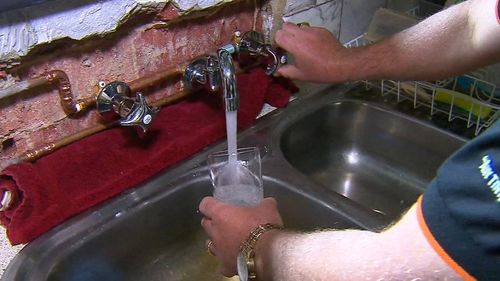
“We’ve got a real problem in Australia and our future generation could be very unwell from this,” he said.
Drinking tap water with peace of mind is relatively new for Bullsbrook residents, with a scheme water system finally installed in March.
Affected residents Australia-wide won a class action against 3M in 2023.
While $130 million was paid out, the forever chemical has left its mark, with confidence in properties still an issue today.