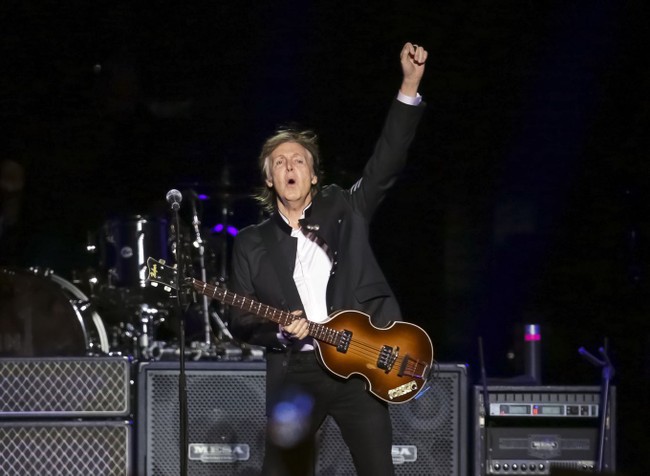

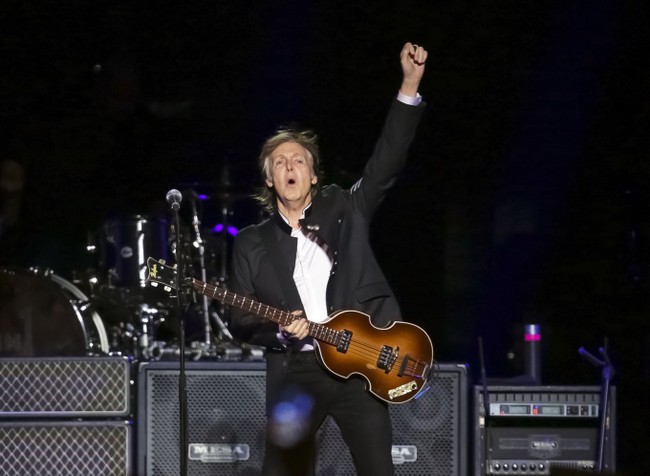
In a time where the title of “legend” is often generously bestowed upon those who barely extend their 15 minutes of fame, few truly earn it. Paul McCartney is one of those rare individuals who genuinely deserves the accolade. Since the 1960s, McCartney, along with his Beatles bandmates, has remained a beacon of musical brilliance. His contributions post-Beatles, whether with Wings or solo, have consistently silenced critics, solidifying his status as one of the most influential songwriters from the 20th into the 21st century. Even if he had stopped at penning “Yesterday” in the mid-’60s, his legacy would have been secure. Yet, McCartney has never been one to rest on past glories. Though not every endeavor hit the mark, more often than not, his work has enriched our lives with its remarkable impact.
As McCartney approaches his 84th birthday in June 2026, an age when most musicians have long retreated from the spotlight, he continues to defy expectations. On May 29, 2026, he released his 27th post-Beatles album, “The Boys of Dungeon Lane.” This lively collection of songs is a testament to his enduring creativity, brimming with energy and melody that rival artists half his age.
For decades, McCartney has exhibited an unparalleled knack for crafting melodies that are both familiar and fresh, with chord progressions and harmonies that defy conventional pop standards. His new album is no exception. The sound is more streamlined than extravagant, with instrumentation and vocals that are understated yet always in service of the melody. The result is a pop-rock album that is vibrant, emotionally engaging, and soothing in its simplicity.
Lyrically, McCartney straddles the line between the past and the present. While he naturally explores relationship themes with a mature perspective—eschewing frivolous love songs—it is when he reflects on the past that his lyrical prowess shines brightest. In tracks like “Days We Left Behind,” McCartney fondly reminisces about friends and moments now preserved in memory, capturing them with a gentle nostalgia rather than sentimental excess.
Though McCartney’s voice may not possess the same power it once did, it remains warm, clear, and pleasing to the ear. The days of raw vocal outbursts may be behind him, yet his delivery is still impressive. Notably, he eschews modern enhancements like autotune, opting instead for authentic vocal and instrumental performances.
In an era where many musicians feel compelled to make grand statements and infuse songs with heavy-handed messages, McCartney’s straightforward approach is refreshingly genuine. “The Boys of Dungeon Lane” doesn’t pretend to be a profound social commentary. Instead, it offers a heartfelt exploration of life’s shared experiences and the simple, yet profound, declaration of love. It’s an album that touches on the beauty of ordinary life, celebrating the past while embracing the present. With 47 minutes and 14 tracks of heartfelt, non-contrived sentiment, McCartney delivers with elegance and charm, giving us yet another reason to be grateful for his musical gifts.
In a world where musicians seemingly feel compelled to make everything a massive statement and every song a sloganeering-laden workout, it is utterly refreshing to have a true master of his craft finding contentment in talking about shared experiences of life and love, realizing no statement is grander or has more impact than a simple “I love you.” “The Boys of Dungeon Lane” makes no pretense of being grand social commentary. It is an album for and about normal people, affectionately recalling what once was while enjoying what is good in the present day. Paul McCartney has offered us a 47-minute, 14-song slice of nonstick sentiment, delivered with style and a smile. For this we can indeed be thankful.


