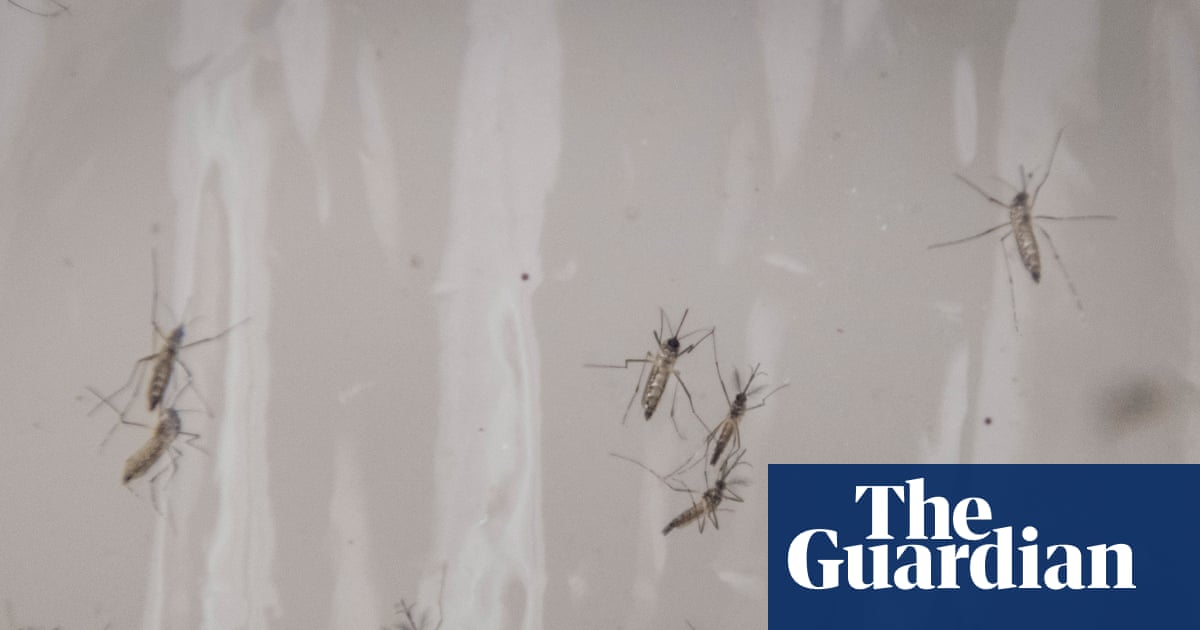

Google is seeking to curb the spread of disease through an innovative approach involving mosquitoes, but not in the way you might think. The tech giant is asking the U.S. government for authorization to release up to 32 million sterilized mosquitoes in the states of California and Florida.
This strategy is part of Google’s “Debug” project, which aims to leverage technology to diminish the population of mosquitoes that transmit dangerous diseases. Known as the deadliest animals on the planet, mosquitoes are responsible for more human fatalities annually than any other creature, spreading illnesses such as dengue fever, West Nile virus, Zika virus, chikungunya, and malaria.
The U.S. Environmental Protection Agency (EPA) is currently reviewing Google’s proposal, which would allow the release of up to 16 million mosquitoes each year over a two-year period in both Florida and California. The agency will make a decision on the experimental use permit following a public comment period set to conclude on June 5.
Interestingly, male mosquitoes, which do not bite and are not vectors for disease, are at the heart of this initiative. Google’s approach involves breeding male mosquitoes with a naturally occurring bacterium called Wolbachia. This bacterium prevents them from producing viable offspring when they mate with wild female mosquitoes. According to a Google blog post, “the population gets smaller with each generation” as these mating attempts result in unhatched eggs.
While it might seem unusual for a tech company to delve into biological experimentation, Google’s parent company, Alphabet, has a strong background in science. Verily Health, a health and artificial intelligence entity that originated as a “moonshot” project within Google X, has spearheaded the Debug initiative for several years. Until earlier this year, Verily operated under Alphabet, but in December 2024, Google fully integrated the Debug project into its operations, as confirmed by Verily in a statement to the Guardian.
According to a 2016 blog post from the Debug project, the team began exploring technology-driven solutions to combatting deadly mosquitoes nearly a decade ago.
Google says other ways of attacking mosquitoes haven’t done the job: spraying them with pesticides can be toxic and less effective over time, and it’s difficult to find, and clear, all the water sources that have become breeding grounds for mosquitoes.
Google’s approach isn’t unique. The company is drawing on a scientific method called the sterile insect technique, which experts have used on a variety of problematic bugs for decades. Eric Caragata, an assistant professor at the University of Florida who specializes in mosquito-microbe interactions, told USA Today that using the wolbachia bacteria for sterilization had been done for about 15 years.
For now, Google is focusing their initial efforts on one species of mosquito known as Aedes aegypti, which is responsible for spreading most cases of dengue, Zika, yellow fever and chikungunya. Google’s engineers and scientists are using data analytics and sensors to build “automated rearing systems” for the fragile creatures, the company says. Part of the challenge entails using AI-powered computer vision to precisely separate males from females and releasing the males “in the right place and in the right numbers”.
The Debug project has made some progress in Singapore, the program’s first international research and development hub. The company said in an 11 May blogpost, citing the country’s national environment agency, that by releasing millions of male wolbachia mosquitoes in Singapore, the country has “achieved 80-90% suppression” of the Aedes aegypti mosquito population and more than 70% reduction in dengue incidents after 6 to 12 months of releases.” Google announced in May that it would be expanding the Singapore site.
“When we first launched Debug in Singapore, our goal was to advance mosquito production and releases through technology and bring Debug to more communities in Asia, where 70% of the global dengue burden occurs,” said Linus Upson, the head of Debug. “Our success in Singapore gives us the confidence to expand.”