
Texas has overtaken California as the state with the most Fortune 500 company headquarters.
The latest Fortune 500 rankings reveal that Texas now hosts 57 major corporate headquarters, surpassing California’s 56. This marks a significant shift from two years ago when California held the top spot.
Texas has long been home to major companies such as Dell, Exxon, and AT&T. High-profile figures like Elon Musk, Mark Cuban, Joe Lonsdale, and David Sacks have also relocated to Texas in recent years.
Recently, Texas added three new Fortune 500 company headquarters, reaching a total of 57, the highest since 2010.
Travis Kalanick, co-founder of Uber and originally from San Francisco, is among those who have moved to Austin, partly due to potential tax increases in California.
In response to Texas’s new status, Governor Greg Abbott declared, “Texas is the undisputed headquarters of headquarters.”
‘The world’s leading businesses invest with confidence in Texas because of our welcoming business climate, predictable regulatory environment, and skilled and growing workforce,’ he added. ‘People and businesses are choosing Texas because Texas works.’
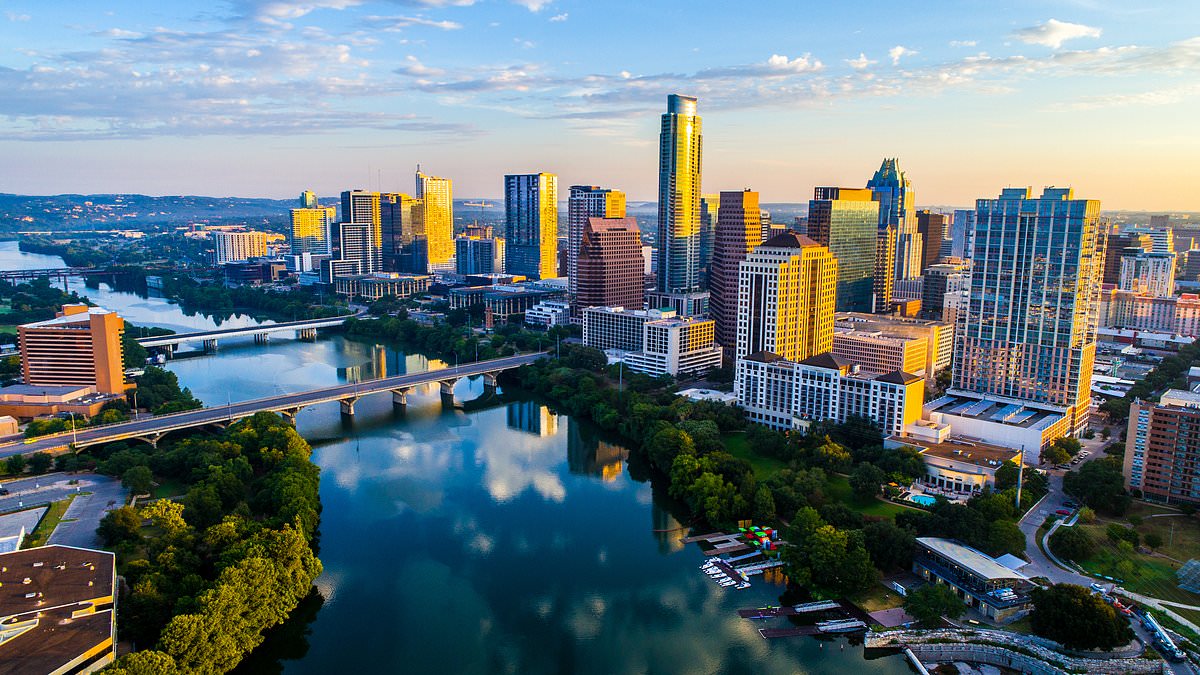
Austin, Texas, had one of the fastest growing housing cycles in the country during Covid and now excess inventory is available for renters and buyers
Uber co-founder Travis Kalanick hinted at wanting to leave California ‘prior to January’ out of fear of a billionaire tax
Business leaders find the lower operating costs in Texas especially appealing – especially when compared to places like San Francisco, where the living expenses are among the highest in the country.
In Texas, office space, warehouses and land are often cheaper, especially in hotspots like Austin, which has seen a major housing boom (and bust) driven by the huge increase in demand.
When tech workers started moving to the city, developers responded with frantic apartment construction.
As demand waned, owners were left with luxury condos dropping drastically in value.
Austin is now among four metros that have 50 percent more homes on the market than pre-pandemic norms, Realtor.com reports. Meanwhile, for renters, Austin is among the cheapest cities to rent.
Vice President of Real Estate Sales, Real Property Management Mike Steward, who has been in the property management business for two decades, previously told the Daily Mail that Austin stands out for having ‘long-run demand.’
‘Other ‘next-wave’ metros can look stronger on near-term competition and demand right now,’ Steward said. ‘If a renter wants relative value in a growth market, Austin is back in the conversation again, since rents came off their peak more than many Sun Belt peers.’
The companies located in Texas are even pulling in a bigger profit, with the state earning $2.8 trillion in revenue, compared to California’s reported $2.7 trillion. New York comes in third with 53 companies and $2.2 trillion.
For wealthy business owners, California’s impending billionaire’s tax poses an added threat.

Exxon is among the biggest companies headquartered in Texas, in addition to Chevron and AT&T
The California Billionaire Tax Act, which would target about 200 California residents with assets over $1 billion, would charge a one-time 5 percent tax on their net worth.
The tax would be due in 2027, and taxpayers could spread payments over five years, with interest, according to the Legislative Analyst’s Office.
Meanwhile, Texas has no state personal income tax, which attracts both executives and frugal employees.
Texas is also one of the fastest-growing states in terms of population, adding over 391,000 new residents last year, according to the Census Bureau.